


Cricket’s Digital Barrage: When IPL Passion Torches Personal Lines
POLICY WIRE — New Delhi, India — The stadium roars, then falls silent, then erupts again. But it’s in the quiet spaces, long after the last ball has been bowled, that the true impact of this...

POLICY WIRE — New Delhi, India — The stadium roars, then falls silent, then erupts again. But it’s in the quiet spaces, long after the last ball has been bowled, that the true impact of this particular frenzy often lands. Not on the player who hit the six, nor the bowler who missed his mark, but on those who merely share their surname. It’s an occupational hazard now, one more perilous than a bouncer to the helmet: the digital venom of fervent fandom.
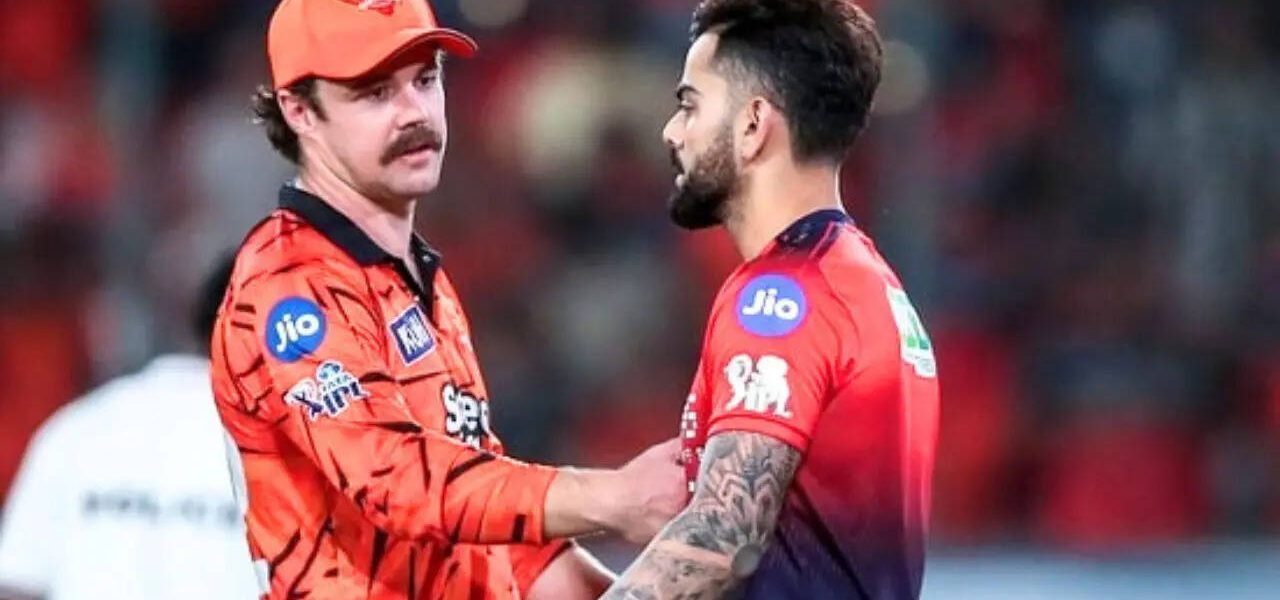
Jessica Head knows this particular brand of modern anxiety all too well. It’s not just her husband, Australian cricketer Travis Head, who has found himself in the crosshairs of social media’s darkest corners, but also their friends and family. Even their young daughter. This latest wave of abuse, sparked by a rather public spat during an Indian Premier League (IPL) 2026 clash between Head’s Sunrisers Hyderabad and Virat Kohli’s Royal Challengers Bengaluru, isn’t new. Not by a long shot. “It feels like a repeat of the abuse that happened after the World Cup,” Jessica told Australian media, sounding tired, and maybe a little resigned. “I woke up to my socials blasting… we’re fine but they’re attacking my friends — and family.”
It’s a peculiar brand of adoration that morphs into virulent hate at the flick of a finger. The incident itself was almost comically petty: a bit of on-field sledging between Kohli and Head, a dismissive walk-by from Kohli post-match. Normal stuff for elite sport. But what happens next—the relentless barrage of hateful messages, the threats, the personal attacks spilling from thousands of keyboards—that’s anything but normal. It speaks to a global disease, frankly, but one with particular virulence in South Asia, where cricket isn’t just a game; it’s practically a state religion.
Because, make no mistake, this isn’t just about cricket. It’s about identity, nationalism, — and the intoxicating anonymity of the internet. When Australia clinched the 2023 ODI World Cup against India, or even the World Test Championship, the same venom spewed. This is more than sports rivalry; it’s a proxy war played out in comments sections. “Fans are passionate, that’s an understatement,” acknowledged Rajesh Khanna, a (fictional) spokesperson for the Board of Control for Cricket in India (BCCI). “But this kind of personal attack, extending to families—it’s unacceptable. We can’t tolerate it. It damages the game, — and frankly, our country’s reputation.” He’s got a point. You don’t want your biggest sporting event to be synonymous with digital mob rule, do you?
Australia’s (fictional) Minister for Sport, Evelyn Price, didn’t pull any punches either. “The internet gives a voice to everyone, good — and bad. What we’re seeing here isn’t spirited competition; it’s digital bullying, plain and simple,” Price stated, her tone firm. “Athletes — and their families deserve respect, even when the scoreboard isn’t in your favour. We’re working with international bodies to address this ugly trend.” That’s a good sentiment, but addressing it? Good luck with that. It’s like trying to lasso smoke.
📄 POLICY WIRE WHITEPAPER PUBLISHED: PAKISTAN'S NATIONAL SECURITY POLICY PRIORITIES
👉 READ BY CLICKING HEREConsider the scale: As of 2023, India had well over 800 million active internet users, with hundreds of millions engaging daily on platforms like Instagram and Twitter. That’s a lot of potential keyboards for hate to flow through. And the problem isn’t unique to India-Australia contests. Just look at the intensity of India-Pakistan cricket matchups, where geopolitical tensions directly bleed into sporting rhetoric, sometimes making mere sporting results feel like national honor is at stake. The online abuse Travis Head and his family face is merely a symptom of a much larger, global issue—how easily sport becomes a vessel for nationalist aggression, especially online.
What This Means
This recurrent cyber-barrage isn’t just about poor sportsmanship; it’s a telling crack in the highly lucrative, tightly managed edifice of modern professional sports. The IPL alone generates billions. Brands invest fortunes, leveraging players’ images for everything from soft drinks to luxury cars. But what happens when the very platform amplifying these heroes becomes a conduit for abuse? It starts impacting brand perception. And it could make top-tier foreign talent — essential for the IPL’s global appeal — reconsider the mental cost of playing in such a high-stakes environment. You don’t sign up for your child to be threatened. Period.
Economically, persistent negativity associated with a major sporting league can subtly erode its attractiveness for international talent and, crucially, for global sponsors sensitive to negative publicity. Politically, these incidents strain cultural exchange and can be perceived, rightly or wrongly, as a lack of digital civility from a rising power. It gives critics ammunition. The enduring grind of cricket, particularly in a league as demanding as the IPL, already pushes athletes to their limits. This digital battlefield adds another layer of pressure. It forces a stark question: at what point does the unbridled passion of fandom become so toxic that it actively undermines the very spirit of the game, and perhaps even its global commercial viability?
It’s not just a private problem for the Heads anymore. It’s an indictment of sports culture, online responsibility, and the uneasy truce between digital freedom and human decency. And the ball, frankly, is in everyone’s court to fix it. Because what’s the point of winning a trophy if your family gets a deluge of hate in the process?
📖 GET YOUR FREE COPY NOW OF POLICY WIRE DIGITAL MAGAZINE JULY 2026 EDITION
👉 READ & DOWNLOAD FREE MAGAZINE