


Gridiron’s Quiet Architects: Virginia Tech’s Recruiting Renaissance Reshapes Local Fortunes
POLICY WIRE — Blacksburg, Virginia — Forget the gridiron heroics for a moment, the electrifying runs, or the bone-rattling hits. Peel back the Astroturf, and you’ll find collegiate athletics...

POLICY WIRE — Blacksburg, Virginia — Forget the gridiron heroics for a moment, the electrifying runs, or the bone-rattling hits. Peel back the Astroturf, and you’ll find collegiate athletics operates on a fiscal engine — a relentless, multi-billion-dollar apparatus powering state pride and university balance sheets. A successful program isn’t just about Saturdays in autumn; it’s a capital investment, a calculated gamble on youth, a shrewd acquisition of potential.
And nowhere is that gamble paying dividends quite like Blacksburg, Virginia, where the Virginia Tech Hokies, under the shrewd stewardship of Head Coach James Franklin, are staging what can only be described as a programmatic resurgence. It’s less about the cheerleaders — and more about the ledger these days. But let’s be frank, you can’t have one without the other.
Franklin, plucked from — as lore would have it — Penn State’s verdant fields last November, didn’t inherit a goldmine. The Hokies’ recruiting class was wallowing somewhere in the 100s. A team needing a defibrillator, really. But what followed? A furious, almost theatrical, recruitment sprint in the weeks leading up to national signing day. They vaulted into the top 25. Then, January saw a calculated dive into the transfer portal, scooping up talent like former Nittany Lions quarterback Ethan Grunkemeyer. The man knows how to play the game, inside — and outside the stadium.
Now, his focus is on 2027. Future capital. Since edge rusher Alexander Taylor decided to call Blacksburg home on March 19th, Franklin’s pipeline has churned out 13 more verbal commitments. The prize jewel? Peter Bourque, a quarterback considered among the nation’s elite. You don’t need an MBA to grasp what this means for brand equity.
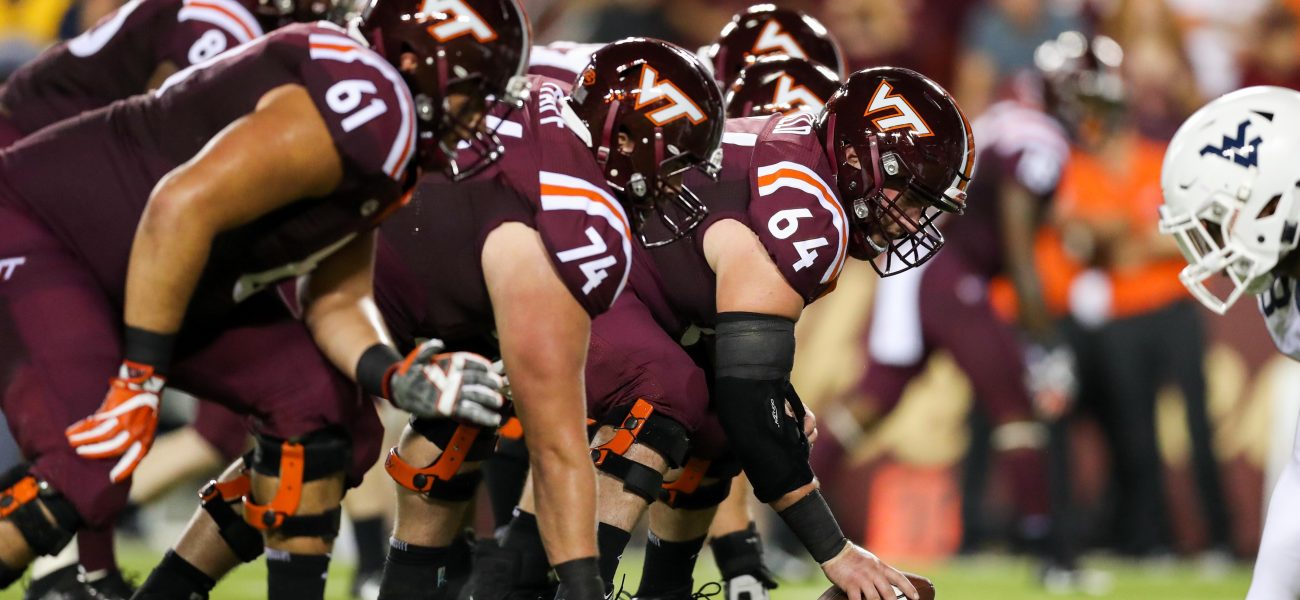
Which brings us to Monday. A date penciled into countless collegiate athletic departments’ war rooms, not just for the Hokies. Kaden Buchanan, a 6-foot-4, 328-pound offensive lineman, one of the coveted Top247 prospects, announces his college choice. Will it be Kentucky? NC State? Or, more poignantly for this narrative, Virginia Tech? This isn’t just a high schooler picking a university; it’s a commodity choosing its market, a decision that could swing recruiting narratives and ultimately, revenue streams, for years.
But Franklin isn’t merely collecting names. “It’s not just about star ratings or who’s the flashiest kid,” Franklin, never one for platitudes but a master of public messaging, told us earlier this spring, his voice resonating with an almost missionary zeal. “We’re building a foundation here, something that’s about character, about family, about our community. This isn’t just about winning a few games. We’re constructing a culture, and that takes specific individuals who buy in, who understand the weight of wearing these colors.” It’s a compelling sales pitch, undoubtedly.
📄 POLICY WIRE WHITEPAPER PUBLISHED: PAKISTAN'S NATIONAL SECURITY POLICY PRIORITIES
👉 READ BY CLICKING HEREAnd the university knows it. “A thriving football program isn’t merely a diversion for students,” explained Dr. Evelyn Chandra, Virginia Tech’s Executive Vice President for Business and Fiscal Affairs, in a recent alumni newsletter. “It’s the university’s most visible front porch, drawing national attention, boosting applications, and — crucially — energizing alumni giving. Our data shows a direct correlation between athletic success — and endowment growth. It’s an intricate, beautiful ecosystem of academic — and athletic pursuits, really.”
Her words aren’t just boilerplate. The economics are stark. According to a 2023 study by the National College Athletics Research Bureau (NCARB), athletic departments in the top Power Five conferences collectively generate over $100 million in annual revenues, often subsidizing non-revenue sports and enhancing institutional visibility. These are staggering sums for amateur competition.
This high-stakes American collegiate theatre, however uniquely domestic it appears, also broadcasts its spectacle far beyond its borders. Across oceans, from London pubs to drawing rooms in Lahore, Pakistan, young aspirants and dedicated fans follow the intricate dance of these recruitments and seasons. The ambition, the sheer resource allocation, the idolization of teenage athletes – it’s a modern saga, a captivating brand. While few Pakistani talents might find themselves on an NCAA roster today, the cultural impact of American sports, the sheer entertainment value and its pervasive commercialism, infiltrates even nascent sports markets across South Asia. The global quest for sporting excellence, and the capital it attracts, isn’t limited by geography; it simply manifests differently.
What This Means
For Virginia Tech, landing Buchanan isn’t just a coup; it signals market validation for Franklin’s vision. Politically, a resurgent Hokies program elevates the university’s profile within the Commonwealth, potentially garnering more state legislative support and making Blacksburg a more attractive locale for state-level investment. Economically, more successful seasons mean fuller stadiums, increased merchandise sales, higher media rights values, and a palpable boost for local businesses, from restaurants to hotels. A top-tier offensive lineman like Buchanan — a critical, if unsung, position — ensures the investments in skill positions like Grunkemeyer and Bourque are protected. It creates stability. And that kind of stability translates directly into long-term financial health for the athletic department and, by extension, the broader university community. The ripple effect, both cultural — and fiscal, can be profound. Because ultimately, success on the field means success in the boardroom. It always has. And that’s what makes this Monday more than just another recruiting announcement. It’s a statement about future intent.
📖 GET YOUR FREE COPY NOW OF POLICY WIRE DIGITAL MAGAZINE JULY 2026 EDITION
👉 READ & DOWNLOAD FREE MAGAZINE