


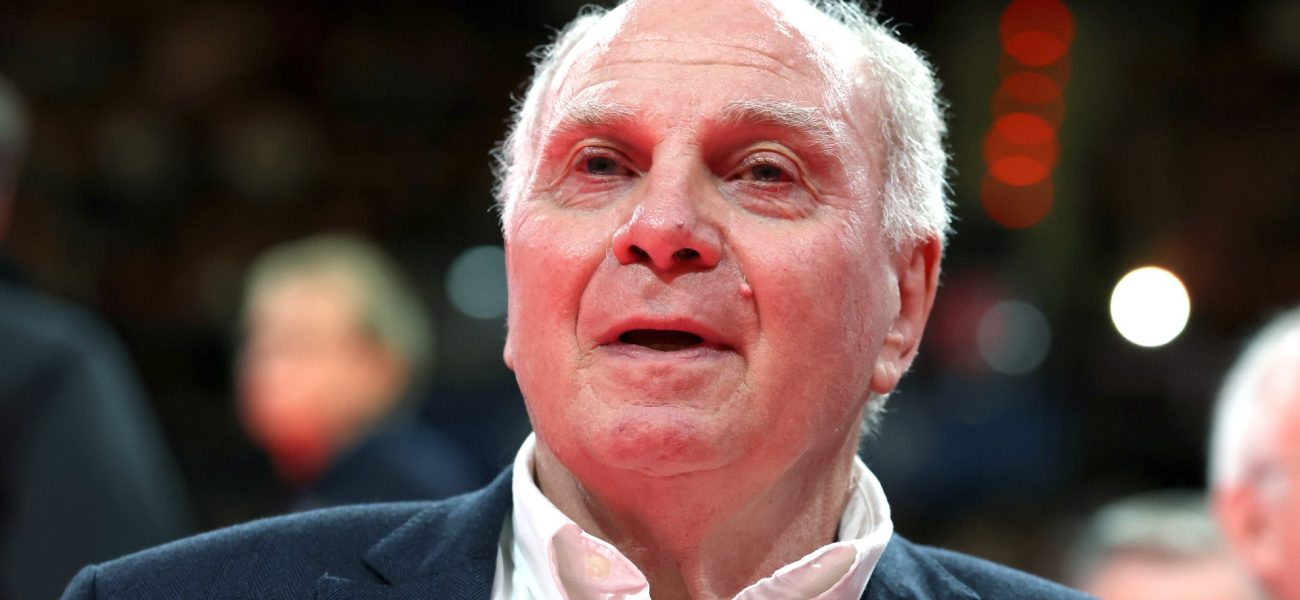
Hoeness Delivers Cold Shower: Bayern Declares Barcelona Bankrupt in Star Striker Chase
POLICY WIRE — Munich, Germany — European football’s high-stakes transfer season isn’t merely about dizzying fees and superstar power; it’s a brutal public performance of economic clout. And right...

POLICY WIRE — Munich, Germany — European football’s high-stakes transfer season isn’t merely about dizzying fees and superstar power; it’s a brutal public performance of economic clout. And right now, Barcelona’s finances are getting shredded on stage for everyone to see. Their quest for a premier striker, after Robert Lewandowski’s departure, has met a particularly blunt, almost mocking, reality check from Bayern Munich’s influential honorary president, Uli Hoeness. It wasn’t a quiet boardroom whisper; it was a verbal uppercut, delivered with a wry grin typical of German pragmatism.
Hoeness, a man who knows a thing or two about building a footballing empire with a healthy balance sheet, didn’t pull any punches after Bayern’s DFB Pokal triumph. Flanked by celebrating players, perhaps still basking in the glow of victory, he made it abundantly clear Harry Kane wasn’t going anywhere near Camp Nou. “FC Bayern is a buying club, not a selling club,” Hoeness asserted, almost as an aside. But then came the true sting, the sentence that reverberated across Europe’s footballing tabloids: “Barcelona have no money anyway.” Just like that, the curtain was drawn on any Catalan pipe dreams regarding England’s talismanic forward. But don’t imagine Hoeness only had one target in mind that evening; he’d earlier playfully swatted away José Mourinho’s perceived interest in Michael Olise for Real Madrid, albeit with less vitriol. Still, his comment about Barcelona hit differently. Because it’s largely true.
Barcelona’s predicament is, quite frankly, a mess of their own making – years of lavish spending and questionable accounting practices have led them down a perilous path. They just saw Lewandowski play his final match for the club, closing a chapter, and now the scramble for a replacement has begun. And boy, is it an uncomfortable scramble. Other targets like Chelsea’s João Pedro — and Atlético Madrid’s Julián Álvarez are floating around. Yet, every single name comes with an astronomical price tag. Reports, though contradictory at times, suggest the Catalan giants might have stashed away a cool €100 million for this very purpose. That’s a chunky sum, to be sure, but a mere drop in the bucket for a top-tier global striker in today’s inflated market, particularly when your club is widely rumored to be grappling with a debt figure hovering around €1.35 billion, according to numerous financial reports over the past year. Such a sum could cripple many state economies, let alone a football club.
This isn’t just about transfer speculation; it’s about a deeply humiliating public admission of financial vulnerability on the global stage. For fans in places like Lahore, Karachi, or Jakarta – communities where Barcelona has historically commanded a massive following and inspired fervent loyalty – such statements diminish the brand. The perceived invincibility and glamour of these European titans, an aura cultivated by decades of on-field glory and seemingly limitless budgets, hinges partly on financial muscle. Watching a club of Barcelona’s stature endure such indignities might just shake the belief system of a generation of global supporters. Because, fundamentally, football’s allure in these markets often comes hand-in-hand with an image of undisputed wealth and power.
A sporting director for Barcelona, speaking anonymously, was reportedly livid about Hoeness’s comments. While there hasn’t been an official counter-statement, the mood within Camp Nou must be icy. As one source put it: “This sort of comment… it’s unbecoming. Our financial journey is complex, but we’re navigating it. We manage our finances responsibly now, which can’t be said for many clubs.” It’s a defense, sure, but a thin one, isn’t it?
📄 POLICY WIRE WHITEPAPER PUBLISHED: PAKISTAN'S NATIONAL SECURITY POLICY PRIORITIES
👉 READ BY CLICKING HEREIndeed, this isn’t just about Harry Kane staying at the Allianz Arena; it’s about Bayern cementing its status as one of Europe’s financially sound footballing superpowers, standing in stark contrast to clubs like Barcelona whose golden eras seem increasingly distant, weighed down by red ink. The Bavarians aren’t just winning on the pitch; they’re winning in the fiscal locker room, too.
What This Means
Hoeness’s caustic remarks aren’t merely garden-variety football banter; they’re a stark bellwether for the shifting economic power dynamics within European football. For Barcelona, the message is clear: the days of buying any player they desire, consequences be damned, are over. Their financial constraints aren’t just an internal problem anymore; they’re public fodder, limiting their competitive reach in an already hyper-inflated transfer market. This could well lead to a more conservative strategy focused on youth development or cheaper acquisitions, a significant departure for a club accustomed to fielding household names purchased at a premium. But will fans stomach it? Probably not without serious grumbling.
And for Bayern Munich, the pronouncements reinforce their disciplined approach, distinguishing them from the perceived financial recklessness of their Spanish counterparts. This stability translates to sustained competitiveness. This saga also sends a chilling message to any club flirting with insolvency: even a history as rich as Barcelona’s won’t shield you from public scrutiny or a diminished standing on the global market. for aspiring leagues and clubs in the developing world – from the Indian Premier League in cricket-crazy India to emerging football powerhouses – the Barcelona story offers a potent cautionary tale about the perils of unchecked expenditure. Managing debt responsibly, it seems, can be just as important as winning on the pitch. Perhaps more so, actually. For a comprehensive look at the intricate dealings in football’s more chaotic side, see our report on The Unseen Toll of athlete diplomacy.
📖 GET YOUR FREE COPY NOW OF POLICY WIRE DIGITAL MAGAZINE JULY 2026 EDITION
👉 READ & DOWNLOAD FREE MAGAZINE