


The Special One’s Return: How Mourinho’s Madrid Comeback Reshapes Football’s Geopolitics
POLICY WIRE — Madrid, Spain — The football world, often seen as a glorious spectacle divorced from geopolitical realities, is instead a hypersensitive barometer of shifting power—especially when a...

POLICY WIRE — Madrid, Spain — The football world, often seen as a glorious spectacle divorced from geopolitical realities, is instead a hypersensitive barometer of shifting power—especially when a titan like José Mourinho looks poised for a second coming at Real Madrid. His anticipated re-anointment at the Santiago Bernabéu, thirteen years after his initial controversial departure, isn’t just a managerial change. No, it’s a tectonic event, triggering a domino effect across the continent’s most gilded financial battlegrounds, with an Italian defender now caught firmly in the crosshairs.
It’s barely even a whisper anymore; it’s a roaring certainty. The ‘Special One’ is slated to replace Álvaro Arbeloa at season’s end, and that decision, folks, has legs—long, money-lined legs. Real Madrid, notorious for its demanding hierarchy, finds itself in a peculiar bind: a defensive line showing its age, with contracts for stalwarts like David Alaba, Antonio Rüdiger, and Dani Carvajal expiring this June. They aren’t getting younger, are they? And the club, frankly, isn’t inclined to extend the hand, or the checkbook, to keep them.
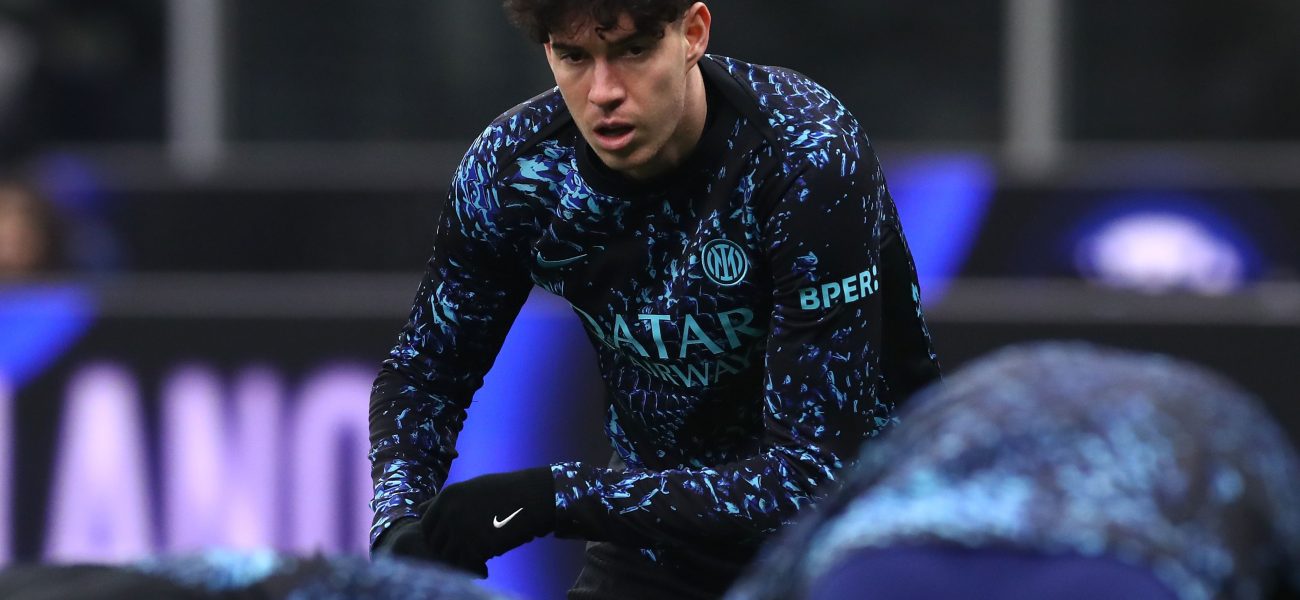
Because of this looming void, reinforcing the backline sits high on the Bernabéu’s priority list. And where there’s a need, there’s a name: Alessandro Bastoni. The Inter Milan center-back, a rather divisive figure in Serie A recently after what can only be described as ‘a string of unfortunate events’ earlier in 2026, finds himself on the market. Inter, being Inter, isn’t shy about valuing their assets. They’ve slapped a cool €70 million price tag on the 26-year-old. Not chump change, even for football’s elite.
Barcelona, Real Madrid’s eternal nemesis, had positioned itself as the frontrunner. They always do. But they’re still playing catch-up financially. Contrast that with Madrid, whose pockets, especially with a renewed sense of purpose and a returning legendary coach, feel bottomless. They won’t blink at Inter’s demands. And, of course, Mourinho isn’t just buying talent; he’s buying his talent. He’s known to be a big admirer of Bastoni, supposedly earmarking him for a prominent role if—or rather, when—he takes the Bernabéu reins. And that, dear reader, changes everything for the hapless Blaugrana.
“We’re not a club that makes decisions based on sentimentality,” declared Florentino Pérez, Real Madrid President, in a recent, unusually forthright statement to the Madrid press. “We’re a club built on perpetual ambition — and the future. If a manager identifies a need and a player fits that vision for the next decade, we will act decisively to secure it.” Pérez’s words weren’t aimed at sentimental fans; they were a clear warning shot across Europe’s bow. Across the Mediterranean, Inter CEO Giuseppe Marotta, always a canny operator, likely smelled the incoming cash flow. “Alessandro is a valued member of our squad, ” Marotta reportedly stated to Gazzetta dello Sport. “But in football, everyone has their price, a price that must reflect a player’s quality — and market value. We’re always prepared to protect the financial health of our club.” Translation: Show us the money.
📄 POLICY WIRE WHITEPAPER PUBLISHED: PAKISTAN'S NATIONAL SECURITY POLICY PRIORITIES
👉 READ BY CLICKING HEREThe numbers behind such moves are staggering. A 2024 analysis by Deloitte’s Football Money League report revealed that Real Madrid’s revenue topped €831 million, a financial muscle far beyond that of many national economies, let alone direct competitors. Such fiscal might fuels these intricate transfer battles, turning clubs into sovereign wealth funds in miniature, competing on a global stage where players are traded like commodities, their values dictated by on-pitch performance and off-pitch commercial pull.
But the true ripple effects of these high-stakes maneuvers extend far beyond European capitals. Consider the fervent fandom spanning from Rabat to Rawalpindi, from Istanbul to Jakarta. Millions in the Muslim world, in South Asia, particularly Pakistan, India, and Indonesia, consume European football with unparalleled passion. Every Real Madrid jersey sold, every broadcast right purchased in these vast markets, injects fresh capital into the Spanish club’s coffers, indirectly underwriting these astronomical transfer fees. These aren’t just fans; they’re a colossal economic force, making choices that ultimately dictate whether Madrid can outbid a cash-strapped Barcelona for the likes of Bastoni. Their loyalty—and their wallets—are a direct, if unseen, component in this grand chess match. The clubs know it; they market relentlessly in these territories because that’s where an immense and growing part of their revenue streams now flow from.
What This Means
Mourinho’s potential return to the Bernabéu, therefore, isn’t simply a reunion with a tactical maestro; it’s a reassertion of Real Madrid’s enduring financial dominance and strategic ruthlessness. For Barcelona, it’s a stark reminder of their strained finances and their diminished ability to compete at the very highest echelons of the transfer market. They’ve been trying to keep pace, bless their hearts, but their balance sheets just don’t allow it. It forces a more pragmatic, perhaps even humbling, approach to squad building—a policy shift not without its own political ramifications in Catalonia, a region notoriously proud of its sporting independence from Madrid’s hegemony.
For Inter, it’s an opportunity to cash in on a player whose stock has arguably fallen among their own supporters, providing vital funds for their next cycle. And for the broader football landscape, it demonstrates that in the upper echelons of the game, managerial star power still translates directly into market advantage. A coach like Mourinho, controversial though he may be, commands influence, demands investment, and fundamentally shifts economic realities. It’s a game of colossal stakes, where decisions made in a gilded boardroom in Madrid can send ripples that are felt across global markets, influencing everything from sponsorship deals to the price of a replica kit in Lahore.