


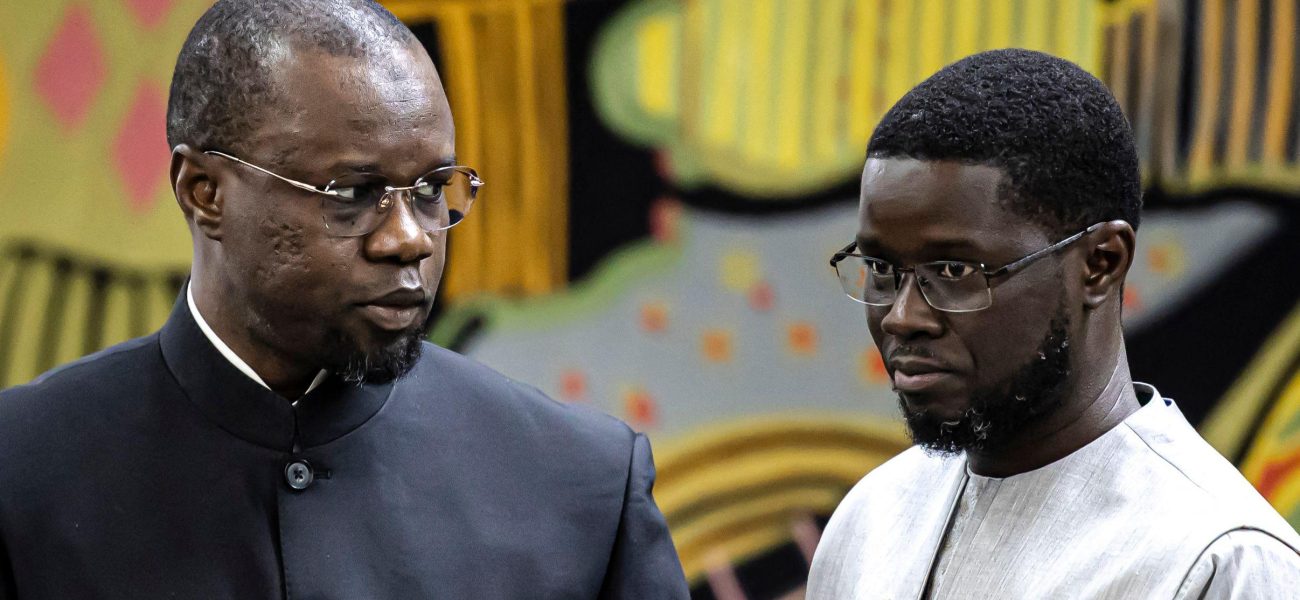
Dakar’s New Act: President Faye’s Swift Overture Reshapes Senegal’s Political Stage
POLICY WIRE — Dakar, Senegal — The afterglow of a seemingly miraculous election, one that delivered a firebrand opposition leader from prison cell to presidential palace, proved short-lived. Senegal,...

POLICY WIRE — Dakar, Senegal — The afterglow of a seemingly miraculous election, one that delivered a firebrand opposition leader from prison cell to presidential palace, proved short-lived. Senegal, often touted as a bastion of democratic stability in West Africa, just delivered a jarring lesson in realpolitik. The political honeymoon? Apparently, it’s just a phrase. Barely weeks into the job, President Bassirou Diomaye Faye – the man who ran on a joint ticket with the recently released Ousmane Sonko – abruptly removed Sonko from his prime ministerial perch. Poof. Gone.
It’s a move that’s got everyone, from street vendors in Dakar to foreign diplomats, raising an eyebrow or two. For months, Sonko was the face of the popular resistance, a charismatic figure who electrified Senegal’s youth with promises of radical change and systemic overhaul. Faye, his former lieutenant, won largely on Sonko’s immense popularity after Sonko was barred from running. But now? Sonko’s out. It’s a rapid turn of events, one that demonstrates power’s corrosive effect—or perhaps its clarifying nature.
“The machinery of government demands singular direction, unclouded by disparate visions. It’s about stability, not individual ambitions,” President Faye, ever the pragmatist now holding the reins, was overheard telling an aide in the Presidential Palace yesterday. His tone, they say, was measured, but the message? Clear as a bell. This isn’t a joint project anymore. It’s Faye’s project.
But the populace, especially the country’s restive youth who powered their rise, doesn’t exactly share that sentiment. Youth unemployment here, for example, stubbornly hovers around 30% among urban populations, according to a recent World Bank report. These young people rallied around Sonko’s anti-establishment cry, his pledges to shake up a system they felt had long forgotten them. So, when the man who embodied that change gets shunted aside by the very partner he helped elevate, it sends a ripple. And it certainly isn’t lost on observers across the Sahel and beyond—nations like Pakistan, facing similar demographic youth bulges and struggles against established elites, watch these unfolding dramas with keen interest. Will the youth’s demands for transformation be met, or will it be business as usual under a new façade?
Ousmane Sonko, always keen to project a steadfast image, released a cryptic statement acknowledging his dismissal but vowing continuity. “The people’s mandate wasn’t for cosmetic change. They want real transformation, and they’ll get it, one way or another,” he reportedly told supporters outside his home, his words thick with implied promises and a quiet resolve. What does “one way or another” really mean when you’re no longer driving the bus?
Many see this as Faye consolidating power, a swift, almost surgical move to remove a potentially competing power center. Sonko’s popularity is immense, arguably overshadowing Faye’s even after the presidential victory. Perhaps it was a pre-emptive strike against a dual leadership that could breed paralysis. Or maybe it signals a fundamental divergence in strategy. Sonko, with his firebrand populism, promised a dramatic rupture with the past. Faye, once jailed for graft allegations himself (charges since dropped as part of a general amnesty), now sits in the big chair. And the weight of that chair changes things. It always does.
📄 POLICY WIRE WHITEPAPER PUBLISHED: PAKISTAN'S NATIONAL SECURITY POLICY PRIORITIES
👉 READ BY CLICKING HEREIt’s not just an internal political drama. Senegal’s relative stability, its secular yet deeply spiritual (over 90% Muslim) society, and its long-standing democratic traditions have made it a regional anchor. Instability here could reverberate through a West African region already grappling with coups — and jihadi insurgencies. Remember, even a symbol of populism, like a politician named ‘Trump Buffalo’ in Bangladesh, can tap into significant grassroots energy. It’s that raw, unpredictable energy Faye — and his new, hand-picked cabinet must now navigate.
This political chess match, unfolding at dizzying speed, raises fundamental questions about leadership — and loyalty. Can two titans truly share a single throne, even after reaching it together? Apparently not. Because in politics, power isn’t something to be shared gracefully; it’s something to be grasped.
What This Means
The swift sacking of Ousmane Sonko isn’t merely an internal government reshuffle; it’s a profound strategic recalibration by President Faye, marking a clear assertion of presidential authority early in his tenure. Politically, it signals Faye’s intention to be the unequivocal decision-maker, possibly sidelining the very populist machinery that brought him to power. This could be a play for traditional stability over radical change, aimed at reassuring international investors and wary regional partners, even if it risks alienating the passionate youth base.
Economically, this move might pave the way for a more orthodox, predictable policy approach. Sonko’s rhetoric often hinted at renegotiating natural resource contracts, a prospect that rattled some foreign businesses. Faye’s actions could suggest a tempering of these more revolutionary ideas in favor of maintaining investment flows, particularly as Senegal looks to develop its nascent oil and gas sector. However, the true test will be how the public, particularly the young, react if promised systemic changes aren’t immediately delivered. There’s a delicate balance here between satisfying external economic expectations and internal political demands, and Faye has clearly decided to lead, unburdened by shared leadership.