


Canadian Grid’s Quiet Insurrection: Fog-Bound Solar Test Defies Old Energy Dogma
POLICY WIRE — St. John’s, Canada — You’d figure the last place anyone would try to harness the sun for electricity is St. John’s, Newfoundland. We’re talking Canada’s...

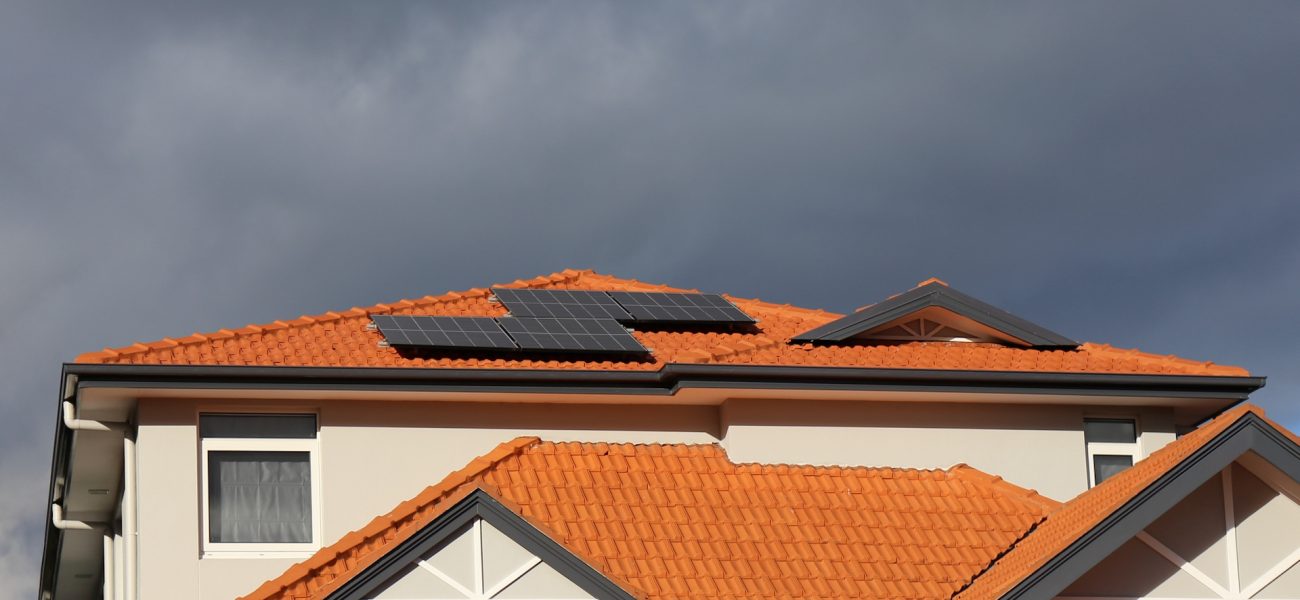
POLICY WIRE — St. John’s, Canada — You’d figure the last place anyone would try to harness the sun for electricity is St. John’s, Newfoundland. We’re talking Canada’s easternmost point, famously cloaked in a meteorological melodrama of fog and clouds so thick you can practically taste them. But this isn’t about logic, is it? It’s about a man, a roof, and an obstinate refusal to surrender to a gray sky, carving out his own piece of energy independence. Call it a quiet insurrection against the utility giants, a stubborn bet on distributed power where it shouldn’t, by all accounts, be paying off.
Many a policy wonk (myself included, I’ll admit) would’ve chuckled at the thought a few years back. Because St. John’s averages something like 1,500 sunshine hours annually. Compare that to Calgary, out west, clocking over 2,400. Still, one local, undeterred by the relentless damp and shade, decided to throw caution – and a hefty sum of cash – to the wind, installing solar panels on his home. The kind of move that usually signals either profound ignorance or revolutionary genius. Turns out, it might just be the latter.
It’s a micro-experiment, sure, but with macro implications for how we think about energy, particularly in places that aren’t bathed in Californian sunshine. If a residential solar array can make economic sense here, then what exactly is stopping wider adoption in places with slightly more agreeable climates? The implications rattle the cages of traditional grid operators, whose entire business model relies on centralized generation and linear consumption.
“We’re seeing homeowners push the envelope, forcing us to rethink our assumptions about renewable integration,” said the Hon. Evelyn Grant, Canada’s Federal Minister for Green Innovation, in an exclusive chat with Policy Wire. “It’s not just about megawatts; it’s about resilience — and community empowerment. This kind of grassroots innovation? It’s how we build a truly distributed and robust energy future across the entire federation.” She didn’t sound particularly surprised, either.
But there’s always the bottom line, isn’t there? The Provincial Energy Regulatory Board’s chief analyst, Dr. Hassan Mir, offered a more tempered view. “Individual triumphs are inspiring, but we mustn’t forget grid stability and the colossal infrastructure investment required for large-scale, intermittent energy sources,” Mir stated, always the pragmatist. “Subsidies — and net-metering schemes mask the true economic costs sometimes. We have to balance ambition with reliable, affordable power for everyone.” And he’s got a point. It’s never as simple as flipping a switch.
📄 POLICY WIRE WHITEPAPER PUBLISHED: PAKISTAN'S NATIONAL SECURITY POLICY PRIORITIES
👉 READ BY CLICKING HEREFor regions like Pakistan, which grapples with chronic power outages – an energy deficit sometimes topping 5,000 MW during peak summer demand, according to the country’s power division reports – this Canadian experiment offers a different kind of mirror. Where Canadian homeowners are looking for independence and emissions reductions, Pakistani households might eye solar simply for uninterrupted basic necessities. But the underlying drive is similar: circumventing a centralized, often unreliable, system. Imagine microgrids proliferating in Karachi or Lahore, bypassing an antiquated national grid—it’s not so far-fetched, actually. Small, independent power production could mean significant disruption, a bit like Lens’ gritty ascent challenging French football’s status quo, albeit with fewer yellow cards.
So, the question shifts from “Does it work?” to “At what cost, — and for whom?” This St. John’s resident proved the physical possibility. He’s reportedly slashed his energy bills, selling surplus back to the very grid he initially aimed to bypass. Natural Resources Canada reported a significant surge in residential solar interest, with installation costs seeing a 15% decrease year-over-year in certain provinces for 2023. This isn’t just a quirky local news story anymore; it’s a genuine market signal.
It turns out, the sun doesn’t have to shine blindingly for solar to contribute. It just needs to peek out, often enough, with some smart battery storage handling the rest. That’s a truth inconvenient for anyone invested in the fossil fuel status quo. And it’s an empowering thought for the rest of us, particularly as energy costs continue their upward trajectory.
What This Means
This localized solar success story isn’t just an anecdotal quirk; it’s a loud claxon for energy policy rethink. Politically, it empowers individual citizens to take a stand, directly influencing their household economics and challenging established utilities. For governments, it poses a quandary: continue propping up legacy systems or accelerate incentives for distributed generation? The economic implications are equally complex. While upfront costs remain a barrier for many, the long-term savings and reduced reliance on volatile energy markets become increasingly attractive. We’re looking at a slow but inevitable decentralization of power generation, forcing utility companies to evolve—or fade. Global energy security, too, gets a nod here. Reducing dependence on distant energy sources, often situated in geopolitically fraught regions, strengthens domestic resilience. Nations across the Muslim world and South Asia, struggling with infrastructure and energy access, watch such innovations with keen interest. They’re not just about clean energy, you see. They’re about stability. It’s about not having your life grind to a halt because a distant power plant decided to fail, or because someone in an entirely different timezone decided to turn a valve. That’s a profound shift.