


Electric Undercurrents: Volvo’s Latest EV Charges a New Global Economic Divide
POLICY WIRE — Gothenburg, Sweden — Few really pay attention to the seams anymore. You know, the rough edges of where a gleaming new product meets the messy realities of global extraction, volatile...

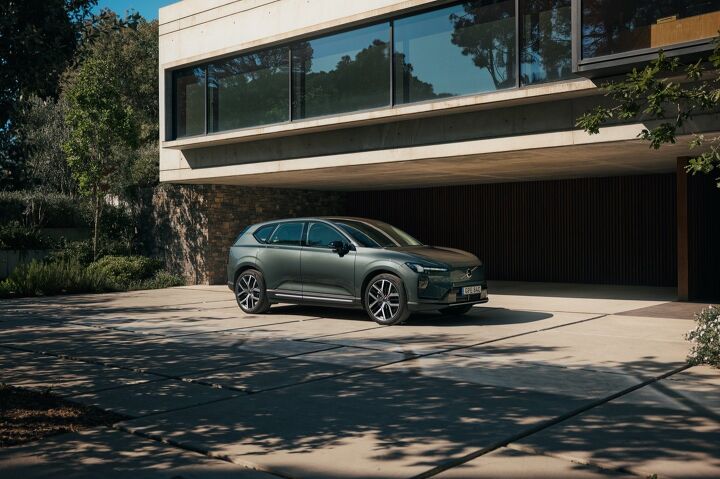
POLICY WIRE — Gothenburg, Sweden — Few really pay attention to the seams anymore. You know, the rough edges of where a gleaming new product meets the messy realities of global extraction, volatile markets, and an industrial base in full, frantic transformation. We’re often too busy marveling at the smooth lines, the whispered promises of a quieter commute, or the environmental halo of electrification. But beneath the polished veneer of Volvo’s new 2027 EX60 electric SUV, those seams are—let’s just say—more frayed than usual. This isn’t just another car; it’s a rolling dissertation on contemporary geopolitics.
It’s not about the instant torque, the silent acceleration, or even the latest LiDAR wizardry that’ll keep you out of ditches (mostly). The real story, the one barely whispered in glossy press releases, is about what it takes to build such a machine. We’re talking about the silent tug-of-war for raw materials, the precarious dance of intellectual property across borders, and the strategic maneuvering of nations trying to grab a piece of the next industrial revolution. Because, frankly, where your lithium comes from now matters as much as where your oil did a generation ago.
And let’s be clear: this shift isn’t just about making cars ‘green.’ It’s a complete re-ordering of economic might. China, for instance, doesn’t just dominate battery manufacturing; it controls a lion’s share of the refining capacity for critical battery minerals like cobalt and nickel, as well as a significant portion of global graphite production. This dominance—a strategic foresight many in the West seemingly missed—has created an undeniable leverage point. Imagine buying a brand-new iPhone, only to find half its guts are patented in Beijing, and its supply chain winds exclusively through Xinjiang. That’s not far from the reality the auto industry stares down now. “The idea of a purely domestic supply chain for EVs is a fantasy,” stated Maria Gonzales, CEO of ‘TerraMetals Holdings,’ a Denver-based firm specializing in mining logistics, in a recent private conference call. “Anyone telling you different is selling you snake oil or hoping for a geopolitical miracle.”
But the narrative isn’t static, thankfully. Emerging economies are also vying for relevance, not just as future markets but as potential sources and processing hubs. Pakistan, for instance, a nation often grappling with energy shortages and an economy perpetually on the brink, views the burgeoning EV sector as a chance for diversification and growth. Discussions are already underway to attract Chinese investment in local assembly plants and—longer term—to explore its own largely untapped mineral resources. It’s a long shot, given infrastructure deficits and political instability, but it’s a calculation nations across South Asia and the wider Muslim world are making.
And these ambitions aren’t limited to just assembly. The shift away from internal combustion engines effectively re-draws the map of global energy dependence. Suddenly, oil-producing nations, many of whom have leveraged petrodollars for decades to build global influence (see: Ronaldo’s Golden Boot, Riyadh’s Heavier Crown), are investing billions in diversifying their economies—not least into renewable energy and green technology. They’re positioning themselves for a future where energy might not come from underground but from high-tech manufacturing, where battery gigafactories are the new oil rigs.
Because ultimately, these shiny new EVs represent choices, not just for consumers but for governments. Do you double down on combustion and risk economic stagnation, or do you dive headfirst into electrification, confronting all the messy complexities it brings? “The geopolitical tremors accompanying this transition are substantial. You don’t just switch from one power source to another without redrawing spheres of influence and economic dependencies,” said Dr. Omar Bashir, a Senior Economic Advisor to the Omani Ministry of Industry, in a rare interview with a Gulf business paper. “It’s a grand game of chess, and every new model like the EX60 is just another pawn on the board, signaling a move.” His perspective underscores the profound strategic dimensions at play, far beyond whether the heated seats are comfy (they probably are).
Consider the raw numbers. Global demand for lithium, a cornerstone element for EV batteries, is projected to surge by approximately 380% by 2030, according to data from the International Energy Agency (IEA). Such staggering projections mean resource-rich countries, and those with advanced processing capabilities, hold immense economic sway. That kind of leverage — the quiet control over future mobility — isn’t something any major power intends to concede without a fight. It makes a sleek Swedish SUV less about Nordic design sensibilities and more about the rough-and-tumble of international statecraft.
What This Means
The Volvo EX60’s arrival is more than an automotive footnote; it’s a bellwether for seismic shifts in global commerce and influence. For Western nations, it highlights the urgent need to shore up domestic — or at least friendly — supply chains for critical minerals and battery components, lessening dependence on a single geopolitical actor. Failure to do so isn’t just an economic vulnerability; it’s a national security risk. it accelerates the timeline for petro-states to genuinely diversify their economies. Their historical energy leverage diminishes with every new EV sold, forcing ambitious (and often expensive) pivots into new industries. For emerging economies in South Asia, including Pakistan, this moment represents both a massive challenge and a tantalizing opportunity: to leapfrog older technologies, attract foreign investment, and establish footholds in an entirely new global value chain. The risk, of course, is that they might simply become assembly lines for foreign parts, perpetuating rather than breaking old dependencies. The car itself, elegant as it’s, merely rides the currents of these deeper, much more consequential battles for tomorrow’s wealth and power.