


Golden Handcuffs: How Elite College Ball Propels NBA’s Newest Dynasties
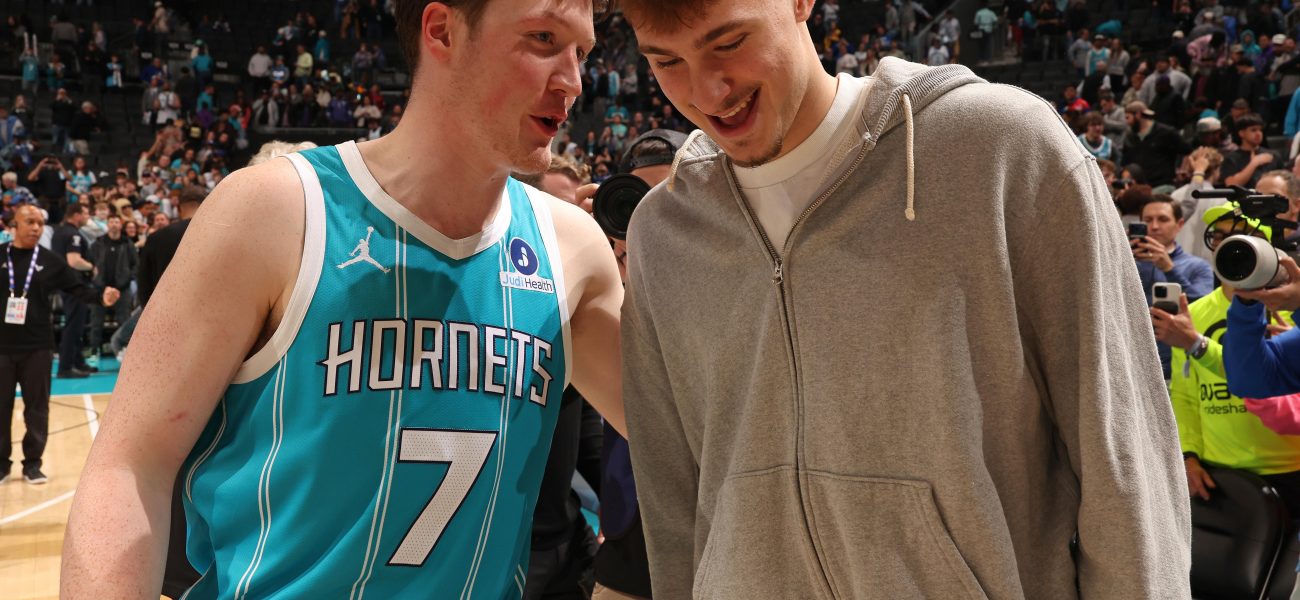
POLICY WIRE — Charlotte, NC — Nobody much cared about Kon Knueppel and Cooper Flagg just talking. Not really. The handshake after their inaugural professional face-off in March 2026, captured for...

POLICY WIRE — Charlotte, NC — Nobody much cared about Kon Knueppel and Cooper Flagg just talking. Not really. The handshake after their inaugural professional face-off in March 2026, captured for posterity and immediate social media digestion, wasn’t about friendship. It was a tableau, see, a public exhibition of a system, perfectly engineered. A culmination. Two freshly minted professional athletes—one for the Charlotte Hornets, the other for the Dallas Mavericks—had just done what Duke does: produce the goods, package them impeccably, and dispatch them to the highest bidders in the NBA.
Because, really, when was the last time a sporting outcome felt like less of a surprise? The NBA’s 2025-26 All-Rookie Team announcements didn’t shock anyone tracking the professional hoops landscape. Flagg — and Knueppel, both former Blue Devils, snagged unanimous First-Team honors. That’s two players, from one university, making up 40% of the league’s top fresh faces. Not bad for an academic institution, eh?
It wasn’t merely ‘good news,’ as some cheerful dispatches framed it. It was the predictable dividend of an aggressive, well-oiled machine. A talent conveyor belt so sophisticated it churns out finished products with consistent, often unparalleled, excellence. You might even call it a strategic triumph for collegiate brands—specifically those with multi-million dollar television contracts and alumni networks deeper than most national economies.
Their ascent wasn’t a charming underdog story. It was policy. The product of concentrated resources, an international scouting apparatus that hoovers up talent early, and a brand cachet that’s, frankly, priceless. Contrast this with regions like South Asia, where basketball, despite a population base topping 1.9 billion, still struggles to develop a consistent, elite-tier pipeline into the NBA. While interest is growing, the institutional support, the financial incentives, and the sheer cultural embeddedness just aren’t there yet to produce Flagg-level prodigies regularly. It’s a stark reminder that professional sports, especially the American variety, operate on a truly global scale but recruit from a meticulously curated subset of global talent pools. It’s capitalism, writ large, in jerseys — and sneakers.
“We aren’t just drafting players anymore; we’re investing in proven commodities,” explained Adrian Smith, an assistant General Manager for an Eastern Conference contender, speaking off-the-record but with knowing confidence. “Duke, Kentucky, even some of the high-level international academies—they’re our R&D departments. These kids arrive, and they’re not just skilled; they’re media-trained, physically optimized, and ready to contribute to a balance sheet.” He made a small, dismissive gesture with his hand. It’s business.
This unprecedented dual unanimity hasn’t happened since the 2004-05 season, when UConn’s Emeka Okafor and Ben Gordon pulled it off. But the economic backdrop then was different. The monetization of college athletes, the transfer portal frenzy, the overt corporate sponsorships of individual high schoolers—none of it approached today’s velocity. According to data compiled by Sportico, the average power conference athletic department brought in over $120 million in revenue during the 2022-23 fiscal year. Much of that, let’s be frank, fuels the athletic arms race that brings kids like Flagg — and Knueppel through the system.
And Duke, specifically, benefits from its particular position in the media ecosystem. You might even say its global reach now borders on the conspiratorial (in the best sense of the word), pushing talent and brand together like an elite marketing firm. Its program, and others like it, now operate as near-monopolies on NBA-ready talent, setting the stage—and the price—for the next generation of professional stars. The media turf wars to secure broadcasting rights for these college programs reflect that deeply embedded value.
“Look, when you run a program like Duke, you’re not just recruiting kids to play basketball,” stated Dr. Evelyn Reed, an associate dean at a competing ACC school’s business department. She didn’t mince words. “You’re offering a golden ticket, a direct flight to the big leagues. And in return, the NBA gets players who have been under intense scrutiny, on national television, since they were, what, sixteen? The vetting process is essentially complete before the draft picks are even made.” It’s a symbiotic relationship, for sure—a very lucrative one. But don’t pretend it’s about amateurism anymore; it’s about professional development on an accelerated timeline, with college branding as an intermediate step.
What This Means
The rise of Flagg and Knueppel, rather than a heartwarming tale of college camaraderie, signals a sharper, more consolidated era in elite athletic development. It indicates that institutions like Duke are increasingly serving as high-efficiency feeder systems, almost extensions of the NBA’s scouting and development departments. This phenomenon suggests that basketball’s talent acquisition strategy is centralizing, concentrating wealth and opportunity around a select few, immensely powerful college brands. The long-term implications are twofold: a potentially richer, more predictable talent stream for the NBA, but also an even wider chasm between these elite programs and the vast majority of other collegiate athletic departments.
Economically, this tight pipeline also solidifies the value proposition of big-brand college basketball. The argument for investing vast sums into athletic facilities and coaching salaries gets even stronger when the NBA consistently validates the quality of your output. For other leagues, or indeed other parts of the world aiming to foster top-tier basketball talent, the blueprint from places like Duke isn’t easily replicable. It requires not just athletic infrastructure, but deeply entrenched media relationships, decades of brand-building, and an intricate financial ecosystem that effectively subsidizes professional player development for the pros.
This dynamic only accelerates the global scramble for talent, and not always in ways that benefit broad athletic development globally. As the NBA looks for its next growth markets—perhaps in places like India or Pakistan, where populations are massive but high-level basketball remains nascent—they’ll find few, if any, institutions capable of replicating the concentrated talent factories currently dominating the American collegiate landscape. It means the soft power of U.S. sports is reinforced, and the economic engines driving it hum louder than ever, attracting top prospects internationally long before they ever dream of playing for their national team. The cycle just keeps on spinning.