


Israel’s Shadow Hand: The Global Hunt for October 7 Perpetrators Begins
POLICY WIRE — Jerusalem — The long knives, it seems, have finally been drawn. Not with the overt thrum of tank treads or the clamor of air sirens, but in the hushed corridors where Israel’s top...

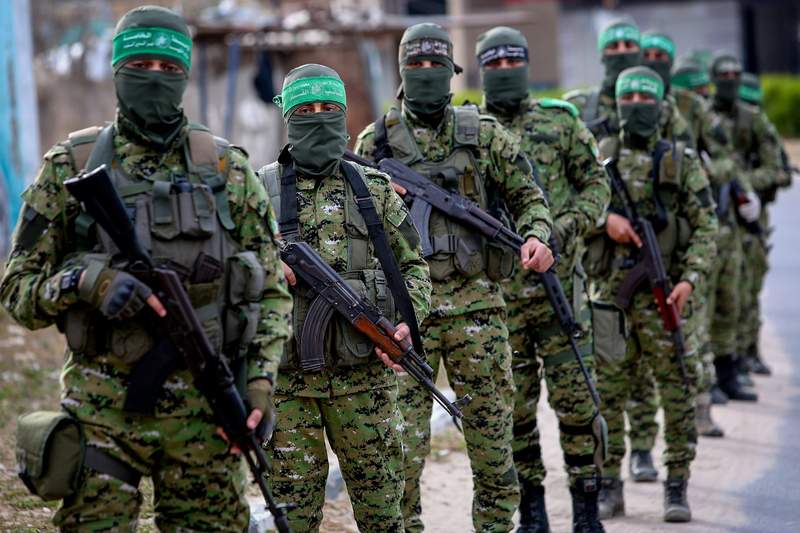
POLICY WIRE — Jerusalem — The long knives, it seems, have finally been drawn. Not with the overt thrum of tank treads or the clamor of air sirens, but in the hushed corridors where Israel’s top security minds chart a chillingly patient course. While global attention often fixates on the daily toll in Gaza, a less visible—but arguably more consequential—operation has slipped into motion: the methodical establishment of a special task force aimed squarely at locating and ‘neutralizing’ every last individual deemed directly responsible for the October 7 attacks. It’s a mission born of grim resolve, one that promises a decades-long pursuit across borders, likely reshaping intelligence operations and international law along the way.
It’s not just about retribution; it’s about deterrence, about sending an unambiguous message. Nobody thinks it’s a simple, tidy job. And no one expects it to be over by Christmas, or even next decade. This isn’t a retaliatory strike; it’s a cold, calculated commitment to a specific kind of justice—or vengeance, depending on your vantage point. Prime Minister Benjamin Netanyahu, never one to mince words when it comes to national security, put it starkly. He stated, in what sounded less like a public address and more like a directive to his inner circle, “We will chase them to the ends of the earth. Any hand stained with Israeli blood from that black day will be severed.” He isn’t known for empty threats, not in these matters, anyway.
The details remain sparse, as you’d expect. Operational security is paramount. But what intelligence analysts can piece together suggests a fusion of capabilities drawing from Mossad’s legendary long-reach operations, Shin Bet’s deep understanding of local networks, and various specialized military units. Their initial focus, according to unconfirmed reports circulating among diplomatic attaches, targets the commanders and planners, but the mandate extends down to those who pulled triggers and committed atrocities during the initial incursion. It’s an almost biblical commitment to ‘an eye for an eye,’ refined through the sharp edges of modern spycraft.
Defence Minister Yoav Gallant, always a pragmatist, offered a more understated, yet equally firm, perspective when pressed by foreign reporters. “Our goal is simple: ensure such an atrocity never repeats itself. That means eliminating the architecture of terror wherever it takes root,” he asserted. His statement hints at a scope beyond just the Gaza Strip, suggesting that commanders aren’t limiting their thinking to just one theater.
Because, really, how could they? The global diaspora of terror finance — and operational support means this ‘hunt’ won’t be confined to obvious hotspots. One can reasonably anticipate activities extending into the gray zones of the Middle East, perhaps even to nations like Pakistan, which has its own complex relationship with international anti-terror efforts while also serving as a regional pivot in the broader Muslim world. Their domestic security forces, though long accustomed to navigating treacherous geopolitical waters, will undoubtedly watch any extra-territorial actions with keen interest, and likely apprehension.
Consider the logistical headache: identifying each target, tracking their movements, and executing operations in sovereign territories—some friendly, some openly hostile. It’s a game of shadows, fraught with diplomatic hazards. According to data compiled by various international intelligence agencies, identifying the precise chain of command and individual operatives in decentralized organizations often requires years of painstaking work; on average, a high-value target (HVT) takes between 2 to 5 years from initial identification to successful neutralization, even with significant resources. That’s a marathon, not a sprint. This task force won’t be wrapping things up anytime soon.
What This Means
The establishment of this task force signifies a long-term recalibration of Israel’s security posture. Politically, it signals an uncompromising stance on accountability, one that’s designed to placate an Israeli public reeling from a perceived monumental security failure. But it also raises the political temperature significantly across the Middle East — and beyond. States might find their own sovereignty challenged, creating new points of friction. Economically, such extended, high-stakes intelligence operations aren’t cheap—they siphon vast sums from national budgets, which then don’t go to healthcare or education. It’s a quiet drain, often unnoticed until the treasury statements come out. And it could easily spark cycles of reprisal, creating more instability in an already fractured region. Nations in South Asia and the broader Muslim world, particularly those with significant diaspora populations or links to international Islamist groups, could find themselves under increasing pressure from both sides, forced to make tough choices about intelligence sharing and extradition requests. It’s a complicated business, navigating the expectations of a wounded neighbor and the sensitivities of one’s own populace, especially when Gaza’s humanitarian crisis casts such a long shadow. This kind of initiative isn’t about immediate victories; it’s about a deeply rooted sense of national honor, however grim the path to reclaiming it might be. It makes for uneasy diplomacy, particularly when Europe’s frayed nerves are already showing the strain.