


Europe’s Frayed Nerves: Mideast Conflict Casts Long Shadow Over Brussels’ Economic Hopes
POLICY WIRE — Brussels, Belgium — It isn’t the dramatic explosions or the distant rumble of jets that truly unsettles the corridors of power in Brussels; it’s the insidious, creeping doubt....

POLICY WIRE — Brussels, Belgium — It isn’t the dramatic explosions or the distant rumble of jets that truly unsettles the corridors of power in Brussels; it’s the insidious, creeping doubt. That particular unease now permeates the European Commission, leading its number-crunchers to effectively surrender a significant chunk of the eurozone’s economic swagger for 2026. The culprits? Familiar faces: a festering Mideast conflict, a global supply chain increasingly prone to apoplexy, and a general air of ‘what now?’ that dampens consumer and investor spirits faster than a tax hike.
No, they won’t tell you the sky is falling, not directly. That’s not how bureaucrats talk. But when the finely tuned instruments of economic prognostication start blinking red, when growth projections for Europe’s collective monetary zone get trimmed, it’s more than a mere footnote. It’s a reality check. We’re not talking about some academic exercise, you understand. We’re talking about jobs, about pension funds, about whether ordinary Europeans can afford to keep their homes warm next winter.
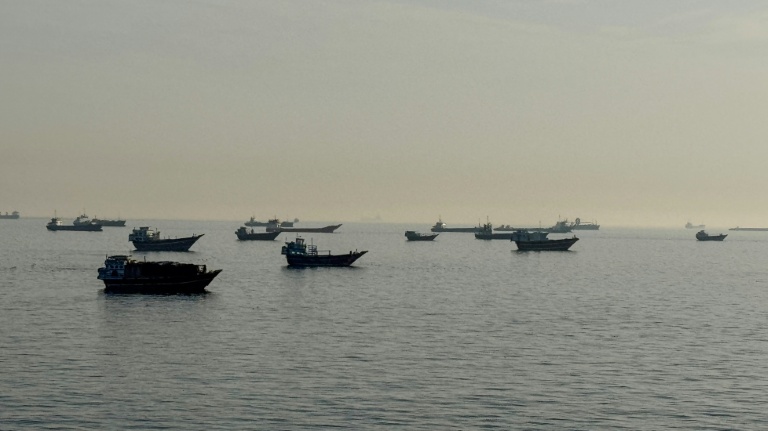
The latest prognosis isn’t exactly sunny: the European Commission, with all its statistical prowess, just lopped a noticeable chunk off its previous forecast for eurozone growth in 2026. Because—let’s be frank—how could they not? Shipping routes through the Red Sea? Utter chaos. Insurance premiums for maritime transport have reportedly jumped by as much as 600% in recent months for vessels navigating or rerouting from that contentious waterway, according to figures seen by industry insiders. And that costs money. Lots of it.
This isn’t just about delayed Christmas gifts, though that’s certainly part of the equation. This is about oil, about natural gas, about the sheer inertia of global trade grinding just a little bit slower. It means German factories get parts late, or at exorbitant prices. It means consumers tighten their belts, wary of the unpredictable. And it means less confidence all around.
Paolo Gentiloni, the European Commissioner for Economy, acknowledged the deepening gloom with his characteristic understatement. “The global environment has become considerably more challenging,” he observed recently, a diplomatic nod to the storm clouds gathering. “We’re navigating waters that demand flexibility and vigilance, but we aren’t immune to the broader currents of geopolitical instability.” That’s diplomat-speak for ‘this is a mess, and it’s hitting our bottom line hard.’
But the ramifications stretch well beyond Europe’s borders. For a nation like Pakistan, already wrestling with its own precarious finances and an enduring energy crunch, higher global oil prices sparked by Mideast skirmishes hit especially hard. It exacerbates an already strained balance of payments situation, pushes inflation higher, and further complicates Islamabad’s efforts to stabilize its economy. It’s not some abstract global economy they’re dealing with; it’s a very real crunch that affects millions. These distant troubles, often seen through a narrow Western lens, have incredibly tangible impacts across the Muslim world—fueling everything from inflationary pressures to societal unrest. It’s a complicated, volatile equation, where cause — and effect often loop back in unexpected, unwelcome ways.
And let’s not forget the politics. Germany, the eurozone’s traditional engine room, has already seen its industrial complex stumble through various energy shocks and supply bottlenecks, a persistent drag that Berlin simply can’t shake. Chancellor Olaf Scholz, ever the pragmatist, was blunt when quizzed about the EU’s economic prospects. “We cannot wish away global events,” he’s been known to say, a hint of resignation in his voice. “The cost of war, even distant war, is always paid, directly or indirectly. We’ve got to adapt, not just lament.” It’s true. They don’t adapt fast enough, often enough, one might argue.
What This Means
The shaved growth forecast isn’t just an adjustment of figures on a spreadsheet; it’s a symptom of Brussels coming to terms with an era of sustained global instability. It suggests a future where economic predictions are less about predictable cycles and more about immediate reactions to geopolitical earthquakes. Policymakers are effectively admitting they’re less in control, that external shocks dictate the pace of recovery and growth. This persistent volatility demands a pivot toward greater economic resilience—more diverse supply chains, less reliance on singular energy sources, and potentially, a more aggressive fiscal policy to absorb the hits. Failure to adapt leaves the eurozone perpetually vulnerable, its prosperity held hostage by faraway skirmishes. Because when distant embers ignite, Brussels eventually feels the heat.