


Mooreville’s Diamond Dogs Snatch Glory From the Jaws of Defeat, A Statehouse Whisper?
POLICY WIRE — PEARL, Mississippi — Sometimes, the story isn’t just about the final score. Sometimes, it’s about the sheer audacity of expecting victory when all signs point to an honorable...

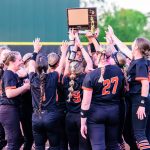
POLICY WIRE — PEARL, Mississippi — Sometimes, the story isn’t just about the final score. Sometimes, it’s about the sheer audacity of expecting victory when all signs point to an honorable defeat. And sometimes, just sometimes, it’s about a rural Mississippi town pulling off a magic trick—making a championship appear when it looked like it’d been thoroughly tucked away by the competition.
Mooreville, a name that doesn’t usually make national headlines (unless a catfish larger than a small car is reeled in, perhaps), found itself unexpectedly at the center of the Mississippi sports universe last week. After pummeling their rivals in Game 1, they stumbled. Big time. Day two saw their bats go colder than a politician’s handshake in a voting booth. Just one solitary run, four measly hits, limping into the sixth inning of the MHSAA 4A championship series at Trustmark Park. Anyone watching could’ve bet the farm Poplarville was about to force a decider.
But that’s where the script usually gets tossed, isn’t it? Coach Derek Thompson, a man whose tenure has likely seen more high-pressure innings than most folks have seen decent sunsets, wasn’t panicking. And why would he? His troops, his baseball boys, they’d navigated a brutal schedule, a new classification, and enough bumps in the road to shake a lesser team right off the asphalt. Thompson, who’d seen five starters walk off to graduation the previous year, leaving big shoes and even bigger expectations, simply believed. He’d rebuilt. Because that’s what coaches do.
“Look, when you’ve lost five senior starters, pitched a hundred-plus innings, and then MHSAA ups your classification—to show up here, again, and win it? It tells you everything you need to know about the heart of these kids,” Thompson remarked later, likely still a bit hoarse from yelling. He knows the drill. It isn’t just about the raw talent; it’s the intangible stuff. The stubborn refusal to quit. Freshman Eli McDaniels, who’d emerged as something of a breakout star himself, echoed the sentiment. “I’m telling you, when that momentum started to shift, I never had a doubt. Not one bit,” he said, likely with the calm confidence of someone twice his age. “Everybody played their part. We just don’t do one-man shows around here.”
Then, the bottom of the sixth. The bats finally, gloriously, awoke. Three runs. Three swift, devastating runs. Poplarville, whose 28-12 record suggested they weren’t exactly pushovers, found themselves looking up at a 4-2 scoreboard, all their earlier dominance washed away like chalk lines in a summer rain. The Troopers, now 30-8, sealed their 10th overall state title, a remarkable feat spanning four different classifications. And just for context, that 10th title, for a school of Mooreville’s size, puts them in rare air—a significant achievement in Mississippi high school sports where, according to the National Federation of State High School Associations, participation in baseball consistently hovers around the 480,000 mark nationwide, fiercely competitive territory for thousands of communities.
But the real juice of the story, as we old hacks say, is in what this kind of victory does for a place. It’s not just a statistic on a sports page. It’s a shot in the arm. A narrative for the locals. It means something. Think about it: a dramatic comeback, defying expectations after moving up a class—it’s the stuff legends are made of, etched into the collective memory of a town that suddenly feels just a little bit taller. This victory, this unexpected triumph from the brink, resonates. It really does.
And across oceans, in places like Pakistan or Indonesia, where communal pride often clings to the successes of local cricket teams or national football squads against overwhelming odds, a small town’s rallying cry isn’t so different. The fervor, the unity, the almost religious devotion to a team embodying community spirit—it’s a universal language, spoken in roars and tears, linking distant cultures through the simple, powerful act of watching young men battle for glory. Maybe that’s the true policy implication here: sport as an unexpected diplomat of emotion, unifying people within and beyond borders.
What This Means
The Mooreville baseball team’s dramatic MHSAA 4A championship isn’t just another trophy for the school’s already crowded case; it’s a palpable jolt to the town’s civic pulse. Economically, while not a major tourist draw, a championship win can subtly elevate a school’s profile, potentially influencing future enrollment and the morale of the local community. Parents might see a thriving athletics program as an indicator of broader school strength, affecting property values and local commerce in a tight-knit region. Politically, well, it’s less about policy change — and more about soft power. Local politicians might mention the success in town hall meetings; it becomes a point of pride, a unifying thread that transcends the usual municipal squabbles. it reinforces the narrative that Mississippi high school sports aren’t just producing athletes but also forging resilience and character—qualities valuable in any walk of life. Success stories like these, particularly when a team punches above its weight (moving up to 4A from 3A and winning, remember?), also keep the competitive spirit of the MHSAA system buzzing, sometimes prompting state-level discussions on how to better support emerging athletic programs and facilities in smaller districts.