


Titan Tango: Wembanyama-Holmgren Rivalry Reaches Peak, Redefining Global Sport’s Economic Frontier
POLICY WIRE — San Antonio, United States — A clash of two impossibly long shadows across the NBA hardwood isn’t just a spectacle for basketball aficionados; it’s an emergent economic force, a...

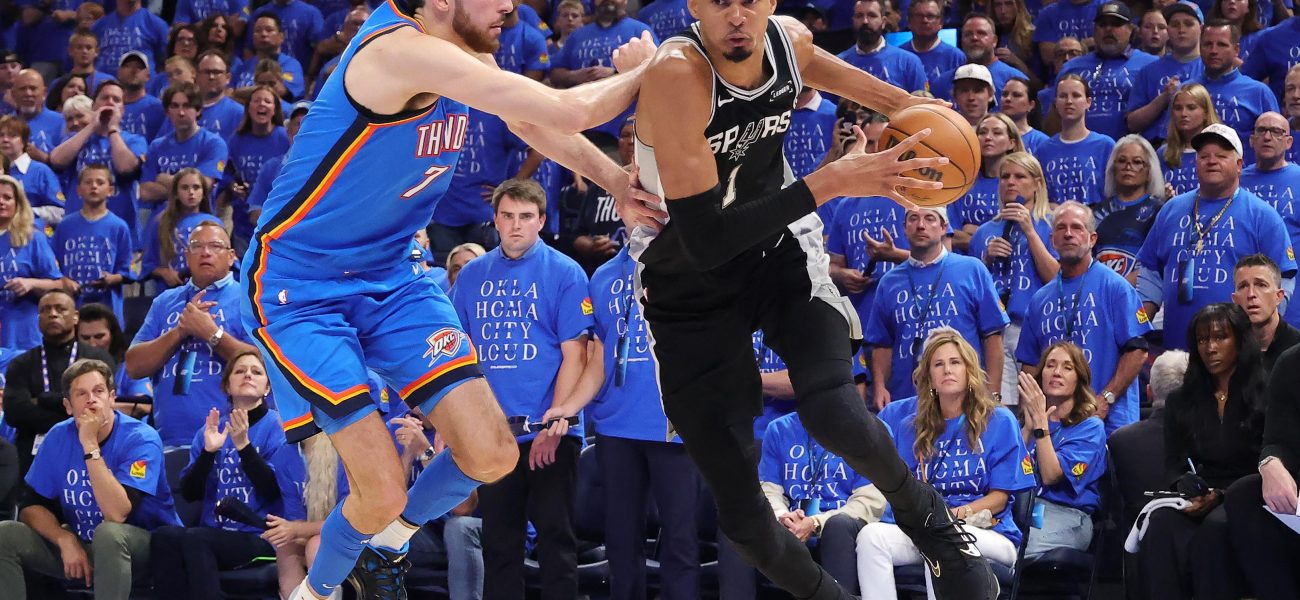
POLICY WIRE — San Antonio, United States — A clash of two impossibly long shadows across the NBA hardwood isn’t just a spectacle for basketball aficionados; it’s an emergent economic force, a battle for future market share, playing out with dunks and snarky glances. Victor Wembanyama of the San Antonio Spurs and Chet Holmgren of the Oklahoma City Thunder don’t just play against each other; they appear to play through each other, creating a high-stakes, high-octane narrative that’s rapidly reshaping global sports engagement.
It’s not merely about the individual brilliance – though there’s plenty of that. Think of it as a meticulously choreographed ballet of economics — and psychology. The traditional sports analyst might focus on box scores, on how Wembanyama dropped 41 points and 24 rebounds in their recent Western Conference Finals opener, clinching a double-overtime victory against Holmgren’s reigning champions. But look closer. This isn’t just a rivalry; it’s a living, breathing commodity, constantly appreciating.
These aren’t your grandfather’s seven-footers. Holmgren, at 7’1″, redefined the ‘unicorn’ with his ability to anchor a defense and consistently hit shots from beyond the arc. Last season, he connected on 36.2 percent of his three-point attempts, according to NBA.com statistics, demonstrating a versatile offensive package previously unthinkable for a player of his stature. And then there’s Wembanyama, a player often described less as a physical anomaly — and more as a species breakthrough. At 7’5″ with an eight-foot wingspan, he renders many basketball concepts obsolete, playing like a glitch in the simulation. He’s simply not supposed to do the things he does.
Their feud wasn’t born under the bright lights of an NBA playoff stage. Oh no. It dates back to the gritty, unforgiving battlegrounds of international youth tournaments. The 2021 U19 FIBA World Cup gold medal game, specifically. The United States, led by Holmgren, triumphed over Wembanyama’s French squad. Holmgren even snagged the MVP trophy, a bitter pill Wembanyama has apparently been savoring ever since.
Marc Spears, the well-connected ESPN reporter, cut right to the chase last fall. “I was told by somebody inside that room that Wemby is motivated by Chet. Chet having one up on him on the championship,” he remarked, framing a nascent resentment that seems to fuel Wembanyama’s hyper-competitive drive. And you see it, don’t you? In the hard fouls, the pointed glares, the almost gleeful reactions to Holmgren’s misses.
Because, really, when you watch Wembanyama, you’re not just watching a basketball player. You’re witnessing the commercial distillation of spite — and ambition. He missed out on a rookie season playoff berth. Holmgren got injured — and sat out his, but returned to a championship the next year. It gnaws at him, it truly does. This isn’t a gentleman’s game for Wembanyama; it’s personal.
This escalating animosity, while intense on the court, spells gold for the league off it. Adam Silver, the NBA Commissioner, commenting last week, seemed to understand this dynamic well: “These personal contests, when they captivate audiences globally, they don’t just sell tickets; they catalyze economic interest, opening doors for the league in markets we’ve long cultivated, from Riyadh to Karachi.” It’s not hyperbole; this global reach is an essential strategic pillar.
For nations like Pakistan, with a burgeoning youth population and an ever-increasing appetite for international sports, these epic individual rivalries don’t just generate viewership; they ignite an aspirational connection. A youngster in Lahore sees Wembanyama defying gravity and Holmgren swatting shots, and suddenly, the sport isn’t some distant American pastime, but a relatable, human drama played on a grand stage. It sparks investment interest, fosters new fan bases, and lays the groundwork for merchandise sales and media deals that funnel millions back to the league.
What This Means
This budding rivalry between Wembanyama and Holmgren extends far beyond the Western Conference Finals; it’s a profound market differentiator for the NBA. In a fractured global media landscape, compelling narratives like this become indispensable currency. For a league that’s aggressively pursuing international growth, particularly in the Middle East and South Asia—regions with massive young populations and burgeoning disposable incomes—such personalized, high-stakes feuds are marketing gold. They transcend language barriers, making sport an easily digestible, universally thrilling story. They’re not just selling games; they’re selling emotional investment, loyalty, and a shared experience, all of which directly translate into massive commercial returns and expanded geopolitical influence for American cultural exports.
Consider the broader implications for international sports diplomacy. When players from France and the United States engage in such a compelling, personal battle, it subtly reinforces connections, however symbolic. It might seem abstract, but these connections—cultivated through shared fandom—can actually grease the wheels for future business and cultural exchanges, making it easier for institutions like the NBA to forge strategic partnerships. And they do it by packaging elite competition as pure, unadulterated drama. We’re watching a phenomenon; these aren’t just ballplayers, but walking, talking economic drivers.
The intensity has been ratcheting up for years, with Wembanyama now holding a narrow 5-4 edge in head-to-head NBA matchups after that thrilling Game 1 victory. The NBA isn’t merely hosting basketball games; it’s orchestrating a spectacle, a theatrical play that leverages personal ambition for collective financial gain. The fact that the protagonists are generational talents merely amplifies the box office returns. And as these titans collide again and again, policy-wire.com will be watching not just for the scores, but for the economic fault lines they reveal across the global sporting ecosystem. It’s high-impact drama with even higher-impact finances.