


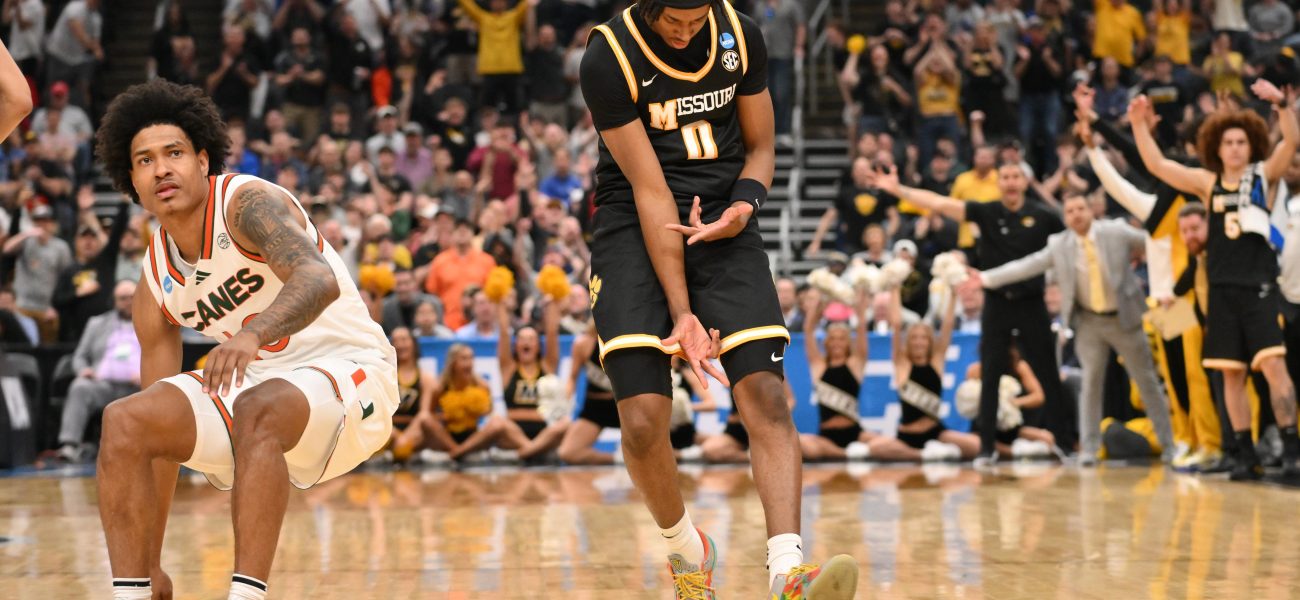
Tallahassee’s Burden: Anthony Robinson II Carries FSU’s Hope on a Hard-Worn Jersey
POLICY WIRE — Tallahassee, FL — It’s late March, and the air here still holds that sticky, almost pre-ordained humidity, a sort of meteorological omen. But for Florida State...

POLICY WIRE — Tallahassee, FL — It’s late March, and the air here still holds that sticky, almost pre-ordained humidity, a sort of meteorological omen. But for Florida State University basketball, the forecast has been less about sunshine and more about an interminable winter. That’s where Anthony Robinson II steps in, a hometown kid coming back to what some are already calling a salvation tour. Because, let’s be blunt: folks here in Tallahassee aren’t just hoping he plays well; they’re expecting him to single-handedly recalibrate the cosmos of FSU basketball. It’s an expectation as old as sport itself, the local hero returning—a narrative as compelling, and often as fraught, as a young cricketing prodigy shouldering the hopes of a nation like Pakistan’s avid fans.
Robinson isn’t some raw recruit plucked from high school, mind you. He’s a veteran, three years deep in the grind of SEC play at Missouri. He averaged almost nine points a night last season, along with 3.0 assists — and more than a steal. Solid numbers, no argument there. But FSU Head Coach Luke Loucks—a man still relatively fresh in the big chair—didn’t just chase Robinson for his stat line. No, Loucks went all in because he saw a higher ceiling, a point guard yet to truly uncork his full potential. He wants more than stats; he wants leadership, a vibe shift.
But leadership isn’t just an aspirational slogan. It’s earned, — and it often begins on the court, dirtying up the uniform. And Robinson, it seems, likes a good scrap. Loucks, never one to mince words, made his intentions perfectly clear when the signing was announced: “We expect him to step in right away and lead, not just on the court but in how we work, prepare, and represent Florida State every day.” The weight of an entire program, neatly packaged in one sentence, draped over a 6-foot-3 point guard. It’s quite the welcome home.
The previous season’s narrative belongs to Robert McCray V, another FSU point guard who found his stride, almost upset Duke in the ACC tournament, and nearly pushed the Seminoles into the Big Dance. McCray, like a savvy diplomat, bent opponents to his will. His assist numbers soared in his senior year, up more than one per game from his junior stint. Can Robinson do that? The flashes are there. He dropped a career-high 10 dimes against Kentucky in January 2026. During his junior year at Missouri, Robinson managed an impressive 1.6 steals per game, ranking him seventh across the SEC — a defensive metric that often flies under the radar but tells you plenty about sheer will and tactical acumen, per official conference statistics.
Turning Robinson from primarily a defensive menace—an SEC All-Defensive Team selection, mind you—into a primary orchestrator of the offense, that’s the rub. He’s a “head-of-the-snake” defender, Loucks proudly stated to local hacks, the kind of guy who’ll hound opposing guards all night. With a cadre of long, athletic wings, Florida State could morph into an absolute nightmare on defense. That’s Loucks’ vision. But scoring is still the ultimate objective, and generating buckets means having a general who can consistently make things happen. The stakes are immense, as any observer of college athletics will tell you—from the fierce regional rivalries in the States to the intense, almost gridiron geopolitics that defines how power is perceived.
But there’s more. This isn’t just a transaction, a new player plugging into a new system. It’s deeply personal. Robinson grew up here, went to Florida State University High School. He left for Missouri, yes, lured by coaches with FSU ties. Now he’s back for his final year of eligibility. Loucks even brought in Robinson’s younger brother, Amaree. It’s a reunion, a family affair. And perhaps that’s why Loucks gave him the keys, banking on that unspoken bond to generate magic. “Anthony is exactly what you look for in a point guard — tough, vocal, and someone who naturally commands respect,” Loucks noted. “He’s grown a lot over his three years at Missouri, and bringing him back home to Tallahassee means a lot to our program.”
He’s got SEC mileage on his odometer, a specific role carved out, and a chance to finish his collegiate journey right where it began. Not every player gets a narrative arc this clean. It’s almost like something out of a pulp fiction novel—the prodigal son returns, aiming to fix what’s broken, hoping to bring the NCAA Tournament back to Tallahassee, something that’s been missing this decade. The pressure is suffocating. But that’s the deal. And if Robinson can pull it off, his story will be the kind whispered in local barbershops for years, perhaps even inspire tales from beyond these shores, stories where unlikely heroes turn the tide, proving that some dreams never really die, they just wait for the right moment—and the right player—to bring them back to life.
What This Means
Robinson’s arrival is less a minor roster change — and more a high-stakes gamble by Coach Loucks. For a program stuck in neutral, a local hero’s homecoming can inject unparalleled enthusiasm, both from fans in the stands and, significantly, from potential donors. Economic implications are straightforward: winning games means more ticket sales, better NIL opportunities for players, and increased overall program funding—money that can recruit more talent and upgrade facilities. Politically, within the ACC, FSU needs to reassert itself. Constant losing erodes influence, weakens recruiting pitches against bluebloods, and complicates conference realignment maneuvers (should they arise again). Loucks, in his second year, needs results. He’s tied his wagon to Robinson. If it works, he’s a genius. If it falters, well, the coaching carousel always finds a new spin. The unforgiving circus of collegiate sports leaves little room for sentimentality, even with compelling personal stories. Robinson’s success isn’t just about FSU; it’s a test of Loucks’ vision and the program’s strategic direction, particularly in a conference perpetually reshaping its identity.