


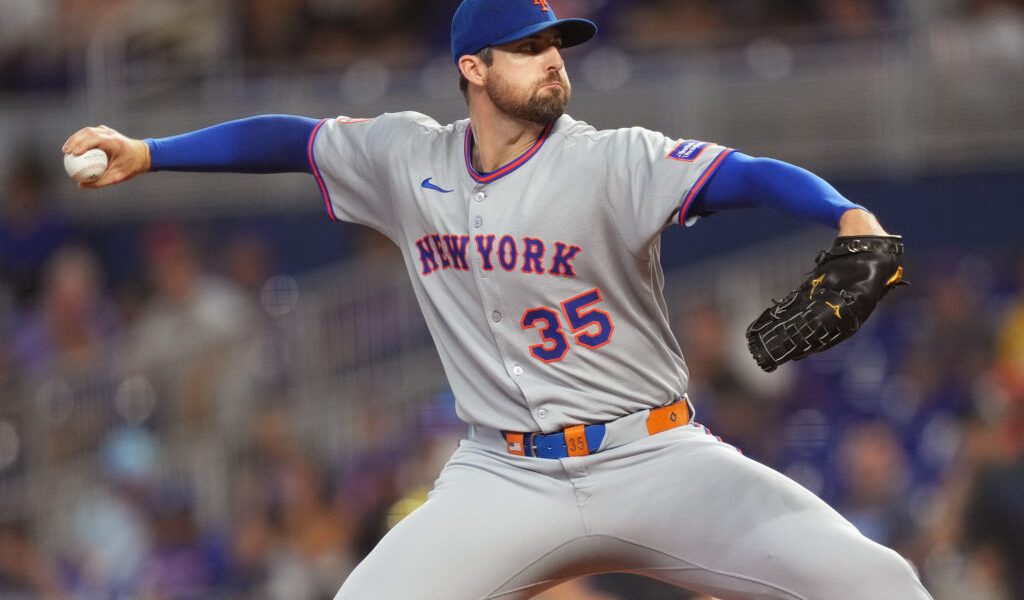
Queens’ Grim Fortune: A Prospect’s Abrupt Ascent in the Unforgiving Circus of New York Baseball
POLICY WIRE — New York, USA — It wasn’t the triumphant fanfare most young phenoms dream of. No, the call-up of left-handed pitching prospect Zach Thornton to the New York Mets this week felt...

POLICY WIRE — New York, USA — It wasn’t the triumphant fanfare most young phenoms dream of. No, the call-up of left-handed pitching prospect Zach Thornton to the New York Mets this week felt less like a celebration and more like a tactical deployment into a crisis zone. Another ace — this time Clay Holmes — had just been laid low, fractured fibula and all, rendering him a sidelined casualty of the unrelenting Major League Baseball grind. The casualty report is grim. And it just kept getting longer.
For a club perpetually teetering on the brink of ‘next year’s’ promise and this year’s existential dread, Thornton’s sudden debut against the Washington Nationals isn’t merely an opportunity. It’s a dire summons. He’s not just pitching; he’s a Band-Aid slapped on a gaping wound, expected to staunch a bleeding rotation for a fan base weary of perpetual heartbreak.
Thornton, whose trajectory saw him quietly racking up solid numbers — a rather respectable 3.16 earned run average across seven starts split between Double-A and Triple-A this season, according to minor league stats aggregators — wasn’t exactly obscure. He’s been orbiting around the fringes of the Mets’ top-ten prospect list, an arm many figured would eventually make an impact. But not like this. Never like this. He’s getting his shot because someone else—someone crucial—just buckled under the pressure (or a line drive, in Holmes’s case).
It’s a brutal introduction to the big leagues, isn’t it? The kind that asks you to not only survive but thrive under the brightest, most unforgiving lights in American sports, all while the house is seemingly on fire around you. Many veterans would balk. Many young arms, too. But the club’s general manager, David Stearns, a man known for his unflappable poker face and long-term vision, isn’t pulling any punches. “Look, we didn’t want to see Clay go down, obviously. That’s a serious blow to our plans,” Stearns told reporters, a hint of steel in his voice. “But you train these kids for moments like this. They’re here to step up. Zach’s earned this opportunity, even if the circumstances aren’t ideal.”
But can a rookie truly shoulder such an immense, immediate burden? Can he transform the mood, not just in the dugout, but across a city? Because here’s the thing about New York sports—it’s never just about the game. It’s about the narrative, the hope, the temporary reprieve from the relentless urban churn. And when things go south, boy, do they go south. Hard.
This isn’t merely about wins — and losses; it’s about the emotional capital of an entire metro area. Baseball, after all, isn’t just a pastime here. It’s a foundational piece of the identity, a sort of urban relief valve, or sometimes, another pressure point. Just like a fledgling government, wrestling with unforeseen crises and internal dissent, finds itself abruptly promoting a relatively untested minister to a critical portfolio—they’re counting on raw talent, tempered by minor successes, to somehow miraculously hold the line.
And that comparison to nascent states isn’t entirely frivolous, either. Consider the volatile, high-stakes political landscapes we cover daily in places like Pakistan, where youthful enthusiasm and unproven leadership are often thrust into critical roles not by design, but by necessity—by the sudden exigencies of economic hardship or political instability. The weight of expectation on an individual in Lahore or Karachi can, in its own way, mirror the immense pressure on a young arm stepping onto the mound at Citi Field.
Veteran sports columnist Peter Gammons, ever the oracle of baseball’s deeper truths, once remarked on the fickle nature of such moments. “These debuts, they’re almost always ugly, full of jitters. But sometimes, sometimes you see a guy, even just for an inning, — and you just know. He’s got it. Most of the time, though? It’s just another turn of the churn.” Thornton, for his part, remains tight-lipped and focused, a strategy likely reinforced by team handlers. He’s young, he’s ambitious, and he’s undoubtedly carrying the weight of expectation—not just his own, but of a sprawling organization and its restless, expectant fans.
What This Means
The sudden promotion of Zach Thornton speaks volumes about the fragility of modern sports rosters and the escalating costs of maintaining competitive advantage. Economically, major league teams are operating on razor-thin margins of talent development versus immediate acquisition. The injury to a key player like Holmes doesn’t just impact a pitching rotation; it sends ripple effects through payroll allocation, trade deadlines, and even potential revenue from playoff runs. Organizations, like the Mets, are investing heavily in scouting and minor league infrastructure—essentially, an internal supply chain for talent—to mitigate the devastating financial and performance impact of unforeseen setbacks.
But this isn’t just about money. It’s about strategy. Relying on an untested arm underscores a particular policy choice: developing from within, even when it feels like a desperation play. This contrasts with a ‘buy-it-all’ approach, often unsustainable for long periods, seen in other elite athletic institutions. For smaller economies, or nations attempting to foster self-sufficiency rather than relying on external aid or imports, this ‘grow-your-own-talent’ philosophy might ring a familiar bell. The pressure is on Thornton not just to perform, but to validate this strategy. His performance tonight isn’t just a stat line; it’s a referendum on resource management in the high-stakes theatre of global sports. It’s about finding long-term solutions in the short-term chaos, a lesson relevant to policy-makers from Baton Rouge to Balochistan.
And, if he somehow catches fire, if this young arm indeed offers a spark, it will reshape the economic calculus for future off-seasons. He’ll become a more valuable asset, certainly. A potential trade chip, perhaps. Or, better yet, a cornerstone of a revitalized roster, freeing up precious capital for other areas—all from a spot start necessitated by sheer bad luck. That’s the real power play.