

Blood for Oil, and Baby Formula: New Mexico’s Peculiar Profit from Mideast Storms
POLICY WIRE — ALBUQUERQUE, N.M. — It’s a bitter cocktail, isn’t it? While geopolitical fires flare a hemisphere away—what some casually refer to as an ‘Iran War’ in the halls of power—New...

POLICY WIRE — ALBUQUERQUE, N.M. — It’s a bitter cocktail, isn’t it? While geopolitical fires flare a hemisphere away—what some casually refer to as an ‘Iran War’ in the halls of power—New Mexico finds its coffers brimming. The Land of Enchantment, or rather, the land of oil and gas, is watching a fiscal miracle unfold, born from the discomfort of a world on edge. Millions, destined for roads and schools, child care and food benefits, trickle down from global instability, making for a strange, morally complex windfall.
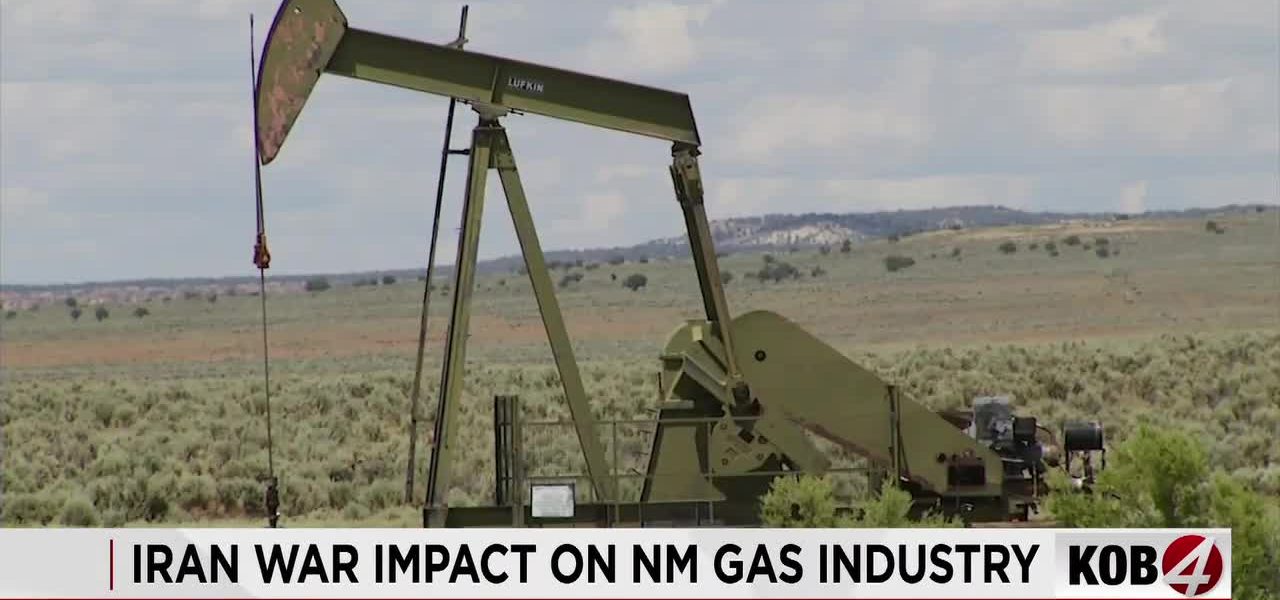
And when we say millions, we’re not talking loose change. This isn’t just about a good year for oil; it’s about a global squeeze pushing crude prices sky-high. Analysts at Policy Wire have crunched the numbers, and the simple truth is stark: for every dollar tacked onto a barrel, New Mexico nets another $59 million. By June’s end, if the current trajectory holds, the state could haul in an eye-watering $850 million in oil revenue. Because let’s face it, being the nation’s second-biggest oil producer, behind only Texas (you know, the other big one), means you’re deeply entangled in the ebb and flow of the world’s energy woes. They’re pumping over 2 million barrels a day here. That’s a lot of oil.
It’s a curious state of affairs. Lawmakers here are looking at overflowing piggy banks, dreaming of expanded healthcare, of universal childcare, of robust food security programs. “These funds aren’t abstract,” stated State Representative Nathan Small, a Democrat who’s watched this revenue stream swell. “They translate directly into vital services. They allow us to truly invest in New Mexicans, particularly our most vulnerable populations. Imagine the generational impact of early childhood education that reaches every family that needs it. It’s a genuine opportunity.” He makes a strong case for where the money could go. It sounds promising, right?
But Small—a shrewd observer—doesn’t stop there. He immediately pivots to the stark human cost of this sudden prosperity. And it’s a punch to the gut for anyone filling up their tank. “I really want to stress the increased costs to all New Mexicans, the pain at the pump, the fact that diesel in particular has spiked, and the increase in fertilizer costs,” he lamented. “These are harms that can’t be undone, except by ending the war with Iran.” See, that’s the rub. Your gas tank feels the burn even as the state treasurer whistles a happy tune. It’s a boom for some, a pinch for most.
Consider the delicate balancing act. On one hand, you’ve got Pakistan, a country perpetually navigating its own complex geopolitics and battling endemic inflation, struggling with global energy prices that squeeze its imports and its people. For them, every uptick in oil is a national crisis. Then you’ve got New Mexico, half a world away, funding social programs thanks to that same global pressure. It’s an economic chain reaction, raw — and direct. What happens in the Strait of Hormuz—or wherever the latest energy flashpoint is—echoes loudly in the gas prices outside an Albuquerque convenience store. These aren’t isolated incidents; they’re all knotted up in the precarious global supply chains, affecting everything from how much folks in Karachi pay for rice to how much a parent in Santa Fe shells out for fuel.
And let’s not pretend this isn’t existential for New Mexico. The New Mexico Oil and Gas Association—not a disinterested party, sure, but their numbers don’t lie—notes that revenues flowing into the state’s trust funds make up nearly half of the state’s general fund. That’s a whopping reliance on a resource notoriously volatile — and tied to the planet’s least predictable corners. Because as Governor Michelle Lujan Grisham recently quipped, with a hint of an arched brow during a private policy brief, “One day we’re talking about surplus, the next we’re bracing for impact. You’ve got to spend it like you’ll never see it again, but save it like it’s your last.” She’s seen these cycles before. The good times rarely last indefinitely.
What This Means
Politically, this situation’s a high-wire act for state leadership. They’re tasked with managing public expectations—all this money should fix everything, right?—while simultaneously battling the very inflation that helped generate it. It’s an awkward narrative: celebrate the economic boon while constituents grumble about skyrocketing costs for essentials. For New Mexico’s leaders, the temptation is strong to greenlight new programs, expanding state services that can be politically popular. But history’s full of commodity-dependent states caught flat-footed when the prices eventually tank.
Economically, the influx creates a distinct challenge. While the state can bolster critical infrastructure and social safety nets—and that’s important, profoundly so—it also fosters a dependence that inhibits genuine diversification. The easy money from oil can, at times, stunt the urgency for investing in renewable energy sources or new economic sectors. It’s a classic resource curse in miniature: too much cash from one source means other, harder-won opportunities get sidelined. This dependence on hydrocarbon markets, driven by events in places like the Persian Gulf, makes the state’s financial health a function of faraway instability. It’s prosperity built on shifting sands, always just one proxy war or a new oil field discovery away from an abrupt, uncomfortable realignment. And that’s the unsettling truth no one likes to admit: sometimes, for some, trouble half a world away really does pay dividends.