


The Unassuming Architect: Rookie’s Grind Game Forces Chicago’s Hand
POLICY WIRE — Chicago, USA — In an era where everything seems to demand an instant spectacle, where viral moments overshadow sustained effort, the slow, methodical accretion of genuine value often...

POLICY WIRE — Chicago, USA — In an era where everything seems to demand an instant spectacle, where viral moments overshadow sustained effort, the slow, methodical accretion of genuine value often goes uncelebrated. But then, a phenomenon arrives that punches through the noise, forcing even the most jaded observer to sit up and take notice. And sometimes, it’s not the fireworks. Sometimes, it’s just the relentless tapping of a quiet drum.
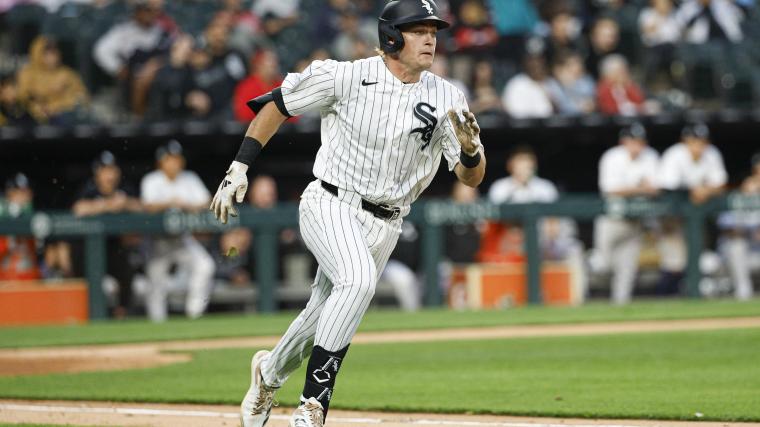
For the Chicago White Sox, a franchise that’s spent more years wandering in the desert of mediocrity than anyone cares to admit, that persistent beat now emanates from Sam Antonacci. He’s not a thunderous home run threat. He won’t steal a game with a diving catch that defies physics. Instead, he’s doing something far more subversive: he’s getting on base. Relentlessly. With an almost infuriating consistency that’s reshaping how the team — and maybe even its skeptical fanbase — views success.
It’s early May, and the White Sox, against all conventional wisdom, find themselves tangled in a surprisingly competitive knot atop the American League Central. This wasn’t in anyone’s projections. And you can point fingers at a few things, but if you’re honest, much of that unexpected traction stems from the unglamorous brilliance of this 23-year-old rookie. He’s got a knack, you see, for turning pedestrian plate appearances into strategic victories.
“He doesn’t have the ego for the highlight reel,” remarked a White Sox front office insider, speaking on background, “but you try managing without him on base four or five times a night. He’s building us a bridge, one brick at a time.” It’s true. The kid isn’t chasing glory. He’s chasing contact. He’s fouling off tough pitches until the pitcher cracks. Because he understands the game’s subtle mathematics.
His ascent, too, hasn’t followed the traditional gilded path of top prospects. Antonacci first sharpened his skills far from the national spotlight, dominating junior college pitching before a quick transfer and a surprisingly swift drafting. He just kept forcing the issue, performing at every level until ignoring him became a losing proposition for the organization.
Consider the data. According to official Major League Baseball statistics, Antonacci boasts an on-base percentage of .391 across his initial 94 major league at-bats. That’s a stark departure from the league average, particularly for a player with barely a month’s experience at this brutal level. He’s not swinging for the fences, he’s swinging for sustainability. And he’s getting hit, taking walks, battling—just whatever it takes. It’s a pragmatic, almost Spartan approach to hitting that belies his tender years.
His quiet performance offers a poignant counter-narrative to the conventional wisdom dominating American sports media: that only explosive power or flamboyant talent truly matters. But Antonnaci’s value comes from somewhere else. It comes from keeping innings alive, from wearing down opposing arms, and from making the guys behind him better by putting ducks on the pond. It’s the kind of diligent, patient work ethic that resonates with, say, a Pakistani immigrant building a business from the ground up—focused not on immediate grandeur, but on steady, unyielding progress, understanding that true legacy is forged in consistency, not flashes. Strategic patience, after all, isn’t limited to geopolitics.
“We prep for the sluggers, for the guys who launch missiles,” one frustrated opposing pitching coach grumbled after a recent contest. “Then Antonacci gets up there, fouls off three pitches, — and singles through the shift. It’s like death by a thousand paper cuts, but they all bleed the same.” That’s the thing, isn’t it? Small cuts accumulate. And eventually, a thousand tiny wounds bring down even the biggest giants.
His journey to the majors, swift as it’s been, carries a distinct whiff of the ‘self-made’ narrative, a flea market dream made good. From the cornfields of Springfield, Illinois, to dominating community college pitching (.515 with 14 homers and 103 RBIs in his 2023 sophomore year, for crying out loud!), he’s demonstrated that innate talent, when coupled with an almost obstinate desire to simply get it done, can bypass entire organizational hierarchies.
What This Means
Sam Antonacci isn’t merely a baseball story; he’s a case study in overlooked efficacy. In the broader policy sphere, this translates to an appreciation for sustained, practical contributions over flash-in-the-pan initiatives or charismatic but ultimately unproven leadership. Economies, for instance, don’t grow on catchy slogans; they expand through consistent productivity, reliable supply chains, and individuals who show up, do the work, and get the goods to market—no matter how unsexy that sounds.
Politically, too, the appeal of a ‘Sam Antonacci’ figure lies in their unyielding adherence to foundational principles: discipline, resourcefulness, and a focus on incremental gains. Such traits often go unrewarded in a political landscape obsessed with rapid-fire news cycles — and performative outrage. Yet, when faced with genuine challenges—a floundering economy, complex social issues, even just a subpar baseball team—it’s the steady hand, the one who can grind through the tough at-bats, who eventually stabilizes the ship. Antonacci’s quiet eruption is more than just a baseball phenom; it’s a lesson in valuing the pragmatic architect over the showman, a lesson that perhaps we, as a society, keep forgetting, and need to relearn.