

Germany’s Green Gamble Goes Sour: Experts See 2030 Climate Dreams Slip Away
POLICY WIRE — Berlin, Germany — It wasn’t supposed to be this messy. For years, Germany carried the environmental torch, pioneering the Energiewende—a grand shift away from nuclear and fossil...

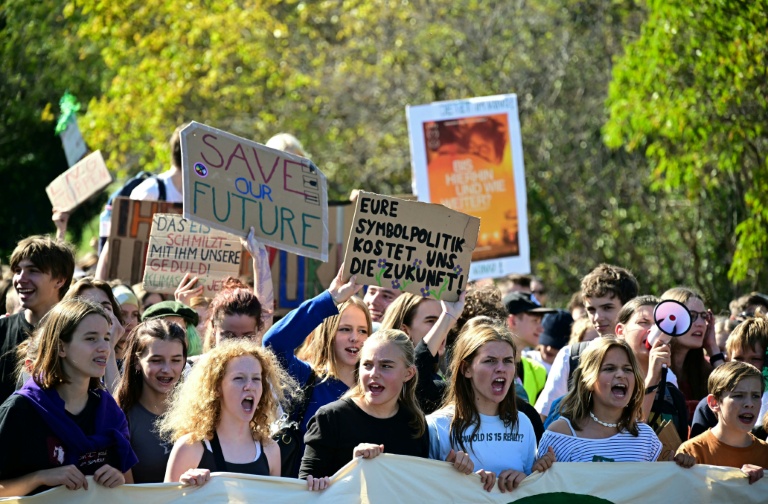
POLICY WIRE — Berlin, Germany — It wasn’t supposed to be this messy. For years, Germany carried the environmental torch, pioneering the Energiewende—a grand shift away from nuclear and fossil fuels—and championing ambitious climate pledges across Europe. Now, instead of basking in green glory, the economic powerhouse finds itself face-planting, hard. Experts, the kind who don’t sugarcoat anything, are laying it bare: Germany’s lofty 2030 climate goals? Forget about ’em. They’re dead in the water, unless Berlin pulls a rabbit out of a very depleted hat. And good luck with that, given the current mood.
The writing’s been on the wall, etched in the sooty exhaust of a revived coal plant and the whirring of stalled bureaucratic gears. But a fresh wave of analysis paints a particularly grim picture. They’re not just whispering ‘difficulty’; they’re screaming ‘catastrophe averted only by a miracle.’ The coalition government, affectionately—or perhaps sarcastically—dubbed the ‘traffic light’ because of its Green, Social Democrat, and Free Democrat constituents, is caught in a political headlock. The Greens want faster, further, harder. The FDP (Free Democrats), ever the champions of industry, are fretting about the bottom line. It’s a genuine mess, isn’t it?
Because the numbers don’t lie. Germany’s latest official figures, according to a recent analysis by the Agora Energiewende think tank, indicate the country needs to accelerate its annual CO2 reduction by an average of three times its current rate to hit the 2030 target. That’s not a slight adjustment; it’s a wholesale gear change, one that no one seems eager to initiate. “We’re in a tough spot, no one’s denying that,” admitted Robert Habeck, Germany’s Minister for Economic Affairs and Climate Action, last month, though perhaps with a touch more public optimism than is warranted behind closed doors. “It’s a tricky balancing act between industry needs and our planet’s demands, and frankly, we haven’t quite mastered the tango yet. But we’re working on it, absolutely we’re.”
The problem is, working on it might not be good enough. This isn’t some abstract projection. We’re talking hard facts, immediate impact. Factories aren’t suddenly going to switch to renewables overnight. Homes won’t instantly insulate themselves. And the current policy mechanisms? They just aren’t cutting it. It’s like bringing a spoon to a snowball fight—the tools are completely inadequate for the job at hand.
But Germany’s struggle isn’t just a domestic squabble. It ripples outwards, washing over the very idea of collective climate action. Europe’s grand environmental ambitions rely heavily on its largest economy pulling its weight. When Germany, with all its wealth — and technical know-how, trips, it sets a chilling precedent. What message does it send to developing nations, particularly those grappling with the harshest impacts of climate change, such as Pakistan? Nations like Pakistan, recently ravaged by devastating floods that displaced millions, depend on the global North’s commitment—not just financially, but ethically—to climate responsibility. This German backpedal just makes every future climate summit feel a little more hollow, a little more hypocritical, for countries facing existential threats. They’ve pinned their hopes on developed nations leading, but that leadership now feels pretty shaky.
And let’s not forget the geopolitical chess game surrounding energy. Germany’s prior reliance on Russian gas (and its swift, messy departure from it) exposed a vulnerability that makes going completely green even more complex. As some European nations fret over energy security, whispers about how Desert Maneuvers: Netanyahu’s Preemptive Strike on Emirati Diplomatic Glory might shift global energy markets further complicate Germany’s delicate balancing act.
📄 POLICY WIRE WHITEPAPER PUBLISHED: PAKISTAN'S NATIONAL SECURITY POLICY PRIORITIES
👉 READ BY CLICKING HEREWhat This Means
Germany’s expected failure isn’t merely an administrative hiccup; it’s a profound political and economic recalibration—or, more accurately, a lack thereof. Politically, it signals a deeper fracture within the ruling coalition, exposing ideological rifts that hinder effective policymaking. The Greens will undoubtedly ramp up pressure, potentially alienating business-friendly FDP elements and leading to internal strife. Economically, businesses hoping for clearer, more aggressive climate-related investment signals are left in limbo. Germany’s industrial giants, already struggling with energy costs, might well conclude that the state’s climate promises are negotiable, stifling innovation where it’s needed most.
Beyond its borders, the repercussions are equally significant. Germany has been a symbolic bulwark for EU climate policy; its weakening stance jeopardizes the credibility of the entire European Green Deal. Other member states, some already balking at the costs, will seize on Berlin’s struggles as justification for their own inertia. And for global south nations—countries like Pakistan, bearing the brunt of climate change while historically contributing little to its cause—it’s a betrayal of trust. Their pleas for climate justice and financial support sound increasingly hollow against the backdrop of rich nations failing to meet their own, less severe, targets. It undermines multilateral climate efforts, plain and simple, creating a vacuum that leaves us all vulnerable to a hotter, less stable future. “The Greens had a grand vision, didn’t they? But visions don’t power factories or heat homes when global energy prices are through the roof,” scoffed Christian Lindner, Germany’s Finance Minister, in a recent, widely circulated remark, encapsulating the realpolitik currently stalling green ambition.
So, the climate alarm bells keep ringing. But in Berlin, it sounds more like a gentle, distant chime, easily ignored amidst the immediate hurly-burly of national politics and economic anxieties. That’s a grim takeaway for anyone still hoping for swift climate action. Grim, but not entirely surprising, when the rubber meets the road—and then skids off it entirely.