

Europe’s Housing Hope Dims as Persian Gulf Fears Cast Long Shadows
POLICY WIRE — Berlin, Germany — There’s this uneasy quiet about the whole thing, isn’t there? One moment, you’re sifting through spreadsheets detailing incremental economic upticks; the next,...

POLICY WIRE — Berlin, Germany — There’s this uneasy quiet about the whole thing, isn’t there? One moment, you’re sifting through spreadsheets detailing incremental economic upticks; the next, the global stage feels like it’s just one stray spark away from blowing sky-high. For Germany, Europe’s industrial heavyweight, this dichotomy couldn’t be sharper. Their construction sector, that workhorse of any decent economy, it’s finally starting to show some leg. But just as the hammers begin to swing with a little more confidence, the distant, rumbling thunder from the Persian Gulf grows louder—a disquieting soundtrack to an otherwise hopeful recovery.
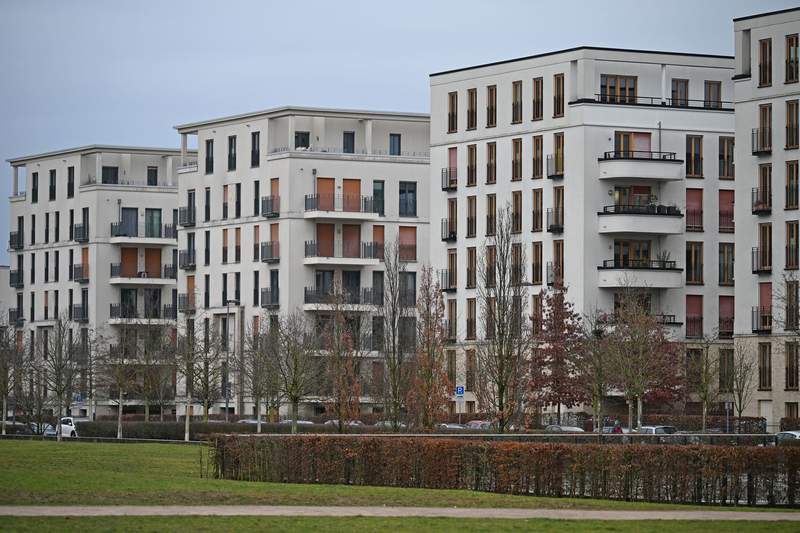
It’s all rather frustrating, really. Berlin’s urban planners have been pushing for more housing, more infrastructure, more everything for what feels like an eternity. And, wouldn’t you know it, their efforts were beginning to pay dividends. New residential building permits, according to the German Federal Statistical Office (Destatis), notched an 8.2% year-on-year increase in March, a welcome shift after months in the doldrums. That’s thousands of new homes, new jobs, new opportunities. People needed somewhere to live, the economy needed a kickstart—this looked like it.
But economies aren’t hermetically sealed systems, are they? Not in this global mess. That flicker of domestic optimism risks being snuffed out by a wildfire thousands of miles away. Because when Iran flexes its muscles, or, worse, when an international skirmish starts to look unavoidable, every single oil-dependent economy—which is pretty much all of them—gets the jitters. And if you think a war doesn’t travel, you just haven’t been paying attention.
Dr. Lena Schmitt, Germany’s usually sanguine Minister for Construction — and Housing, acknowledged the fragility. “We’ve seen encouraging signs,” she stated recently, her tone notably subdued. “Our policies are fostering much-needed residential growth. But global stability remains the bedrock for any sustainable recovery, doesn’t it? An oil shock or disruption to supply chains? That’s not just a statistic; it’s families struggling, projects halted, futures put on hold.” She’s not wrong. It’s an economy on a tightrope, — and the wind just picked up.
For nations like Pakistan, for instance, a Gulf crisis isn’t abstract geo-politics; it’s an immediate, gut-wrenching threat to their financial stability. Already grappling with its own internal economic trials, Pakistan relies heavily on remittances from its enormous expatriate workforce in the Gulf. Any conflict there means job losses, mass repatriations, and a catastrophic drop in those crucial foreign currency inflows. Then there’s the oil bill. A sudden spike in crude prices, say to $120 or even $150 a barrel, would absolutely cripple Islamabad’s already strained budget. Their economic fate, quite literally, hangs on the whims of leaders far beyond their borders.
📄 POLICY WIRE WHITEPAPER PUBLISHED: PAKISTAN'S NATIONAL SECURITY POLICY PRIORITIES
👉 READ BY CLICKING HEREAnd it’s not just energy. Think about the Red Sea, the Suez Canal, all those vital shipping lanes. A conflict in Iran, particularly one that escalates, sends tremors through global trade routes. Freight costs skyrocket. Insurance premiums become punitive. Businesses everywhere, including those budding German construction firms finally seeing a path forward, suddenly find themselves wrestling with costs they simply hadn’t factored into their nice, neat plans. Supply chains—you know, the ones we only ever really think about when they break—would get tied in knots.
Ambassador Tariq Khan, a former Pakistani envoy to Brussels, didn’t pull any punches in a recent webinar. “The Gulf region is the beating heart of much of the developing world’s economic lifeline. You disrupt that heart, you don’t just affect the Middle East; you trigger a systemic shutdown. For countries like Pakistan, Iran isn’t just a neighbor; it’s an inextricable knot in the fragile web of our economic existence. We simply can’t afford instability on our doorstep, or rather, on the doorstep of our primary income sources.” His sentiment, shared by many across South Asia and the broader Muslim world, points to a much deeper, broader interconnectedness than many Western observers often grasp. It’s not just about one nation; it’s about the entire game board.
What This Means
This looming shadow over the German building spree illustrates a grim, inconvenient truth: no matter how robust a nation’s internal policy initiatives, geopolitical instability is the ultimate wild card. Germany might pour billions into revitalizing its housing sector, but if global energy markets become a political football or if key trade arteries clog up, those investments will quickly flounder. Economically, we’re staring down the barrel of amplified inflation, stagnating wages, and quite possibly, a renewed contraction of European growth, which would naturally bleed into a global recession. Politically, a significant conflict would force a reassessment of international alliances, shift energy diplomacy priorities, and embolden authoritarian regimes—while simultaneously weakening multilateral institutions. For ordinary people, it means fewer new homes, higher living costs, and a general feeling of unease that the ground beneath them is always, always shifting.