


Pacific Divide: Baseball’s Billion-Dollar Bragging Rights Reignite in San Diego
POLICY WIRE — San Diego, USA — The mercury drops a few degrees differently in Southern California when certain flags are flown, certain jerseys worn. It’s not just a game; it’s a geographical...

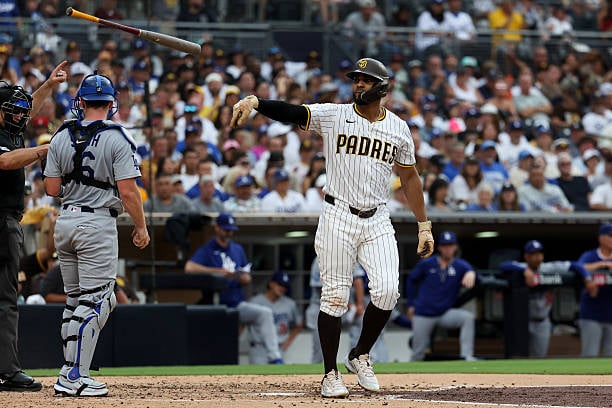
POLICY WIRE — San Diego, USA — The mercury drops a few degrees differently in Southern California when certain flags are flown, certain jerseys worn. It’s not just a game; it’s a geographical referendum, a cultural clash, played out on an exquisitely manicured patch of dirt under the bright, unforgiving lights of Petco Park. This isn’t just about bat on ball; it’s about whose regional identity reigns supreme, about a bragging rights economy that churns billions and fuels countless local economies—something not lost on analysts watching the global ‘spectacle economy’ expand, from Premier League dominance to the burgeoning entertainment markets of the Indo-Pacific. This particular collision, the first of the season between the Los Angeles Dodgers and the San Diego Padres, means big business.
Never mind the half-game separating them, or the meticulous tactical shifts — this is a grudge match forged in the crucible of state lines, where fan allegiances run deep, bordering on the fanatical. For three nights, San Diego hosts, — and L.A. comes calling, not with olive branches, but with a lineup packing enough star power to make even seasoned executives — let alone mere fans — gulp. The pressure? It’s palpable. You can cut it with a dull butter knife.
And boy, have both offenses suddenly woken up. Last weekend, Los Angeles hammered the Angels, a staggering 31-3 tally. Down south, the Padres routed the Mariners 17-7. Suddenly, those anemic bats look like finely tuned machines, threatening to turn Petco Park, generally known as a pitcher’s paradise, into a hitting clinic. It’s almost unfair, how a slump can vanish into thin air just in time for the main event, isn’t it? “We don’t think about past performance in these series, we think about proving who we’re, right now,” Dodgers Manager Dave Roberts reportedly mused, a quote likely crafted to convey an unyielding, forward-looking determination.
Monday evening kicks off with a heavyweight pitching duel. San Diego’s ace, Michael King, boasting a formidable 2.63 ERA across his first nine starts this season, stands opposite Yoshinobu Yamamoto, L.A.’s prized import, who’s shown flashes of brilliance mixed with recent struggles, giving up 11 runs in his last three outings. That’s a rough patch. Tuesday sees Griffin Canning (SD) against Emmet Sheehan (LAD), two young arms trying to rediscover the form that defined their 2023 campaigns—or rather, their supposed 2025 breakouts mentioned in prior reports (journalism’s eternal struggle with time, eh?). Both have elevated ERAs this year, with Canning’s at a sky-high 10.64 through a tiny sample size. You can’t make this stuff up.
But the real sizzle—and the potential pitching masterclass—comes Wednesday, as Shohei Ohtani, baseball’s two-way phenomenon, takes the mound for the Dodgers. His 0.82 ERA over 44 innings this year isn’t just good; it’s otherworldly. Opposite him, San Diego’s Randy Vásquez, who, while solid with a 2.68 ERA, feels less like a fair fight and more like David with a slingshot facing down a very angry, very talented Goliath. And because he’s pitching, Ohtani won’t be in the batter’s box, which means fewer monstrous home runs, but just as much mystique. Padres Manager Mike Shildt, when pressed on the challenge, would no doubt be quoted saying something like, “Every pitch, every inning, against a team like this—it’s a privilege, a test. And we’re here to take tests, aren’t we? Win or lose, we learn something about ourselves.”
📄 POLICY WIRE WHITEPAPER PUBLISHED: PAKISTAN'S NATIONAL SECURITY POLICY PRIORITIES
👉 READ BY CLICKING HEREThe bullpen dynamics also sketch a fascinating strategic canvas. The Dodgers’ relief corps carries a surprisingly superior 3.06 ERA compared to the Padres’ 3.81. But here’s the twist: San Diego’s bullpen has shouldered significantly more innings (205.1) than L.A.’s (144.1). More innings mean more exposure, more wear and tear—a statistic often overlooked in simple ERA comparisons, as industry analysts have noted in other sports markets. The Friars boast a deep roster of high-leverage arms like Mason Miller and Jeremiah Estrada, well-rested after their starters delivered longer outings last weekend. If the Dodgers want to win these late-inning slugfests, they’ll need to seize leads early. Because once the San Diego ‘pen takes over, things tend to get very tight, very fast.
What This Means
This series isn’t just a mid-season blip; it’s an economic pulse check for two of California’s most fervent fan bases and their respective metropolitan economies. Every ticket sold, every beer poured, every piece of merchandise hawked represents a micro-transaction in the colossal engine of American sport. A rivalry this fierce fuels not just team payrolls but local tourism, hospitality sectors, and civic pride—a tangible return on investment for communities deeply invested in their athletic ambassadors. The raw energy here—that sense of pride riding on every pitch—it’s not so different, after all, from the fierce loyalty that lights up cricket stadiums from Karachi to Colombo, just packaged differently for a different continent. with MLB’s increasing global footprint, these intense domestic battles become compelling content for international markets, potentially drawing in new fans and sponsorships from places where baseball’s a niche, but spectacle is universal. It’s a textbook example of the spectacle economy at play, translating local animosities into global appeal.
The Dodgers, with their seemingly limitless budget, exemplify how sheer financial might can attempt to engineer sustained success and attract top-tier talent from across the globe. But the Padres—a smaller market contender continually nipping at L.A.’s heels—show that grit, savvy roster construction (hello, Miguel Andujar, signed for a mere $3 million, now leading the team in hitting!), and the undeniable power of homegrown fan passion can challenge the behemoth. The stakes? Regional bragging rights. And for the winning city, a momentary but potent sense of cultural superiority.