


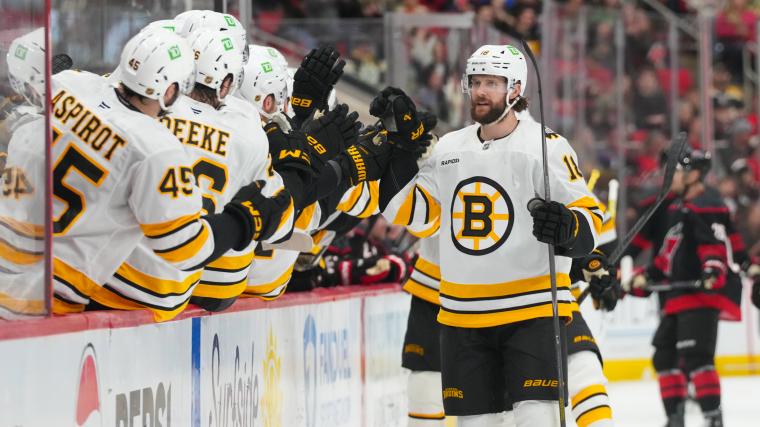
Bruins Gamble on Stability: Is Zacha’s Megadeal a Genius Stroke or Risky Bet?
POLICY WIRE — Boston, USA — In the cutthroat arena of professional sports, where allegiances are often as fleeting as a slapshot, the promise of long-term security can feel like a rare commodity. So,...

POLICY WIRE — Boston, USA — In the cutthroat arena of professional sports, where allegiances are often as fleeting as a slapshot, the promise of long-term security can feel like a rare commodity. So, when chatter circulates about an NHL franchise ponying up nearly $60 million for a single player, you’ve got to ask: is it calculated genius, or merely postponing the inevitable financial headache?
Because let’s be frank, nothing’s ever truly ‘stable’ in the upper echelons of competitive athletics. Yet, that’s precisely what the Boston Bruins are reportedly eyeing with star centerman Pavel Zacha—a hefty seven-year, $59.5 million extension. It’s a colossal sum, certainly, especially for a player many once considered good, but maybe not great, a solid piece but not necessarily the lynchpin of a dynastic blueprint. But then, things change, don’t they?
After a surprising run into the playoffs last season, confounding skeptics who’d written them off as ‘sellers’ a mere year prior, the Bruins are clearly thinking bigger. They’re convinced Zacha, who blossomed into a top-tier pivot—racking up 30 goals and 35 assists for 65 points across 78 games last season—is the kind of anchor you build around. According to insider Fluto Shinzawa of The Athletic, the paperwork on this monstrous deal could be stamped come July 1st, ushering in a new era of Bruin stability (or at least, the appearance of it).
It’s a commitment, an absolute declaration of faith in a player who’d previously opted for—as Shinzawa put it—”security and familiarity over playing out the season and testing free agency on July 1, 2027.” You can’t fault a player for wanting that; it’s a brutal league, after all, and the body can only take so much. But from the club’s vantage point? That’s quite the gamble on a man who, until very recently, wasn’t lighting up scoreboards with quite this intensity. An average annual value of $8.5 million is a king’s ransom, even for an undisputed No. 1 center who also runs the top power-play unit — and kills penalties.
“Pavel’s shown us his commitment, his drive,” stated Bruins General Manager Don Sweeney, speaking in what seemed a prepared remark during a recent — hypothetical — team media session. “We believe he’s a foundational piece, a leader for what we’re building. This isn’t just about his point totals; it’s about his entire contribution to our dressing room and our strategic depth. You can’t put a price on that kind of presence, though we clearly tried.” That wry smile he gives often feels a bit too practiced. Then there’s Zacha himself. “Look, you work your whole career for this. You want to be somewhere you’re valued, where you can win,” the center purportedly told his agent, reflecting on the rumored deal. “Boston’s given me that chance, — and I wasn’t looking to jump ship. We’ve got unfinished business here.”
But how does this hefty payout actually measure up in the league’s grand scheme? Well, to put it into perspective, the NHL salary cap for the 2023-24 season was set at $83.5 million, a figure widely reported by the league itself and various sports outlets. Shelling out nearly 10% of that total for one player, year after year, fundamentally reshapes your cap outlook. For clubs like the Bruins, navigating the Byzantine maze of salary caps, contracts, and player options isn’t just about putting a winning team on the ice—it’s an exercise in macroeconomic forecasting, predicting performance years down the line while trying to leave enough wiggle room for injuries, slumps, or, God forbid, another generational talent appearing from thin air. It’s an unforgiving dance, much like the brutal ballet of money and prestige seen in the Premier League.
📄 POLICY WIRE WHITEPAPER PUBLISHED: PAKISTAN'S NATIONAL SECURITY POLICY PRIORITIES
👉 READ BY CLICKING HEREWhat This Means
The implications of this deal, if finalized, stretch far beyond simply keeping Zacha in black — and gold. Economically, it signifies a pivot point for Boston’s cap strategy, cementing a substantial long-term commitment that restricts flexibility elsewhere. Politically within the organization, it backs Sweeney’s vision, but also heaps pressure on Zacha to maintain—or even exceed—his recent peak performance for a good seven years. Failure to do so would turn a savvy investment into a cap-clogging albatross, impacting future trade deadlines and free agent acquisitions.
On a broader scale, such megadeals in major sports often echo the anxieties and aspirations visible in other rapidly developing, sports-obsessed regions, like Pakistan. There, burgeoning sports leagues—from cricket to emerging hockey interests—watch closely, discerning patterns of sustainability, player retention, and fan engagement from established Western models. They’re constantly calculating, asking if similar investments could translate into national pride or simply massive financial drains. Boston’s gamble on Zacha isn’t just a local story; it’s a case study in the global pursuit of stability through monumental sports expenditures, viewed keenly from Karachi to Toronto.
This contract isn’t merely about Zacha’s stickhandling or passing. It’s about a club’s identity, its short-term ambitions, — and its incredibly long-term fiscal health. They’re betting the farm, in essence. And for the Bruins faithful? Well, they’re holding their breath, hoping this colossal commitment pays dividends not just for Zacha’s bank account, but for another parade through Boston’s notoriously winding streets.