


Russia’s Hollow Shell: Drone Attacks Peel Back Layers of Invincibility
POLICY WIRE — Moscow, Russia — The coffee’s barely brewed, and another headline drops. Three lives, extinguished in what Moscow’s media will dutifully brand as a terrorist act—a predictable,...

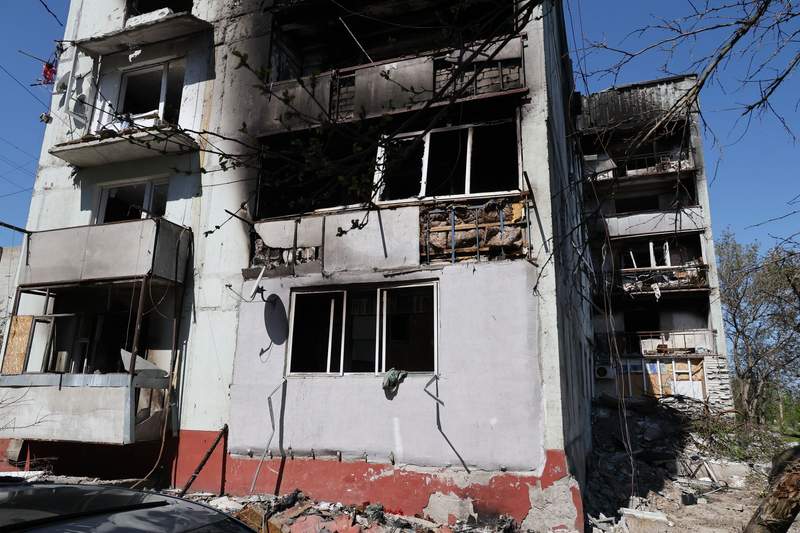
POLICY WIRE — Moscow, Russia — The coffee’s barely brewed, and another headline drops. Three lives, extinguished in what Moscow’s media will dutifully brand as a terrorist act—a predictable, tragic byproduct of yet another aerial assault deep within Russian territory. Kyiv’s drones, cheap and remarkably effective, are now a grim morning fixture, chipping away at not just infrastructure but also the Kremlin’s meticulously cultivated image of unassailable might. We’re well past the novelty here. This isn’t a one-off spectacle anymore; it’s an unsettling new normal.
Ukrainian unmanned aerial vehicles, many no more complex than glorified hobby-shop models, aren’t just hitting industrial targets. They’re hitting homes, the routine fabric of civilian life, dragging Russia’s citizenry further into a conflict once promised as a distant, tidy affair. Think about it: a civilian population, told they’re secure, now staring up at their own version of falling shrapnel. That changes things. Doesn’t it?
Kremlin officials, perpetually armed with their familiar blend of indignation and vague reassurance, immediately condemned the strikes. But the carefully worded condemnations don’t mask the underlying reality—the air defense systems, those much-vaunted S-300s and S-400s, aren’t providing an impenetrable dome. They intercept, sure. A lot of them. But enough still get through, making a mockery of Moscow’s claims to total air superiority. You’d almost feel sorry for them, if not for, you know, the *entire* invasion of a sovereign nation.
Because every strike, every explosion, every fresh civilian casualty serves as a brutal reminder: this war isn’t just happening over there in Ukraine anymore. It’s here, over their heads, scattering bits of drone debris onto city streets. Colonel General (Ret.) Sergei Ustinov, a long-time fixture within Russian defense circles, often quite vocal, gave a remarkably terse assessment, probably a rare moment of genuine exasperation. “Our defenses are robust, exceptional. But when faced with such volume, such wanton disregard for life, it requires constant vigilance. It isn’t perfect.” Not exactly the ironclad declaration of victory his comrades usually manage.
Meanwhile, in Kyiv, the mood, while somber for any loss of life, carries a definite edge of grim satisfaction. And why wouldn’t it? They’re finally making Russia taste its own bitter medicine. General Oleksiy Pavlyuk, Commander of the Ground Forces of Ukraine, typically restrained, didn’t pull punches this time. “Russia started this. They brought the war to our doorstep, they murdered our people. We’ve simply chosen to return the favor, to remind them what ‘doorstep’ really means when it’s your own. It’s a harsh calculus, but they wrote the formula.” It’s a direct, almost biblical retribution—an eye for an eye, or rather, a drone for a drone.
📄 POLICY WIRE WHITEPAPER PUBLISHED: PAKISTAN'S NATIONAL SECURITY POLICY PRIORITIES
👉 READ BY CLICKING HEREThe geopolitical tremors from this aren’t confined to Europe’s borders, either. Consider the observers in Islamabad, Riyadh, even Jakarta. They’re watching. Every single drone attack against Russia—especially the ones causing actual, verifiable damage or fatalities—sends a very clear signal about the changing nature of modern conflict. The sheer affordability and accessibility of drone technology means smaller nations, less endowed with conventional firepower, might increasingly see a low-cost, high-impact path to asymmetric warfare. According to a recent analysis by the Royal United Services Institute (RUSI), the cost-to-damage ratio of certain commercial drone variants converted for military use is less than 1:100 against traditional defense infrastructure targets, making them a spectacularly efficient, if morally fraught, weapon system.
This isn’t about grand invasions anymore, not solely. It’s also about bleeding an adversary slowly, psychologically, politically. It’s about forcing a behemoth to divert resources, to rebuild its narrative, and crucially, to protect its citizenry—something it’s proving less and less capable of doing when faced with these persistent, low-tech threats. And the casualty count, while small compared to front-line losses, still serves to chip away at domestic support, at least on the margins. You can’t spin dead civilians as collateral damage quite so easily when the target wasn’t military. Or can you?
What This Means
These recurring drone strikes, particularly those incurring civilian casualties, mark a deepening of Russia’s strategic predicament and a chilling evolution of the conflict. Politically, they fracture the Kremlin’s ‘special military operation’ narrative into smaller, harder-to-manage pieces. How do you maintain patriotic fervor when your homeland is repeatedly struck, and your military leaders are constantly making excuses? It forces a re-evaluation of Russia’s true defensive capabilities, impacting Moscow’s geopolitical swagger. Economically, while the individual damages might seem minor against Russia’s vast industrial base, the cumulative psychological toll on investor confidence, coupled with the need for increasingly expensive and constant air defense patrols, quietly erodes the nation’s fiscal stability. This isn’t just about blowing up a refinery; it’s about making ordinary life feel precarious, which directly affects commerce. The global reverberations are also worth noting. Nations like Pakistan, perpetually navigating complex border disputes and insurgent threats, are undoubtedly studying these attacks. The perceived success of relatively inexpensive, off-the-shelf drone technology in penetrating sophisticated defenses offers a tempting, if terrifying, template for future asymmetrical conflicts, changing military doctrines across South Asia and beyond. But it’s also a stark warning of unintended consequences—once you open that Pandora’s Box of easily deployable, deadly autonomous weapons, well, it’s devilishly hard to close it.