


Denmark’s Vanishing Giant: A Humpback’s Tragic End Exposes Wider Oceanic Blight
POLICY WIRE — Copenhagen, Denmark — The crowd had gathered, smartphones aloft, clinging to a fading hope, a collective whisper of “maybe this time.” For days, the ailing humpback, affectionately...

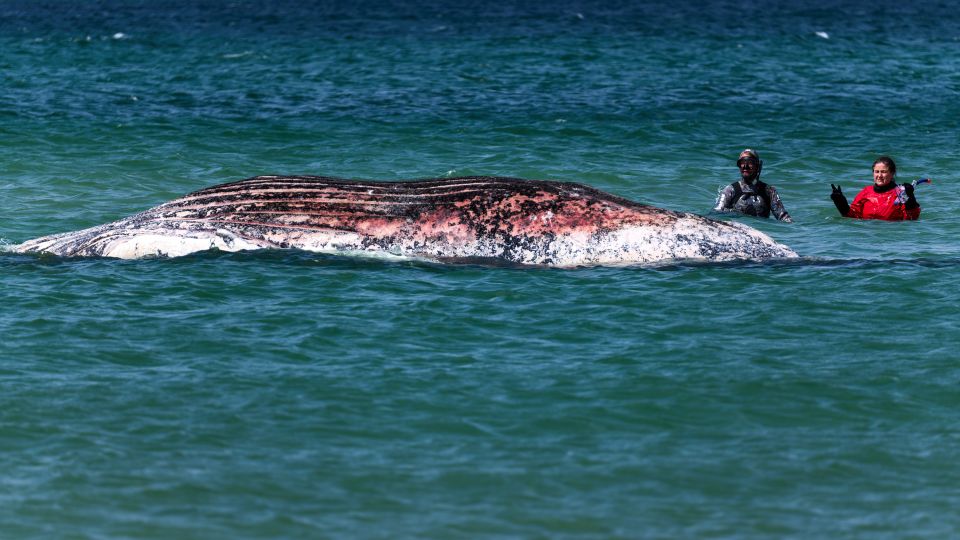
POLICY WIRE — Copenhagen, Denmark — The crowd had gathered, smartphones aloft, clinging to a fading hope, a collective whisper of “maybe this time.” For days, the ailing humpback, affectionately dubbed “Timmy” by some, had dominated Danish news cycles—a leviathan out of place, struggling in the shallow embrace of Vejle Fjord. This wasn’t a fairy tale; it was a slow, public spectacle of an animal losing its fight against an unforgiving shore. It’s the kind of poignant, high-visibility crisis that momentarily pries our attention from geopolitical squabbles and inflation figures, making us question our relationship with the planet’s vast, increasingly fragile ecosystems.
They’d tried. God, they’d tried. Rescue teams, marine biologists, local volunteers—a makeshift flotilla of good intentions and specialized gear—attempted to guide the roughly 15-meter cetacean back to deeper waters. Their efforts were as dramatic as they were ultimately futile. And yesterday, the curtain dropped on this particular natural drama: the massive whale was confirmed dead, a silent behemoth marooned, his once-magnificent bulk now a somber landmark off the coast near Fredericia.
“We threw everything we had at it, you know? Our expertise, our resources, even a small sense of collective guilt,” conceded Jens Bøgh, a seasoned marine wildlife expert with Denmark’s Natural History Museum, his voice flat with exhaustion during a morning briefing. “But some battles—especially those born of human encroachment—they just can’t be won by well-meaning humans and tow ropes.” It’s a candid, if depressing, assessment of where we’re at with environmental conservation: often playing catch-up, rarely getting ahead. The carcass, a logistical nightmare, will eventually be towed out for scientific study and, well, dignified disposal, presumably somewhere far from public view.
But the questions surrounding Timmy’s plight, — and others like it, don’t vanish with the tide. This incident isn’t an isolated Nordic anomaly; it’s a symptom. And experts are increasingly concerned about the wider pattern of marine mammals getting disoriented, losing their way, or simply finding their traditional routes obstructed. For centuries, these leviathans have navigated the colossal expanse of the globe’s oceans, their migratory paths coded into their very being. But those ancient routes are now increasingly cluttered, noisier, and chemically altered—thanks to us.
Consider the cumulative pressure: increased shipping traffic, sonar pings echoing through underwater realms, and, yes, the endless churn of marine pollution. It’s an environmental triple-whammy. “The world’s oceans are no longer the tranquil sanctuaries they once were for these majestic creatures,” stated Dr. Fatima Khan, a Pakistani-Canadian oceanographer specializing in maritime ecosystems, during a recent virtual conference on global shipping lanes. “Whether it’s plastic waste choking vital habitats in the Arabian Sea or disorienting noise in the North Atlantic, the systemic challenges are borderless. The fate of a single whale in Denmark isn’t disconnected from, say, the health of the Indus River dolphin population. It’s all part of the same hydrographic headache we’ve created.”
This isn’t hyperbole, by the way. Globally, a staggering over 8 million tons of plastic enter our oceans every year, according to a recent report by the United Nations Environment Programme, creating floating landfills and microplastic soups that confuse, injure, and starve marine life. Whale strandings, while not entirely new phenomena, are seen by many as increasingly indicative of wider ecosystem distress.
📄 POLICY WIRE WHITEPAPER PUBLISHED: PAKISTAN'S NATIONAL SECURITY POLICY PRIORITIES
👉 READ BY CLICKING HEREIt’s easy to dismiss a dead whale as just an unfortunate happenstance, a quirk of nature. But perhaps we ought to consider Timmy’s quiet demise a flashing red light, a blunt policy message drifting ashore, one that doesn’t mince words. We’re part of this mess, like it or not, and our political leaders—from Copenhagen to Karachi—need to start acting like it. The North Sea, the Arabian Sea, they’re not separate policy fiefdoms; they’re interconnected segments of a single, ailing organism.
What This Means
Timmy’s death isn’t just an animal welfare tragedy; it’s a stark, public policy wake-up call wrapped in an emotional package. First, there’s the economic ripple. Rescue efforts aren’t cheap, requiring specialized vessels, expert personnel, — and coordinated governmental responses. When these efforts fail, there’s a cost in public trust — and resources. Then, the carcass itself presents a challenge: it’s not a simple matter of disposal; it’s a complex operation that demands marine biologists, environmental safeguards, and significant expenditure.
Politically, incidents like this apply pressure on environmental ministries. They generate public outcry and media scrutiny, forcing governments to justify existing conservation policies and perhaps push for more stringent maritime regulations. For example, Danish authorities, alongside other EU nations, may face renewed calls for stricter controls on shipping noise or limits on industrial pollutants—policies that don’t always sit well with economic growth agendas. It’s a tricky balance, weighing economic activity against environmental impact, and one that resonates deeply within organizations grappling with global sustainability, even extending to the maritime trade corridors vital for nations like Pakistan.
This episode also spotlights the limits of our environmental policy. Despite grand agreements and climate summits, the cumulative effect of human activity often outpaces regulatory enforcement. It’s not enough to set targets; we’ve got to fund, enforce, and, frankly, innovate quicker. And because it’s impossible to address these issues in isolation, it will require truly global solutions, perhaps even some ‘green gambles,’ that extend beyond national borders. The oceans, after all, aren’t waiting for a consensus; they’re simply changing, one stranded whale at a time.