

Beyond the Finish Line: Preakness’ Provisional Stint at Laurel Reveals Racing’s Shaky Ground
POLICY WIRE — Laurel, Maryland — You don’t often find America’s second-biggest horse race, steeped in over a century and a half of pomp and circumstance, shacked up in a temporary rental....

POLICY WIRE — Laurel, Maryland — You don’t often find America’s second-biggest horse race, steeped in over a century and a half of pomp and circumstance, shacked up in a temporary rental. But there it was, the 151st Preakness Stakes, running at Laurel Park on May 16, 2026. This wasn’t about glitz; it was about keeping the lights on—and Pimlico, the grand old dame, off-limits and under the knife for some much-needed, multi-million-dollar repairs.
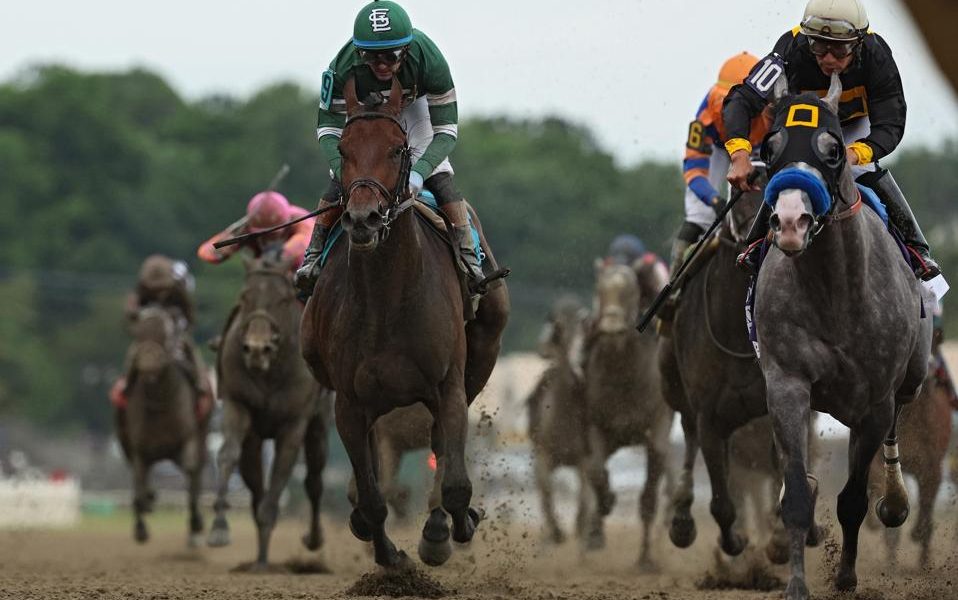
Against this backdrop of high-stakes improvisation, a roan colt named Napoleon Solo, considered by most pundits a decent but not dazzling 7-1 shot, threw out the script. He didn’t just win; he carved out a victory that felt almost defiant, especially against the crushing disappointment of Taj Mahal, the favorite whose early blaze fizzled out like a wet firecracker.
It’s always a study in human expectation, isn’t it? Everybody loved Taj Mahal. The local darling. Had trained there, won there. His odds reflected it, sitting pretty at 9-2. But racing’s a cruel mistress, particularly when a track’s geometry plays tricks. Laurel’s oval, a bit snugger than Pimlico’s, shoved the starting gate for the Preakness a football field closer to the first turn. What that means for a front-runner like Taj Mahal is a suicidal temptation to gun it straight out the gate.
And gun it, he did. The official timing clock ticked. Taj Mahal blasted his first quarter-mile in a blistering 22.66 seconds, an unsustainable pace even for the truly elite. By the time Napoleon Solo and jockey Paco Lopez found their gear, hitting the top of the final three-sixteenths, Taj Mahal was just a memory. He faded hard, finishing a desolate tenth.
“We knew he had it in him,” said trainer Chad Summers, barely containing a grin through the post-race pandemonium. “Paco rode him like a champion. It ain’t always about the fastest, it’s about the smartest race, — and Solo, he ran smart. That’s why we do this, right? The underdog getting his moment.” It’s a sentiment as old as the sport itself, echoed in grandstands from Saratoga to Sha Tin.
But the ‘underdog moment’ at Laurel masked a much larger, frankly more precarious narrative for American racing. The sport’s survival hinges not just on thrilling finishes but on serious capital investment, on securing its heritage without alienating a fickle public. But you wouldn’t know it watching the jubilation as Napoleon Solo crossed the wire, paying out a handsome $17.80 on a $2 bet.
📄 POLICY WIRE WHITEPAPER PUBLISHED: PAKISTAN'S NATIONAL SECURITY POLICY PRIORITIES
👉 READ BY CLICKING HEREIron Honor grabbed second, paying $9.20, — and Chip Honcho showed, returning $8.20. And the trifecta? A tidy $597.10. Those numbers—they’re the real engine, the lifeblood of this sprawling, complex enterprise that often operates at the periphery of the public’s consciousness until a Triple Crown chase kicks in. It’s a testament to the sheer cost of fleeting speed and the massive sums always in play.
Pimlico’s grand revitalization isn’t just about a fresh coat of paint; it’s a desperate gamble. A throw of the dice to ensure the Preakness doesn’t just fade into a nostalgic memory, losing out to other, glitzier spectacles. Because, let’s be honest, sports fans have options. More than ever before. But securing that legacy is tough, balancing tradition with the hard reality of urban development and changing demographics. Alan Kincaid, a spokesperson for the Maryland Jockey Club, sounded both relieved — and guarded. “Laurel did its job, no question. But Pimlico, it’s the heart. Getting it right, getting it future-ready, that’s what keeps the tradition — and the money — flowing. It’s a huge undertaking, but it’s got to be done.”
And this ongoing saga, a tale of vast capital expenditures for grand spectacles, plays out on a global stage. A sport born of royal whims, its global footprint now stretching from the manicured lawns of Maryland to the breeding farms of Dubai. The pursuit of equine excellence, the culture surrounding horses, it resonates deeply in regions like South Asia. Here, speed and lineage once decided tribal power and fortunes, shaping cultural practices that persist today, echoing even in the traditions of Pakistan’s cavalry and local equestrian events. It’s a parallel universe, really: one where millions are poured into renovating a historic racetrack for an ephemeral annual race, while elsewhere, in countless towns, the simple act of betting on a local nag might mean dinner for the family. It’s a brutal ballet of money and hope, irrespective of geography.
What This Means
Napoleon Solo’s surprise victory, however sweet for his connections, merely highlights a larger, unsettling trend in thoroughbred racing. The very need to relocate the Preakness speaks volumes about the aging infrastructure of American tracks and the precarious financial model sustaining the sport. Maryland taxpayers, local government, and the private racing industry are collectively shouldering hundreds of millions for Pimlico’s overhaul. This isn’t a discretionary spend; it’s a Hail Mary pass. If the revitalized Pimlico fails to draw larger crowds, generate more revenue through diversified events, or attract a new generation of fans and gamblers, then the sport faces an existential crisis far beyond temporary venue issues. The economic implications are direct: jobs, tax revenues, — and a centuries-old cultural institution are on the line. Politically, the state’s investment needs to demonstrate tangible returns, not just nostalgic appeasement. Because, frankly, in an era of constrained public budgets, the goodwill for subsidizing horse racing—no matter its storied past—isn’t limitless. It all comes down to whether these gargantuan investments can finally get the sport to run smart, not just fast.