


Fuzzy Capitalism: How Albuquerque’s Retro Game Store Is Reshaping Community Care, One Feline at a Time
POLICY WIRE — ALBUQUERQUE, N.M. — In an era of accelerating societal detachment, where the pursuit of nostalgic escapes often replaces genuine community engagement, a modest game shop in New Mexico’s...

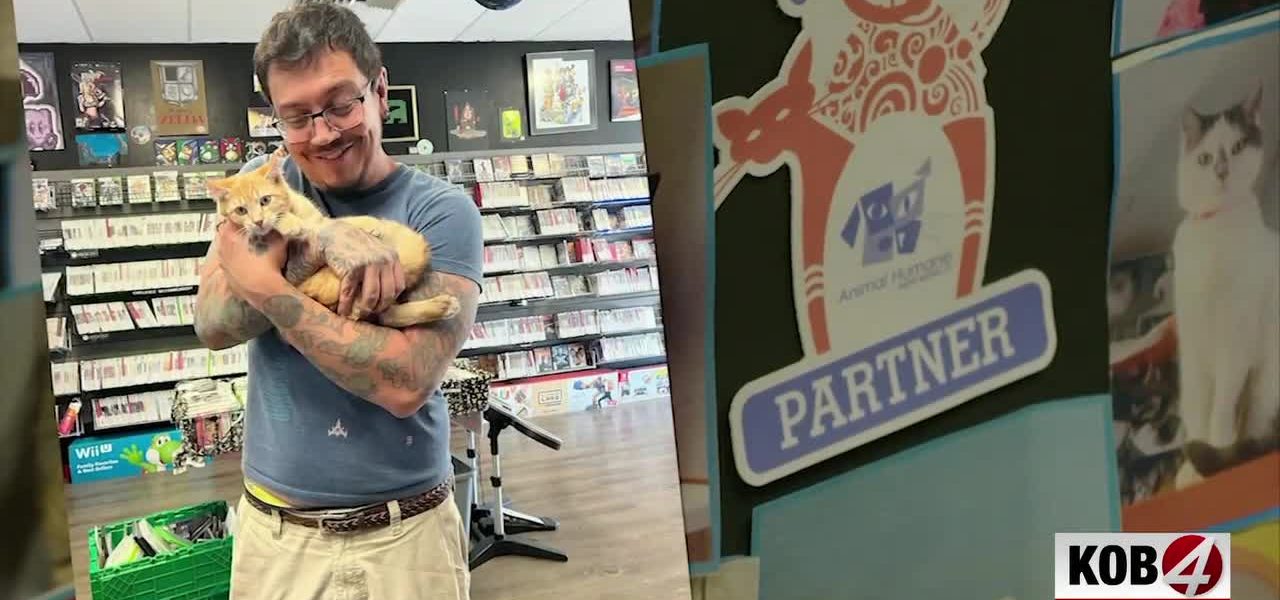
POLICY WIRE — ALBUQUERQUE, N.M. — In an era of accelerating societal detachment, where the pursuit of nostalgic escapes often replaces genuine community engagement, a modest game shop in New Mexico’s high desert has unwittingly stumbled upon a formula for profound social impact. Forget algorithms — and AI; this isn’t some Silicon Valley initiative. It’s Gamers Anonymous, and their currency isn’t just pre-owned cartridges—it’s also purrs and the occasional swat of a tiny paw.
For nearly a decade, tucked amidst the dusty spines of classic Xbox titles and forgotten Nintendo gems, this establishment has moonlighted as an impromptu animal shelter, facilitating the adoption of an astonishing 202 felines. It’s an incongruous pairing, sure: the solitary pursuit of high scores interwoven with the very communal act of pet adoption. But it works, startlingly well. And frankly, it prompts a rather blunt inquiry into what, exactly, qualifies as a public service in contemporary America.
Jon Sakura, the co-founder who once thought his legacy would be tied solely to forgotten pixels, admits the feline invasion wasn’t exactly strategic. “It just sort of happened, didn’t it?” he mused recently, leaning against a stack of vintage PlayStation magazines. “People come in, looking for a particular title, maybe their first time, — and suddenly there’s a cat sauntering by. You should see their faces—pure, unadulterated delight. It kinda cuts through all the usual retail cynicism, doesn’t it?” His voice held a hint of surprise, as if still grappling with the serendipity of it all.
Obed Orozco, the store’s owner, puts it more succinctly, if a little cryptically: “Gamers, bless ‘em, they’re generally chill folk. The cats just… they just fit. It’s like they were always meant to be here, nestled amongst the quest lines and character sheets.” He views the store not just as a transactional space, but as a decompression chamber for an increasingly frazzled populace. “For anyone having a rough go of it, we aim to be that quiet therapist, that little purring anchor. And a lot of our regulars already have cats, you see? It ties in perfectly. Peanut butter — and jelly, that’s what it’s. Or, well, tuna and controllers.”
The numbers, however unassuming they might seem in the grand scheme of municipal budgeting, do speak volumes. According to the ASPCA, roughly 6.3 million companion animals enter U.S. shelters annually. So, while 202 adoptions might not dismantle the entire crisis, it’s far from a negligible drop in the bucket. For these animals, many pulled from the strained resources of local shelters like Animal Humane, it represents nothing less than salvation. Because let’s be honest, those numbers reflect the ongoing struggle animal welfare organizations face nationwide—a struggle often compounded by insufficient funding and overflowing kennels.
But the true policy implications stretch beyond simple animal liberation. This quirky, community-led initiative subtly highlights the lacunae in traditional public welfare systems. Small businesses, operating on razor-thin margins, are essentially patching holes that perhaps a more robust, publicly funded infrastructure should be addressing. Think about it: a retro game store becomes a crucial conduit for re-homing, and concurrently, a vital social hub—offering companionship and informal therapy, albeit unintentionally. It’s a pragmatic workaround to systemic challenges, proving that sometimes, solutions don’t come from bureaucratic directives but from the unexpected corners of free enterprise, especially when tempered with a touch of altruism. the casual nature of this model — not a formalized, sterile shelter experience, but one embedded in daily commerce — might just be a template for greater engagement.
📄 POLICY WIRE WHITEPAPER PUBLISHED: PAKISTAN'S NATIONAL SECURITY POLICY PRIORITIES
👉 READ BY CLICKING HEREGlobally, the relationship between commerce, community, — and animal welfare takes many forms. In bustling metropolises from Karachi to Cairo, stray animal populations present a profound and often overlooked public health challenge, frequently managed by underfunded NGOs or religious charities rather than state intervention. The success in Albuquerque, small as it’s, underlines a common truth: informal networks, built on grassroots commitment, often absorb the burdens that formal structures cannot—or won’t—carry. This entrepreneurial compassion, though lacking explicit governmental sponsorship, represents a dynamic form of localized resilience. It’s less about grand, top-down directives, — and more about organic, community-driven problem solving.
What This Means
This tale of furry success in Albuquerque isn’t just a feel-good piece; it’s a case study in decentralized social responsibility. What we’re witnessing here is a micro-economic phenomenon with macro-social implications. Businesses like Gamers Anonymous are demonstrating that purpose can seamlessly blend with profit—or at least, with survival. They’ve tapped into a market beyond just games: the demand for connection, for unburdened joy, for creatures to share our sometimes-lonely existences.
It suggests that policymakers, often obsessed with large-scale interventions, might do well to pay closer attention to these organic, ground-level innovations. Perhaps there are incentives to be explored—tax breaks for businesses that integrate community welfare initiatives, for example. And, this micro-trend also speaks to a deeper shift: individuals, disaffected by bureaucratic inefficiencies, are increasingly turning to their local ecosystems for solutions. It’s not about waiting for a mandate from on high; it’s about making a tangible difference with whatever resources are at hand. The hourglass economy, as some might call it, means traditional societal constructs are slowly eroding, only to be replaced by novel forms of community care. These aren’t just local curiosities, they’re quiet indicators of evolving social safety nets.