


Modena’s Shattered Calm: A Car, Eight Casualties, and Italy’s Lingering Questions
POLICY WIRE — Modena, Italy — The espresso machines hummed. Tourists shuffled, gelato in hand. Then, suddenly, a screech of tires — and the sickening crunch of metal. Eight lives, casually enjoying a...

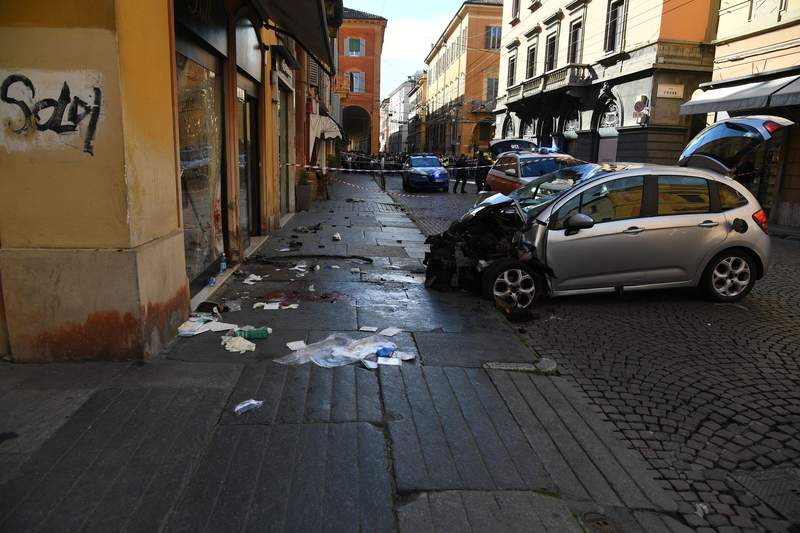
POLICY WIRE — Modena, Italy — The espresso machines hummed. Tourists shuffled, gelato in hand. Then, suddenly, a screech of tires — and the sickening crunch of metal. Eight lives, casually enjoying a sun-drenched afternoon in Modena, were irrevocably altered when a black sedan veered sharply into a pedestrian zone near the city’s ancient cathedral. It wasn’t an explosion, not a shouted threat—just a mundane vehicle, weaponized by unknown intent, slicing through the ordinary. Modena, a name synonymous with fast cars and slow food, now finds itself another blot on Europe’s increasingly turbulent canvas, wrestling with the chilling banality of unexpected chaos.
It happened fast. Very fast. Paramedics described the scene as ‘confusing mayhem.’ Eight people were hauled away to hospitals, their injuries ranging from severe fractures to bruising. All are expected to survive, thankfully. But the physical scars are often the least enduring. The emotional toll? That festers. Police quickly apprehended the driver, identified only as 34-year-old Khalid al-Mansour, an Algerian national with an expired residency permit. He’d been living in Italy for six years. The authorities are investigating whether it was a deliberate act or a tragic, calamitous accident—a distinction that often gets lost in the public square, particularly when certain demographics are involved. And frankly, the speed of information, misinformation even, makes everyone jittery.
Because the moment al-Mansour’s identity trickled out, the incident stopped being just a local news item. It became a political grenade, lobbed straight into the heart of Italy’s already volatile debate on immigration and national security. Nationalist voices didn’t waste a second. “Another senseless act, another reminder of the dangers we import when borders become suggestions,” blasted Carlo Rossi, Italy’s Minister of Interior Affairs, in a sharp press conference that same evening. He didn’t mince words. “We can’t afford leniency. Our citizens demand protection. Their safety isn’t up for debate.” It’s a tune Italian political leaders know well, playing it with increasing fervor in a country grappling with fluctuating migrant flows from North Africa and the wider Middle East. You see it every other week.
But others were quicker to caution. “We must await the full facts. Jumping to conclusions does a disservice to justice and risks deepening divisions,” countered Elisa Bianchi, Mayor of Modena, speaking from her city hall office. Her voice, measured but firm, pushed back against the knee-jerk condemnations. “Our community is resilient. We’ve welcomed people from all corners of the world for centuries. One man’s potential folly shouldn’t indict an entire population, or cast a shadow on the many who contribute daily to our city’s vibrancy.” It’s a tough line to walk, keeping civil discourse alive when public emotion runs high—something you don’t envy a local leader for.
This incident, small in its immediate casualty count, reverberates far beyond the Emilia-Romagna region. Italy’s stance on immigration, already amongst the most scrutinized in Europe, will tighten further. Think about it: a small incident in Modena, — and suddenly, the ripple effect reaches everywhere. It’s the same old story playing out again, the immediate victim count morphing into a wider conversation about social integration—or the perceived lack thereof. For immigrant communities, particularly those from Pakistan or the broader Muslim world already facing heightened scrutiny in Europe, such events exacerbate pre-existing fears of discrimination and prejudice. News travels fast back home. Family members in Lahore or Rabat hear about these incidents — and worry for their relatives trying to build new lives. It’s a cruel feedback loop, making global discord feel very, very local.
📄 POLICY WIRE WHITEPAPER PUBLISHED: PAKISTAN'S NATIONAL SECURITY POLICY PRIORITIES
👉 READ BY CLICKING HEREItaly, a primary landing point for many asylum seekers crossing the Mediterranean, registered approximately 157,600 irregular migrant arrivals in 2023, according to figures released by the Ministry of Interior. Each individual arrival, each residency application, gets weighed against incidents like the one in Modena. And it changes things. It hardens positions. Makes compromise look weak. This incident, minor as it’s in the grand scheme of global tragedies, will be another footnote in policy documents, another tally mark for those advocating stricter controls.
What This Means
The Modena incident, regardless of the driver’s ultimate motive, feeds into a pre-existing European narrative. It confirms biases. It galvanizes political factions, particularly those on the right, who argue for more restrictive immigration policies and tighter security measures. This won’t be the trigger for a sea change, no, but it’s another chip in the wall of liberal immigration discourse. Expect more calls for expulsions, accelerated deportations for those with expired documents, and an overall hardening of tone from Rome. Economically, while a localized event like this rarely dents a national GDP, it can impact local tourism, instill public fear, and divert policing resources—all tiny cuts that slowly bleed away civic confidence. For migrant communities, it spells deeper isolation. Many feel the burden of proof is always on them, that one individual’s actions unfairly tarnish the entire collective. It’s a brutal cycle of perception — and blame, further eroding trust and integration efforts. The deeper market anxieties in Europe? They get tied into this too, because economic instability often fuels social unrest, making these kinds of flashpoints all the more explosive. And policymakers? They’re left scrambling to patch up a torn social fabric, while the political points scoring continues unabated.