


The Leviathan’s Lament: Danish Shores Echo a Deeper Oceanic Despair
POLICY WIRE — Copenhagen, Denmark — Not every giant can outrun its fate. Certainly not one that washes up cold and unresponsive on a sandy stretch of Danish coastline, a spectacle both grim and...

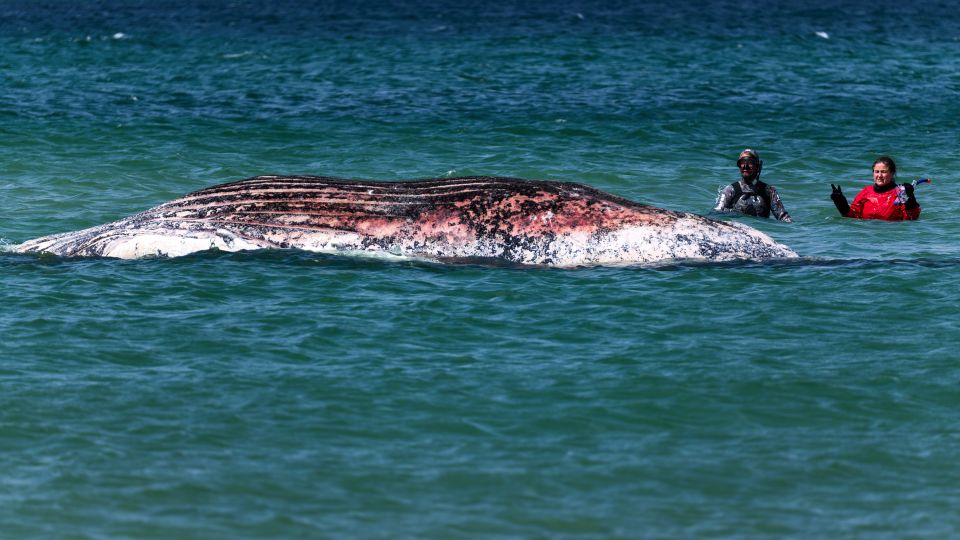
POLICY WIRE — Copenhagen, Denmark — Not every giant can outrun its fate. Certainly not one that washes up cold and unresponsive on a sandy stretch of Danish coastline, a spectacle both grim and vaguely—or perhaps not so vaguely—accusatory. This week, it wasn’t geopolitical tremors shaking the foundations of the Nordic quietude; it was the inert, colossal form of a humpback whale, affectionately named Timmy, now definitively pronounced dead.
His story, if you can call a mammal’s unfortunate demise a ‘story,’ began weeks ago, a lone figure far from its usual feeding grounds. And now, a silence on the shores near Hvide Sande. Danish authorities confirmed his death after a protracted vigil, a human attempt, however futile, to coax the 14-meter behemoth back to the depths it once commanded. We send our vessels to faraway seas to monitor territorial disputes, to escort VIPs across sparkling fjords, but here, on our own doorstep, lay a dying marvel, ignored by all save the gawking and the grieved.
It’s an inconvenient truth, this. An unscripted moment where nature interrupts our meticulously planned narratives of progress — and prosperity. “We mourn the loss of any animal, particularly one as magnificent as a humpback,” stated Helge Knudsen, Denmark’s Minister for Environment and Food, in what felt like a rehearsed sorrow. “But we must also face the realities of an increasingly challenging marine environment. These are not isolated incidents; they’re symptoms.” His pronouncements carry the weight of bureaucracy, not genuine lament, but you can’t fault the man for sticking to the script.
But the script itself has more grim footnotes than ever. Timmy’s odyssey, tragically concluded on Denmark’s sands, serves as a harsh echo of wider, unsettling trends afflicting our world’s oceans—trends that reach from the cold North Sea to the warming waters off coastal Pakistan, where environmental concerns often take a backseat to more immediate economic pressures. The Arabian Sea, a critical migratory route for numerous cetacean species, sees its own share of mysterious strandings, often linked to unregulated shipping, entanglement in fishing gear, or outright plastic ingestion.
Dr. Ingrid Olsen, a lead marine biologist at Aarhus University, offered a less platitudinal, more stark assessment. “Humpback whales are tough, incredibly resilient creatures. But they aren’t immune to anthropogenic pressures. His exact cause of death will take time to ascertain, but his presence here, so far off course, raises questions about navigation disruption—acoustic pollution, perhaps—or foraging failures,” she observed, her voice weary. “This isn’t just bad luck for one whale; it’s a distress signal for the ecosystem he came from, and for all others connected to it.” And she isn’t wrong; scientists estimate that over 100,000 marine mammals die annually from entanglement in fishing gear globally, according to the Convention on Migratory Species (CMS) in 2022. Just a little food for thought.
We’re witnessing the brutal arithmetic of human encroachment. Every shipping lane, every offshore wind farm, every careless jettison of waste becomes a variable in the lives of creatures like Timmy. And the world keeps turning, businesses keep booming. Even if it means fewer whales in the bargain.
📄 POLICY WIRE WHITEPAPER PUBLISHED: PAKISTAN'S NATIONAL SECURITY POLICY PRIORITIES
👉 READ BY CLICKING HEREWhat This Means
Timmy’s death isn’t just a somber anecdote for morning news programs; it’s a low, insistent hum on the policy frequencies. Politically, the stranding intensifies calls for tighter environmental regulations within the European Union, especially regarding marine conservation areas, shipping corridors, and fishery management. Governments, particularly those reliant on coastal tourism or with active fishing fleets, now face increased scrutiny over their commitment to global biodiversity targets. It’s no longer an abstract commitment—it’s a dead whale on the beach. But public outcry, however significant, usually fades, replaced by broader market anxieties or the next media spectacle. Expect temporary increases in marine patrol budgets or symbolic legislative pushes rather than the wholesale reforms environmentalists might clamor for.
Economically, the incident poses both a short-term cleanup burden—the logistics of moving a 50-tonne carcass aren’t insignificant—and a long-term reputation challenge. For a nation like Denmark, priding itself on green initiatives and sustainable practices, a high-profile marine death can tarnish its ecological bona fides. There’s a tangible, albeit indirect, impact on sectors like eco-tourism, and even fishing industries, which might find themselves subject to more stringent, costly regulations under increased public and political pressure. Think of it as a morbid marketing event: what message does it send when nature’s majestic figures can’t even navigate our waters?
And so, Timmy—or what’s left of him—will be carted away. Studied. Perhaps even eulogized, for a moment. But his passing whispers a louder message than any living whale ever could: our blue planet, it’s not feeling so great. We’d be wise to start listening to the echoes before they’re all that’s left.