


Ghosts of October 7: IDF Closure, Persistent Shadows
POLICY WIRE — Tel Aviv, Israel — The ghosts of October 7, they don’t just haunt the immediate vicinity of the border fences. They whisper through Knesset hallways, echo in hushed civilian prayers,...

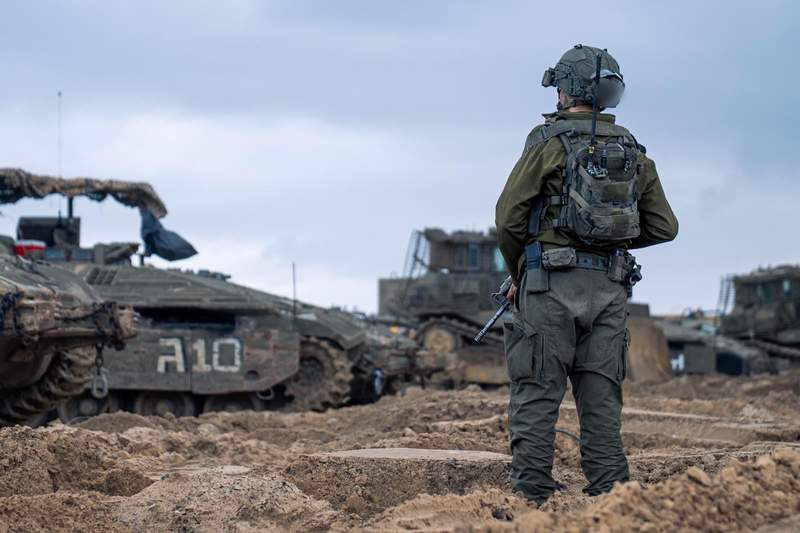
POLICY WIRE — Tel Aviv, Israel — The ghosts of October 7, they don’t just haunt the immediate vicinity of the border fences. They whisper through Knesset hallways, echo in hushed civilian prayers, and — occasionally — materialize as lingering threats demanding a grim reckoning. This past week, two such specters, men identified by Israeli defense forces as Hamas fighters who’d crossed into Israel during that horrific day, found their long-delayed conclusion.
It wasn’t an immediate triumph on that dreadful morning. It was a cold, precise elimination months later. The Israel Defense Forces (IDF) confirmed their troops successfully tracked and neutralized the two individuals within Gaza. Because, frankly, in this protracted conflict, there’s no statute of limitations on perceived threats, no expiry date on an enemy combatant’s designation. The operational details, as always, remain shrouded in the necessary fog of war—tactical specifics rarely see the light of day. But the intent? Clear as a desert sky.
An IDF spokesperson, General Daniel Hagari, articulated the military’s stance with a grim certainty. “Every terrorist brought to justice, even months later, is a reaffirmation of our resolve. We don’t forget; we don’t forgive those who attacked our homes,” he stated, his words clipped and measured, delivered from a podium where the backdrop was always the IDF’s crest. And you know, there’s no nuance in such pronouncements—just unyielding commitment.
But the broader narrative? That’s messy. Hamas official Ghazi Hamad, speaking from Beirut—his words widely disseminated across Arab media—offered a starkly contrasting perspective. “These operations prove the resilience of our struggle, the determination that no barrier can truly contain. Our fight for freedom, for dignity, continues, despite all the occupation’s brutality,” he remarked, effectively reframing the ‘neutralization’ as just another skirmish in an ongoing, larger struggle that his movement sees as righteous. It’s a dialogue of the deaf, really, played out with blood — and bullets.
The geopolitical ramifications of these continuous, grinding actions aren’t contained to the immediate front lines, either. Far beyond Gaza’s besieged borders, the conflict throws long shadows. Pakistan, a nation with deep historical ties to Islamic causes, frequently voices its profound concerns. Pakistan’s Foreign Minister, Bilawal Bhutto Zardari, during a recent meeting with UN officials, remarked that “The enduring crisis in Gaza and the continued violence across the region remain a scar on the conscience of humanity. Solutions, real solutions, must be found, not just tactical responses to isolated incidents.” His observations highlight a widely held view across the Muslim world: this isn’t just about security for one state, it’s about justice, or the perceived lack thereof, for an entire people.
And that sentiment, it galvanizes populations thousands of miles away. It fuels protests from Jakarta to London. This isn’t just news from the Levant; it’s a global flashpoint, igniting passions — and reshaping political alliances. The sheer scale of humanitarian devastation in Gaza—where, according to UN OCHA, over 85% of the population has been forcibly displaced since October 7—adds an undeniable, crushing weight to these debates, forcing the world to acknowledge a catastrophe unfurling in slow motion. It isn’t pretty, what’s happening.
📄 POLICY WIRE WHITEPAPER PUBLISHED: PAKISTAN'S NATIONAL SECURITY POLICY PRIORITIES
👉 READ BY CLICKING HEREThe latest IDF operation—a seemingly isolated act of retribution or closure, depending on your perspective—underscores a deeply troubling trend: the sheer durability of this conflict. Every precise strike, every declared success by one side, is often met with renewed vows of resistance or escalating retaliation from the other. It’s a cycle that feels, to many observers, interminable. There’s no clean break, no definitive end; only chapters that bleed into the next.
What This Means
The elimination of two individuals linked to the October 7 assault serves primarily a symbolic purpose for Israel, communicating its long-reach capability and unwavering commitment to post-facto justice. Domestically, it provides a fleeting moment of relief, a sense of overdue reckoning for a public still reeling from the attack’s trauma. Politically, however, such operations do little to alter the strategic calculus in Gaza. They don’t dismantle the underlying grievances, nor do they halt Hamas’s capacity for reorganization, however diminished.
For Hamas, these deaths are likely to be spun into narratives of martyrdom, fueling a continued cycle of recruitment and radicalization, perpetuating their struggle for popular support among certain segments of the Palestinian population. Regionally, the consistent drip-feed of conflict ensures the Middle East remains a geopolitical pressure cooker. Nations like Pakistan, Iran, and various Arab states continue to find their foreign policy constrained and shaped by the ongoing Israeli-Palestinian deadlock, which inevitably complicates any broader efforts toward regional stability or normalized relations. It’s like watching a tightrope walker, you know, but the rope’s always swaying. The international community, grappling with the immense humanitarian crisis, remains largely ineffective, trapped between condemning violence and endorsing any definitive solution. Expect more shadow games, more retributions, — and a longer, darker road ahead for everyone involved. These aren’t just isolated events; they’re links in a seemingly unbreakable chain of action and reaction that defines this tortured landscape.