

Vatican’s French Gambit: Pope Leo’s Unannounced Paris Trip Rattles Europe’s Secular Spine
POLICY WIRE — Paris, France — It isn’t the thunder of cannons or a fresh wave of economic angst keeping Parisian elites awake; it’s the quiet contemplation of a man in white arriving late this...

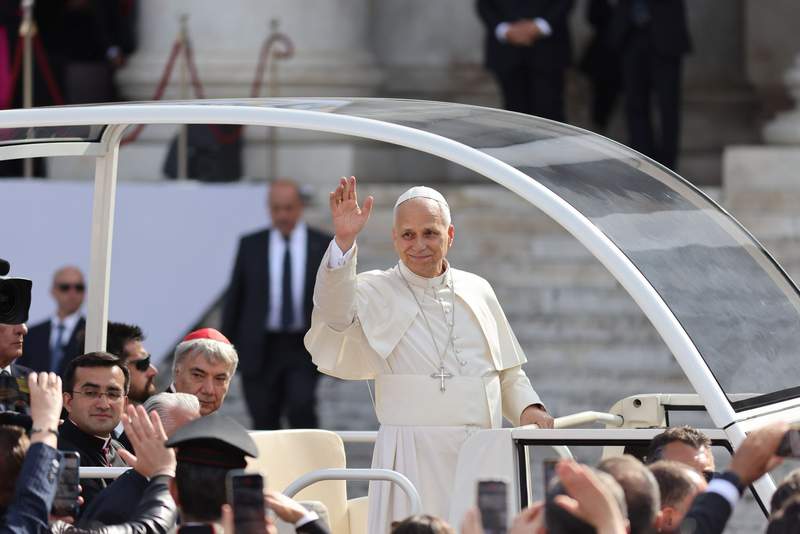
POLICY WIRE — Paris, France — It isn’t the thunder of cannons or a fresh wave of economic angst keeping Parisian elites awake; it’s the quiet contemplation of a man in white arriving late this September. Pope Leo, whose pontificate has been nothing if not subtly audacious, is slated to touch down in a nation fiercely—some might say jealously—guarding its secular soul. It’s less a pilgrimage, more a strategic, spiritual incursion, folks. And frankly, Paris doesn’t quite know what to make of it.
The Vatican confirmed the visit in an anodyne press release last week, painting it as a pastoral engagement, a ‘meeting with the faithful.’ But for anyone watching Europe’s ever-more-fragile religious and political architecture, this trip isn’t just about blessing babies. It’s about soft power, about challenging a nation whose public square has systematically, and sometimes brutally, sidelined overt expressions of faith. It’s a bold move, considering France’s commitment to laïcité, its secular framework, isn’t just a law; it’s a dogma, an identity forged in revolutionary fires.
President Valéry Dupont’s office offered a predictably cordial, if stiff, welcome. “France values dialogue — and mutual understanding,” he told Policy Wire, his tone carefully neutral. “His Holiness’s visit provides an opportunity to reflect on the enduring values of peace and human fraternity, principles we hold dear, regardless of one’s personal beliefs.” Notice he didn’t mention God, Catholicism, or even the Church. It’s an exercise in diplomatic tightrope walking, an official greeting that sounds less like a welcome and more like a carefully worded disclaimer. They’re acutely aware this visit comes at a time of heightened religious tensions across the continent—especially concerning France’s considerable Muslim population.
Because, let’s be real, the Vatican doesn’t simply send its supreme leader to a major European capital just for a Sunday service. This is geopolitics, served with incense. Pope Leo’s recent speeches have consistently focused on interfaith harmony and the plight of marginalized communities—themes that hit different in a nation struggling with immigrant integration and the rise of nationalist sentiment. Sources within the Élysée Palace whisper that they’re wary of the Pontiff’s pronouncements potentially clashing with French integration policies, particularly those regarding religious symbols in public spaces. This isn’t just about French Catholics; it’s about setting a global example for religious coexistence in increasingly secular, yet diverse, societies.
Monsignor Giovanni Rossi, a long-serving Vatican diplomat, put it plainly: “The Holy Father goes where the sheep need tending, and sometimes, those sheep are facing existential questions about identity and belief within societies that question the very relevance of faith.” He added, with a twinkle that might have been a wry smile, “It’s never just about Catholicism; it’s about humanity’s common journey, a message that resonates from Paris to Islamabad.” And there it’s: the nod to a broader canvas, the quiet acknowledgment that what happens in the heart of Europe’s secular bulwark sends signals far and wide. The global implications of such an outreach can’t be overstated. Consider, for instance, how questions of faith and state intertwine across diverse geopolitical landscapes, from the intricacies of religious exemptions in commercial law to the complexities of peace in the Middle East.
📄 POLICY WIRE WHITEPAPER PUBLISHED: PAKISTAN'S NATIONAL SECURITY POLICY PRIORITIES
👉 READ BY CLICKING HEREThe numbers don’t lie, either. While France remains historically Catholic, church attendance has dwindled drastically. A 2022 Ifop poll found that just 8% of French Catholics attend mass at least once a month, a stark contrast to past generations. This suggests the Pope isn’t merely addressing his flock, but an entire nation navigating modernity without a religious compass, an audience far larger and more diverse than his traditional congregants. He’s talking to the agnostics, the atheists, the growing Muslim communities—all the fractured pieces of contemporary France.
What This Means
This Papal visit, however short, represents a deliberate strategy by the Vatican to reassert the Church’s moral authority in Western Europe, a region increasingly skeptical of institutional religion. Politically, it’s a tightrope for President Dupont; he can’t appear too deferential to Rome without alienating secular voters, nor too dismissive without offending a substantial—though quietly declining—Catholic demographic. The economic impact might be marginal in terms of direct tourism, but the dialogue could influence global perceptions of France’s approach to religious pluralism. If Pope Leo strikes a note of genuine compassion and interfaith understanding, particularly concerning France’s significant Muslim population (estimated around 9-10% of the total, largely from North Africa and sub-Saharan Africa), it could soften some of the rhetoric surrounding French integration policies. But don’t misunderstand, the deep-seated French adherence to laïcité isn’t crumbling overnight. This visit is, instead, a public test of that resolve—a soft challenge, but a challenge nonetheless, to a country that often seems to believe its cultural identity hinges on maintaining a certain spiritual void.