


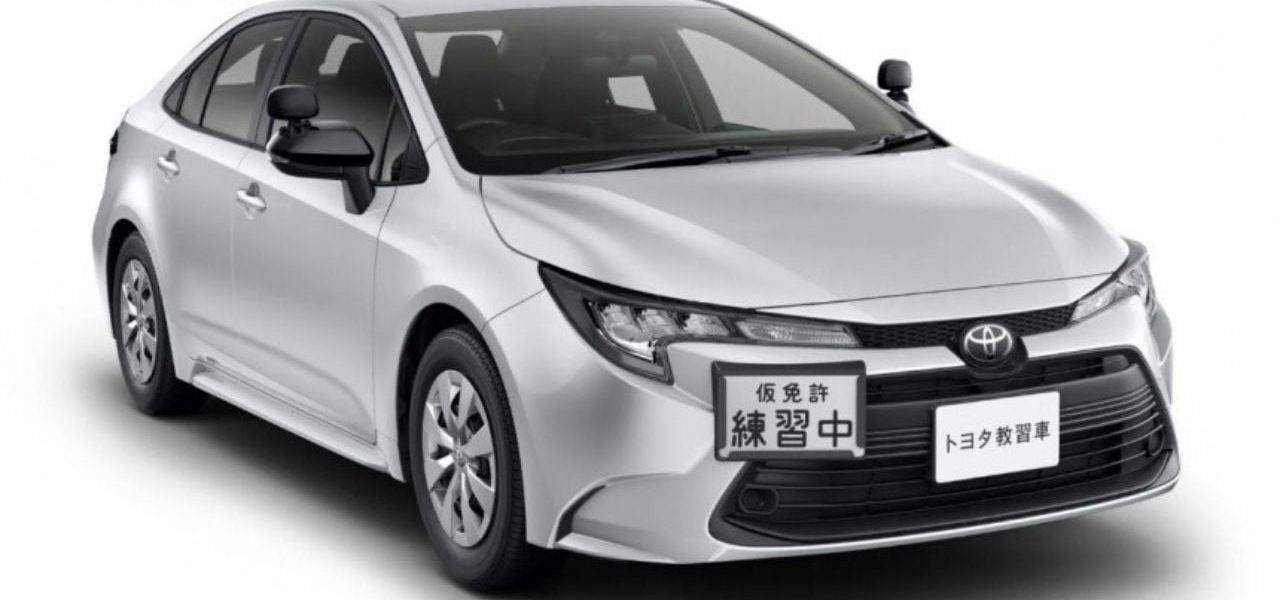
Toyota’s Phantom Gearbox: The Manual Corolla You Can’t Buy — And Why That’s The Point
POLICY WIRE — Tokyo, Japan — In an era choked by automation, where self-shifting gearboxes dominate and even electric cars dream of driving themselves, there’s a particular, almost archaic...

POLICY WIRE — Tokyo, Japan — In an era choked by automation, where self-shifting gearboxes dominate and even electric cars dream of driving themselves, there’s a particular, almost archaic longing that still flickers in the hearts of a few enthusiasts. It’s for the manual transmission. The stick shift. The third pedal. You know, the thing your grandparents probably complained about, or maybe your slightly eccentric gearhead uncle still waxes poetic about.
So, when Toyota — the purveyor of dependable, often sensible, certainly voluminous transportation — announces a manual transmission option for its workhorse Corolla, you might expect a small cheer, perhaps a mild uptick in interest. But you’d be missing the entire, delicious point. Because Toyota isn’t really building a manual Corolla for you, the regular commuter. They’re building a legend, a phantom, a whisper on the wind. It’s a trick, really. A brilliant, calculated market maneuver.
They’ve done it with the GR Corolla, specifically. And while it features a six-speed manual — a rarity these days, making up a mere 1.1% of new cars sold in the U.S. in 2023, according to Edmunds data — securing one is akin to winning the lottery while simultaneously being struck by lightning. Scarcity, after all, creates desire. Always has. It’s the oldest marketing trick in the book, repackaged with a dash of petrol-scented nostalgia.
Consider the production numbers: a precious few thousand worldwide. This isn’t mass production; it’s bespoke automotive alchemy designed to fuel online chatter — and dealer markups. You see these machines hitting showroom floors, maybe even appearing online, only to vanish into the garages of those with deep pockets or connections quicker than you can say ‘limited edition.’ It leaves regular folks, the loyal Corolla buyers, scratching their heads. Aren’t these cars supposed to be, well, for everyone?
But this isn’t about being for everyone. This is about being for someone special. Or, more precisely, making everyone else feel less special. Akio Toyoda, the company’s former CEO and a known driving enthusiast, once put it — somewhat grandly — that they’re trying to build cars that evoke ‘Waku Doki,’ a Japanese expression for excitement. Creating an exclusive, driver-focused model like this? It certainly sparks conversation. And perhaps a bit of frustration.
“It’s a love letter to driving purists, a demonstration of our continued commitment to what makes driving fun,” stated Satoshi Naka, a Toyota spokesperson, in a remarkably understated corporate email to Policy Wire. You can almost hear the wink through the corporate jargon. He didn’t mention the hundreds of desperate emails from would-be buyers. Nor the secondary market prices already soaring north of MSRP (Manufacturer’s Suggested Retail Price) for the lucky few who snagged one.
Because, really, in many parts of the world, like say, Karachi or Lahore, getting your hands on anything beyond the base model imports is often an exercise in patience and financial contortion. The parallel economies, the taxes, the specific regulations — they all mean that such niche, performance-oriented gems rarely make it to Pakistan’s dealerships. You’re more likely to see a slightly modified older model, painstakingly kept alive, than one of these factory-fresh, elusive hot hatches. And it underscores the stark divide between automotive consumption in developed markets versus burgeoning ones, where practicality, not passion, often dictates choices.
📄 POLICY WIRE WHITEPAPER PUBLISHED: PAKISTAN'S NATIONAL SECURITY POLICY PRIORITIES
👉 READ BY CLICKING HERE“They’re weaponizing nostalgia for profit, plain — and simple,” mused Dr. Anya Sharma, an automotive market analyst at Transglobal Dynamics, speaking on a recent industry panel. “This isn’t about accessibility; it’s about desirability. And frankly, it works. Every missed opportunity for a consumer just solidifies the mystique.” It makes sense, too. Who wouldn’t want what they can’t have?
What This Means
Toyota’s strategic foray into manufactured scarcity with the GR Corolla is more than just an automotive anomaly; it’s a shrewd brand play that reverberates through the entire industry. First off, it significantly elevates the Corolla nameplate. For decades, it’s been the sensible shoe of the car world. Now, thanks to its barely-there performance sibling, it gets a sheen of excitement, a sprinkle of ‘cool’ it hasn’t possessed in ages. This halo effect benefits the entire line, nudging buyers who couldn’t care less about manuals but now associate the name with something a bit spicier.
Secondly, it’s a testament to the power of niche marketing in an age of globalization — and mass production. While Nissan is making a mid-market gambit, Toyota’s playing to the superfan. By deliberately limiting supply, Toyota sidesteps direct competition with traditional sports car manufacturers and instead cultivates a loyal, passionate fan base willing to pay a premium. It fosters an aspirational narrative. And that’s pretty effective, even if it does annoy a significant chunk of would-be buyers.
Finally, it highlights a broader industry trend. As electric vehicles and autonomous tech consume research budgets, traditional, gasoline-powered performance cars — especially those with manual transmissions — are becoming modern-day unicorns. They’re a nod to a disappearing past, framed as collector’s items even before they’ve truly left the assembly line. This tactic ensures maximum buzz with minimal output, proving that sometimes, less truly is more — especially when you’re not planning to sell many anyway.