


North Sea’s Bleak Warning: Europe’s Whale Carcass Echoes Global Environmental Reckoning
POLICY WIRE — Skagen, Denmark — It isn’t often that the demise of a marine leviathan, adrift off the Danish coast, prompts a low-key diplomatic ballet. But a carcass, an undeniable punctuation...

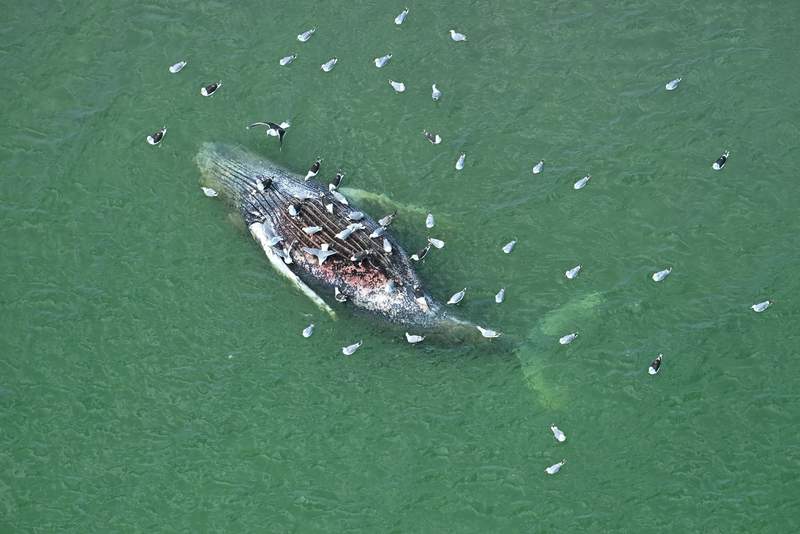
POLICY WIRE — Skagen, Denmark — It isn’t often that the demise of a marine leviathan, adrift off the Danish coast, prompts a low-key diplomatic ballet. But a carcass, an undeniable punctuation mark on the shifting policies of European environmentalism, is never just a carcass. No, it’s far more than that—it’s a data point, a political proxy, a symbol. And when it’s a whale, found floating lifeless near Denmark’s northern tip, its sheer presence triggers a joint expedition, blending German expertise with Danish bureaucratic pragmatism.
Two specialists, a German veterinary expert and a Danish Nature Agency official, are now charged with unravelling the biological mystery of its death. This isn’t just about an autopsy; it’s about discerning the health—or illness—of an interconnected ecosystem that frankly, we don’t treat all that well. It’s about piecing together signals from a silent world.
“Every incident like this offers a window, albeit a grim one, into the broader stresses our marine environments are facing,” mused Dr. Klaus Richter, a marine pathologist from the University of Kiel, speaking to Policy Wire from his lab before departing for Denmark. He’s seen too many of these. “We’re not just looking for a cause of death, you see. We’re trying to understand patterns—ingested plastics, vessel strikes, sonar disturbances. The sea doesn’t differentiate between our national borders, and neither do its problems.” His tone wasn’t accusatory, just tired.
The creature itself, a sizable cetacean by early accounts, serves as a sobering testament to humanity’s expansive footprint. The North Sea, for all its rugged beauty, remains one of the world’s most heavily trafficked maritime corridors. From giant container ships ferrying consumer goods—everything from Bavarian beer to textiles destined for markets further east—to deep-sea fishing trawlers, it’s a bustling thoroughfare. It’s an economy on the move. But it’s also a deeply disturbed habitat. You don’t get pristine ecology — and frenetic commerce in the same tight space. Not for long.
Because the oceans don’t respect invisible lines on a map, such investigations inherently demand cross-border cooperation. Jesper Larsen, Head of Coastal Management at the Danish Nature Agency, summed it up rather starkly. “It’s about shared responsibility. What affects a whale in our waters could easily be a consequence of activities hundreds of miles away. It’s imperative we work with our German counterparts; we’re effectively neighbors in this oceanic commons.” He wasn’t exaggerating; they’ve had more than their share of these marine mysteries lately.
Indeed, the health of this northern European sea has broader implications than many realize. It reflects, in miniature, the global predicament of marine ecosystems, from the polluted estuaries of the Mississippi to the plastic-choked coastlines of Karachi. Coastal communities, whether they’re European fishermen or the desperate, struggling net menders of Gwadar, Pakistan, depend on a thriving ocean. Their economies, their very way of life, hang by the same tenuous ecological threads. You just don’t hear about the Pakistani struggles often in European headlines.
📄 POLICY WIRE WHITEPAPER PUBLISHED: PAKISTAN'S NATIONAL SECURITY POLICY PRIORITIES
👉 READ BY CLICKING HEREAccording to a 2021 report from the European Environment Agency, marine plastic litter constitutes 80% of all debris in European seas, a relentless onslaught. This isn’t abstract; it’s what winds up inside filter-feeding whales. It impacts everyone. But the political will to genuinely address the source? That’s a different animal entirely. We talk about it, sure, but effective policies sometimes feel like a phantom limb, an echo of what ought to be there.
What This Means
The joint German-Danish whale autopsy, while seemingly a niche biological undertaking, speaks volumes about the intertwined nature of environmental policy and international relations in a resource-scarce world. It’s a barometer for broader trans-European cooperation, particularly concerning environmental directives that often fall prey to national self-interest or budget cuts. The economic ramifications are considerable; thriving fisheries, crucial for coastal livelihoods, depend entirely on marine health. Any indication of widespread oceanic distress could foreshadow deeper economic disruptions, from plummeting fish stocks to declining tourism revenue along heavily impacted coastlines. It forces EU member states to confront whether their commitments to marine conservation are genuinely enforceable—or just ambitious prose on paper. It’s not just a whale. It’s a flashing red light on the dashboard of our shared future, suggesting something’s gravely wrong under the surface.
It’s not just marine biology; it’s messy, pragmatic environmental geopolitics. This incident—one dead animal—underscores the silent crisis slowly suffocating our global oceans. And that, frankly, is a story everyone should be paying attention to. We can’t just wish it away, can we?