


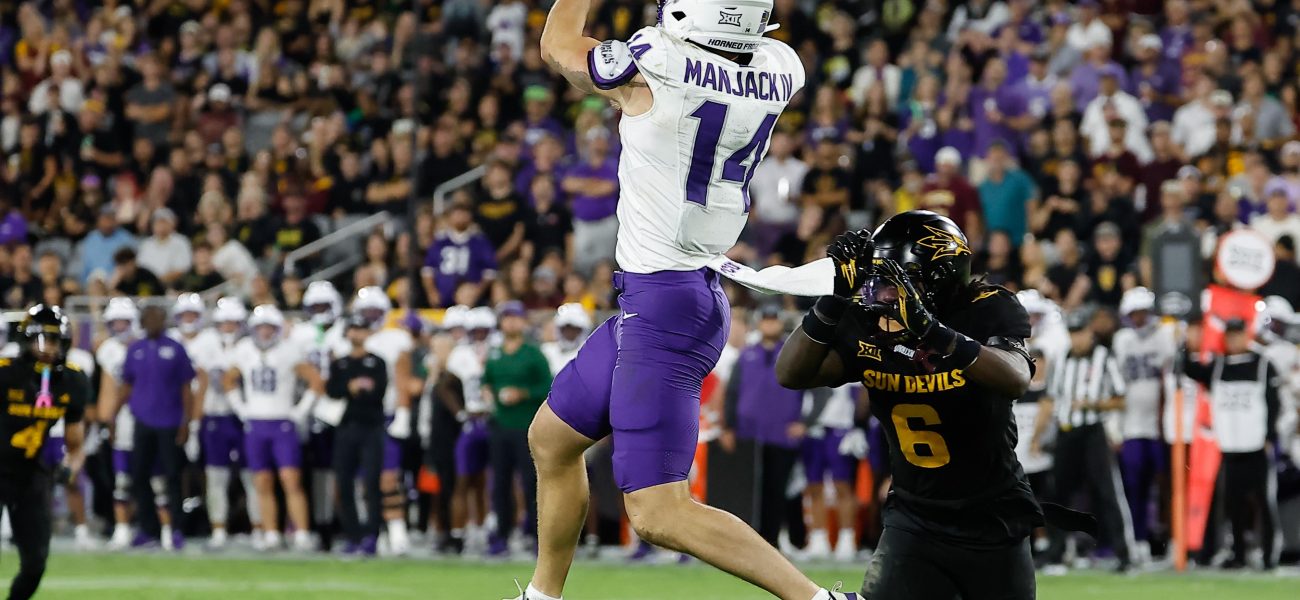
Gridiron’s Fray: Joseph Manjack IV and the Unseen Crucible of Pro Football’s Fringe Economy
POLICY WIRE — Denver, USA — Another spring. Another fresh crop of ambition, raw — and yearning, poured into the NFL’s relentless grinder. For every marquee name called with fanfare,...

POLICY WIRE — Denver, USA — Another spring. Another fresh crop of ambition, raw — and yearning, poured into the NFL’s relentless grinder. For every marquee name called with fanfare, thousands of other aspirants face a far grittier reality. These aren’t the generational talents destined for endorsement deals — and Pro Bowl nods. No, these are the unheralded, the undrafted, the ones banking on grit and a sliver of luck, like Joseph Manjack IV, a wide receiver now vying for the most ephemeral of footholds with the Denver Broncos.
It’s a gladiatorial theater, this late-round — and undrafted free agent scramble. One where futures hang on a single training camp rep, a timely block, or a crucial special teams tackle. Manjack IV, hailing from TCU — after stints at USC and Houston — isn’t here because he was hand-picked. He’s here because he scraped his way onto a list of thirteen undrafted signings the Broncos ushered in alongside their seven draft picks. And that, dear reader, is where the story gets interesting, or perhaps, painfully familiar.
Manjack IV boasts a respectable collegiate resume: fifty games played, 1,732 yards, 13 touchdowns across various programs. Last season with the Horned Frogs, he managed 44 receptions for 579 yards. He’s 6-foot-2, 197 pounds, runs a 4.51-second 40-yard dash, — and can jump a decent 36.5 inches. Good, not great. Solid, not spectacular. These aren’t the kind of numbers that scream first-round lock. But they’re the kind of numbers that give you a fighting chance to get your foot in the door — if you’re lucky enough to locate a door.
The stark reality facing Manjack, and literally thousands of others like him each year, is that the NFL isn’t just about raw talent anymore; it’s a cold, calculated exercise in roster optimization. He’s swimming in a receiver room already choked with talent: Jaylen Waddle, Courtland Sutton, Marvin Mims, Troy Franklin, and Pat Bryant are all but inked in. And, as we’re often reminded, these teams prioritize known quantities.
Because beyond the primary roster, Manjack IV’s true target is one of sixteen spots on the practice squad. There, he confronts veterans Lil’Jordan Humphrey — and Michael Bandy. These aren’t household names, but they’re valued commodities in the brutal calculus of team management. They know the playbook. They know the coaches. They know the unspoken rules. They’ve earned Sean Payton’s trust, — and that’s a currency more precious than draft stock.
“Every season, it’s a recalibration,” Broncos General Manager George Paton recently noted, reflecting on the annual churn. “We’re looking for value, for functional players who fit our scheme — and our culture. It’s less about the pedigree — and more about what they do when the pads come on. The talent pool is deep, but the fit is everything.” Paton wasn’t talking about Manjack specifically, of course, but he didn’t need to. His words echoed across the entire league. This is a business, after all, and every body on the roster represents an investment and a decision.
It’s not just about catching the ball either. Humphrey blocks like a freight train, — and Bandy is a savvy route-runner and a return specialist. Manjack IV, for all his collegiate production, will need to be all that — and then some. “Look, this isn’t a charity. It’s a meritocracy,” Head Coach Sean Payton is known to demand, his words often cutting through the typical pre-season optimism. “You show up, you produce, you fit what we’re building. Blocking, special teams – those are currency around here. If you can do the dirty work, if you contribute beyond the highlight reel, you’ve got a shot if you earn it.” That’s the gospel according to Payton, and it’s brutally clear.
📄 POLICY WIRE WHITEPAPER PUBLISHED: PAKISTAN'S NATIONAL SECURITY POLICY PRIORITIES
👉 READ BY CLICKING HEREThe NFL’s rigorous vetting of human capital, its relentless search for niche talent and functional specialists, mirrors similar economic migrations and battles for resources across the globe. From the ambitious tech engineer in Karachi eyeing Silicon Valley to the aspiring athlete in London chasing a contract in the *English Premier League*, the mechanics of aspiration and selection are brutally universal. Everyone’s vying for a slice of the pie, a shot at escaping the ordinary and securing a future, often in markets that favor established players.
But Manjack has some Payton-approved traits: sure hands, a willingness to block, a good build, and a character that hints at a strong work ethic. These are qualities that managers and coaches look for in the *human element* of their vast, intricate sports organizations. Still, statistics don’t lie. According to the NCAA, roughly 1.6% of college football players go professional, and the odds of an undrafted free agent securing a lasting roster spot — meaning sticking around for at least three seasons — hover around a meager 9%, as reported by Forbes.
What This Means
Manjack IV’s uphill battle isn’t just a sports story; it’s a microcosm of the contemporary global labor market. The NFL, in its unyielding pursuit of marginal gains and specialized talent, functions like a high-stakes, performance-driven corporate entity. It offers limited opportunities, subjecting countless applicants to intense scrutiny for positions where failure carries immediate, financial repercussions. This isn’t unique to football; it reflects a broader economic trend where established incumbents — Lil’Jordan Humphrey, Michael Bandy — possess an inherent advantage due to institutional knowledge and existing trust, often making it extraordinarily difficult for new entrants to dislodge them, even with comparable raw talent. It means individuals are forced to differentiate themselves not just through primary skills but through a host of ancillary, ‘utility’ capabilities — blocking, special teams, versatility. This hyper-competitive, globalized talent funnel creates a vast, disappointed diaspora of nearly-rans, while those who ‘make it’ become increasingly valued assets, their roles less about passion and more about optimizing return on investment for the enterprise. It’s a relentless system, a testament to the brutal efficiencies of modern capitalism. It chews up — and spits out, only ever seeking that razor’s edge advantage.
So, Joseph Manjack IV will be there. In the summer heat, grinding it out. But this isn’t merely about football, is it? It’s about dreams, dollars, — and the unforgiving reality of a meritocracy, or at least a system that claims to be one. A global capitalist system, it’s got its golden handcuffs for the few, and its cold shoulders for the many. The struggle continues.