


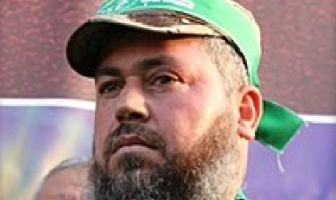
The War’s Relentless Calculus: Israel Targets Hamas Commander Amidst Gaza’s Long Shadow
POLICY WIRE — Tel Aviv, Israel — Sometimes, the quiet thud of an operation’s success echoes louder than any bomb blast. Yesterday, a quiet announcement from Tel Aviv – though, frankly, little in this...

POLICY WIRE — Tel Aviv, Israel — Sometimes, the quiet thud of an operation’s success echoes louder than any bomb blast. Yesterday, a quiet announcement from Tel Aviv – though, frankly, little in this conflict remains truly ‘quiet’ – marked another name checked off a very long list. We’re talking about the stated elimination of a Hamas leader, a guy Israel fingers as one of the architects behind the October 7th atrocities. And, well, in this unending saga, that’s just another turn of the screw.
It wasn’t presented as breaking news so much as an inevitable data point. Israeli forces claim they’ve killed Marwan Issa, identified as deputy head of Hamas’s military wing. A shadowy figure, sure, but a very real one, apparently. His reported demise comes amidst what Washington might call ‘heightened tensions,’ but most folks on the ground would simply term ‘a perpetual nightmare.’ His operational fingerprints, according to intelligence sources, were smeared across the brutal incursions that kicked off the current, devastating round of fighting. It’s a trophy killing, in a war that collects too many.
Because Israel’s military doesn’t mince words about its intentions. They’re systematically carving through the leadership, one target at a time. A senior Israeli security official, speaking on condition of anonymity due to the sensitive nature of operations, put it plainly: “This isn’t about vengeance, not solely. It’s about methodically severing the command — and control that enables these groups. We will chase every last one of the architects of terror, no matter how deep they burrow.” But as history’s proven time and again, one head chopped often means another grows, sometimes stronger, sometimes just angrier.
The international community, as is its custom, issues statements. A spokesperson for the United Nations Special Coordinator for the Middle East Peace Process voiced concern, stating, “While security forces naturally address threats, escalatory actions risk further destabilization for an already beleaguered civilian population. The tragic human cost — and the UN’s Office for the Coordination of Humanitarian Affairs (OCHA) notes over 30,000 Palestinian casualties since October 7th — requires a desperate shift toward peace.” A sentiment often repeated, rarely acted upon with full force, but it’s there. That’s the dance. It’s an elaborate, deadly tango, frankly, with predictable steps.
📄 POLICY WIRE WHITEPAPER PUBLISHED: PAKISTAN'S NATIONAL SECURITY POLICY PRIORITIES
👉 READ BY CLICKING HEREFor nations like Pakistan, this latest development resonates deeply. Across its mosques and political rallies, solidarity with Palestinians isn’t just policy; it’s a profound public sentiment. News of another Hamas leader’s death, particularly one framed by Israel as retribution for October 7th, serves only to fuel existing anti-Israel sentiment and amplify calls for more robust governmental support for the Palestinian cause. It can certainly make diplomatic maneuvering for the Biden administration—or any Western power, for that matter—a trickier proposition in regions that look at Gaza with heartbreak and fury. Prime Minister Shehbaz Sharif’s administration, grappling with its own economic woes, will undoubtedly face renewed domestic pressure to articulate a stronger, perhaps more defiant, stance on the conflict. It’s a domestic pressure cooker, effectively. The situation in Gaza isn’t some faraway skirmish for these nations; it’s a live-wire political issue.
What This Means
The alleged death of Marwan Issa isn’t some game-changing moment, not in the traditional sense, but it does inject fresh layers into an already complex political-military stew. For Israel, it’s a message: nobody is truly safe, not if you’re deemed a planner of such scale. It might temporarily degrade Hamas’s high command capabilities, perhaps creating a brief, chaotic vacuum that makes large-scale operations harder to coordinate. But that’s a short-term tactical gain in what remains a grinding, strategic impasse. History instructs us that leadership decapitations rarely solve ideological conflicts or the root causes of grievances. They mostly just create martyrs — and inspire successors. You don’t have to be a geopolitics savant to see that much. Instead of outright capitulation, you get an adaptive enemy, sometimes a more fragmented, harder-to-pin-down one. It’s like whack-a-mole, only with far higher stakes — and far more tragic outcomes. Economically, the regional instability—amplified by such strikes—continues to disrupt trade routes, stifle investment, and keep oil prices jittery, which is terrible news for countries already struggling to find their fiscal footing. Just look at the challenges faced by nations dependent on the Suez Canal or Middle Eastern stability; it’s a global web, not just a local skirmish. And on the street level, across a vast swath of the Muslim world, such news ignites protest, entrenches division, and makes any kind of normalization or reconciliation seem like an absurd fantasy. You could argue it solidifies the trenches rather than softening them. Cities across the globe, from London to Karachi, already feeling the urban pulse of this distant conflict, will see emotions — and political will — further tested. It doesn’t end anything; it just rearranges the pieces on a bloody chessboard.