

Washington’s Unseen Vapors: Rep. Omar’s Casual Remark Unmasks a Capitol Hill Reality
POLICY WIRE — Washington, D.C. — The marble halls of Capitol Hill, monuments to gravitas and grand policy, often guard secrets far more mundane, yet no less telling, than the weighty legislation they...

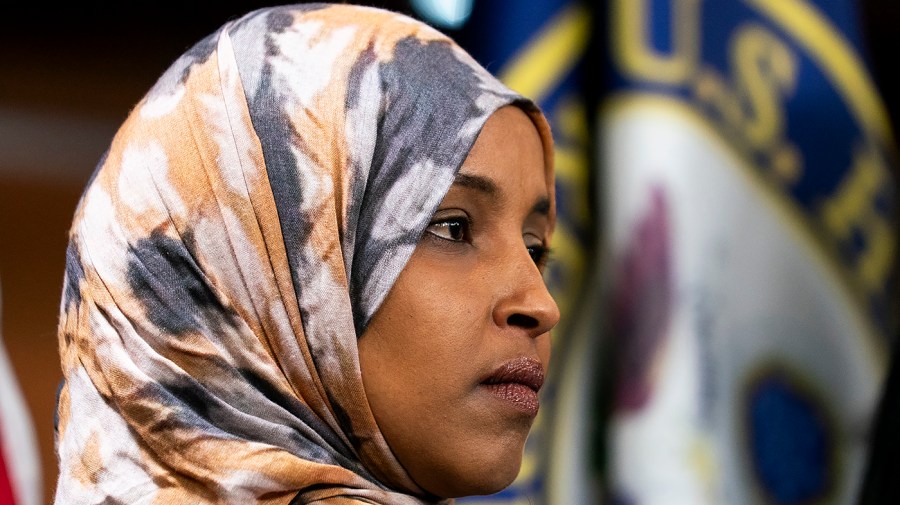
POLICY WIRE — Washington, D.C. — The marble halls of Capitol Hill, monuments to gravitas and grand policy, often guard secrets far more mundane, yet no less telling, than the weighty legislation they house. It’s in this backdrop that Congresswoman Ilhan Omar offered a casual observation recently that ripped a subtle curtain aside, exposing what many might suspect but few dare to utter: a significant chunk of U.S. lawmakers, she suggests, aren’t just discussing cannabis policy, they’re partaking in its botanical bounty.
It wasn’t a fire-and-brimstone accusation. Oh no. It was, instead, the kind of quiet aside that slices through the pretense like a well-aimed surgical scalpel. Omar didn’t claim to have witnessed a smoky congressional locker room. She merely voiced a strong suspicion that ‘a lot of people’ on both sides of the aisle engage with marijuana, a substance still federally prohibited, mind you, despite rapid state-level decriminalization. But this isn’t just about recreational habits, is it? It’s about hypocrisy.
Her remark wasn’t a sudden burst of candidness; it felt more like an exasperated sigh, a nod to the unspoken reality floating just beneath the surface of official Washington. “It’s not about recreation, it’s about hypocrisy,” Omar reportedly told a closed-door gathering of congressional aides, emphasizing, “The chasm between public perception and private practice on this hill is a canyon. We legislate with one hand — and discreetly partake with the other.” And she’s not wrong. Because for decades, Congress has wrangled over drug scheduling, federal prohibitions, and punitive measures, while simultaneously—if her estimation holds—some of its own members quietly subvert those very rules.
The evolving landscape of cannabis legality nationwide only sharpens the irony. Thirty-eight states and Washington D.C. have now legalized medical marijuana, with 24 having approved adult recreational use. Yet, Capitol Hill remains ensnared in a federal classification that deems cannabis a Schedule I controlled substance—on par with heroin. It really highlights the enduring paradox of Washington’s ability to debate minutiae while ignoring clear shifts in public sentiment and state-level policy.
A 2023 Gallup poll, for instance, indicated that 70% of Americans now believe marijuana should be legal, an all-time high. That’s a staggering supermajority. You’d think, given those numbers, that legislative reform would be a high-priority item, not an unspoken secret of congressional self-medication.
Naturally, Omar’s comments didn’t exactly charm everyone. Many conservatives, predictably, found the suggestion distasteful. “Suggesting a substantial portion of our elected officials are engaged in illegal drug use, even for ‘therapeutic’ purposes, is hardly the kind of decorum the American public expects from its representatives,” stated Representative Andy Barr (R-KY), a known fiscal conservative, in an emailed statement. “This kind of rhetoric simply distracts from the serious work at hand.” But, you know, does it really distract, or does it simply illuminate a disconnect? A significant number of lawmakers appear to have a rather relaxed interpretation of laws they themselves uphold with a straight face.
📄 POLICY WIRE WHITEPAPER PUBLISHED: PAKISTAN'S NATIONAL SECURITY POLICY PRIORITIES
👉 READ BY CLICKING HEREThis internal friction isn’t confined to American shores, of course. Across the globe, nations grapple with evolving drug policies, often with a stark double standard. While Western nations debate federal cannabis legalization, developing countries, including many in the Muslim world like Pakistan, continue to enforce stringent—sometimes religiously-informed—prohibitions. It’s a striking contrast to places like Lahore, where public services often leave communities to fend for themselves on more basic public safety matters, rather than fret over the recreational habits of their elite.
What This Means
Representative Omar’s blunt assessment, though anecdotal, points to a deeper malaise within the U.S. political system: a stubborn refusal by the federal government to reconcile its outdated drug laws with present-day societal realities and shifting public opinion. The economic implications are substantial; a federally legalized cannabis industry could generate billions in tax revenue, create countless jobs, and provide a new export commodity. Politically, this dissonance perpetuates a perception of hypocrisy, eroding trust in institutions. It also exposes a class divide. Lawmakers can ‘discreetly partake,’ while countless ordinary citizens, especially from marginalized communities, have faced and continue to face severe penalties for similar, or lesser, offenses.
The statement isn’t just about cannabis; it’s a window into the unspoken rules of Washington. It shows us that what gets said in public, what becomes law, and what happens behind closed doors are often three wildly different narratives. And for those watching from abroad, particularly from nations under pressure from Washington to adhere to certain social norms, it simply adds another layer of skepticism about the sincerity of American leadership.