

Theology Meets White House: When Prayer Breakfasts Stir More Than Just Coffee
POLICY WIRE — Washington D.C., USA — In the sprawling theater of American politics, few stages draw as much scrutiny as the intersection of faith and governance. Sometimes, it’s a quiet murmur; other...

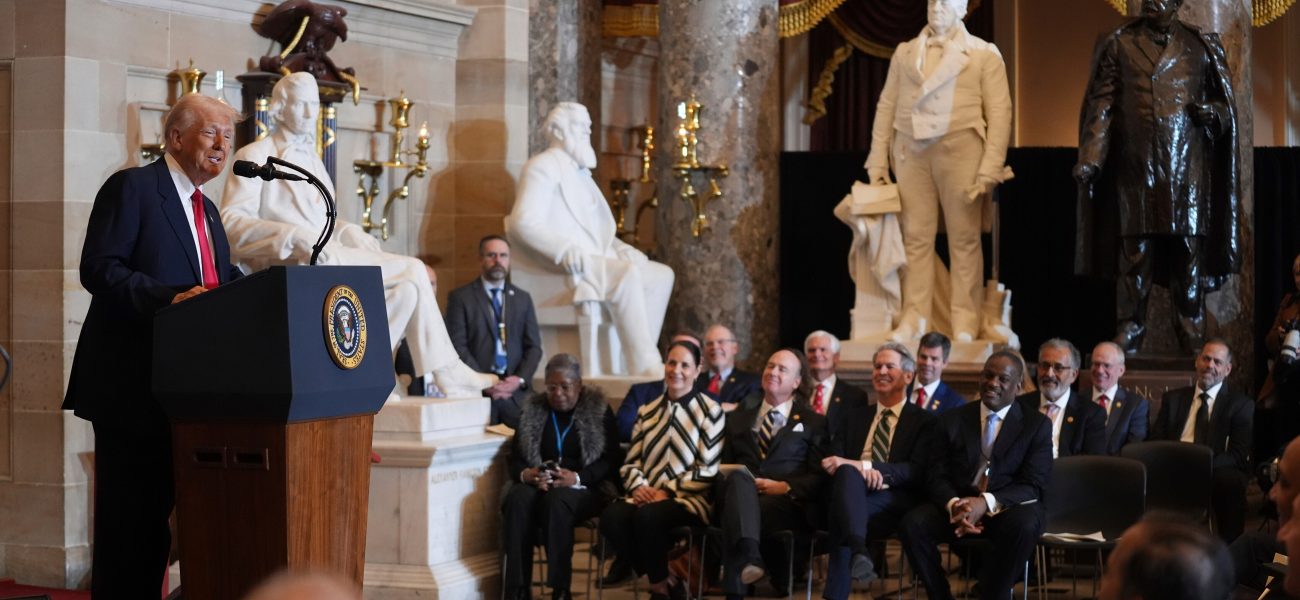
POLICY WIRE — Washington D.C., USA — In the sprawling theater of American politics, few stages draw as much scrutiny as the intersection of faith and governance. Sometimes, it’s a quiet murmur; other times, a veritable gale. Today, we’re witnessing the latter—a tempest, really—as the White House gears up to throw its weight behind a religious confab many critics contend blurs separation lines well past recognition. Not merely a pastoral assembly, you see, but an organized expression some brand as Christian nationalism, dressed in prayer.
It’s an old trick, harnessing the divine for earthly gains. Politicians have been doing it since—well, forever, haven’t they? But the sheer, unabashed public embrace from the highest office of an event linked explicitly to a contentious theological-political ideology? That’s a different animal entirely. The administration’s intent, proponents suggest, is simply to acknowledge the faithful. And millions *are* faithful. But sometimes, what you say you’re doing — and what the optics scream are two very separate propositions. You don’t have to be a seminarian to grasp that.
The gathering, an annual affair, has historically seen a broad guest list. But its association with certain leaders and the messaging frequently echoing tenets of Christian nationalism—a belief system suggesting the U.S. was founded as a Christian nation and its laws should reflect Christian values—has elevated its profile, and its detractors. One such group, Americans United for Separation of Church and State, noted recently that their polling indicates a significant majority of Americans, around 70 percent according to a 2021 Pew Research study, believe government should remain separate from religious institutions. Hard to argue with those numbers. Still, this administration—it doesn’t seem to mind bucking trends.
“We’re a nation of believers, and it’s right to seek divine guidance for our leaders,” stated a senior White House aide, who preferred to speak on background, articulating a view commonly expressed within conservative religious circles. “The notion that we shouldn’t acknowledge God in public life is precisely the kind of secular overreach this event aims to counteract.” And perhaps it does. Or perhaps it merely hardens battle lines. From the other side of the fence, however, the perception couldn’t be more different. “This isn’t about individual prayer; it’s about state endorsement of a specific, exclusionary religious ideology,” countered Rachel Greene, Director of Policy for the Freedom From Religion Foundation. “It undermines the very bedrock of our pluralistic democracy and sends a chilling message to citizens who don’t conform to a Christian-first worldview.”
It isn’t just domestic tremors these events create. Imagine, if you will, the view from nations where the intertwining of faith and state is not a debated ideal but codified law. Think of Pakistan, for instance, a nation grappling with its own complex, often volatile, dance between Islamic identity and democratic aspirations. From Lahore to Islamabad, where religious decree frequently finds its way into public policy, a U.S. administration overtly embracing a particular religious strain could easily be perceived through a lens of hypocrisy, or worse, as validating similar religiously-driven political moves abroad. It feeds into narratives that the ‘secular West’ is merely putting on a show, secretly guided by its own holy texts. That sort of perception isn’t helpful, to say the least, especially when navigating delicate geopolitical landscapes.
📄 POLICY WIRE WHITEPAPER PUBLISHED: PAKISTAN'S NATIONAL SECURITY POLICY PRIORITIES
👉 READ BY CLICKING HEREThe Trump team, known for its strategic flirtation with its evangelical base, likely sees this as an uncomplicated win. They’re speaking to their choir, — and the choir, let’s be honest, loves a good Hallelujah. They’ve long held the belief that they’re battling a cultural war, that traditional American values—which they frequently conflate with Christian values—are under siege. For them, participating in such a gathering is less an endorsement of Christian nationalism and more a defiant flag-planting against what they term liberal secularism. It’s performance art, really. Politics, after all, is rarely subtle these days. It screams.
What This Means
The political implications here are stark, — and surprisingly cyclical. On one hand, the administration successfully energizes its religiously conservative base, solidifying their support ahead of any future electoral contests. This group is a significant, organized voting bloc, — and ignoring them is a luxury few politicians can afford. So, they turn out, they pray, and they vote. But on the other hand, this overt religious alignment risks alienating a broad swath of American society—those who cherish strict separation of church and state, those of other faiths, and even many Christians who believe faith should influence personal ethics, not dictate public law. Economically, while not directly impactful in terms of GDP, the continued fostering of such division creates social instability, potentially dampening consumer confidence or investment in areas perceived as ideologically charged. It doesn’t scream ‘unity,’ does it? on the global stage, this further cements perceptions of American exceptionalism steeped in religious particularism. This can complicate diplomatic efforts in non-Christian majority nations, providing ammunition for adversaries who seek to paint the U.S. as a religiously biased power. It’s a double-edged sword, and its keenest edge usually cuts both ways.