


Cricket’s Silent Summit: A Geo-Political Handshake on the Pitch?
POLICY WIRE — Ahmedabad, India — The cricketing world, often seen as anodyne, a simple contest between bat and ball, occasionally throws up a quiet moment freighted with more geo-political baggage...

POLICY WIRE — Ahmedabad, India — The cricketing world, often seen as anodyne, a simple contest between bat and ball, occasionally throws up a quiet moment freighted with more geo-political baggage than a stack of UN resolutions. Such a moment looms in 2026. Because tucked into the International Cricket Council’s calendar is a Board meeting slated for Ahmedabad—a stone’s throw, geographically speaking, from where the Indian Premier League final is expected to electrify fans.
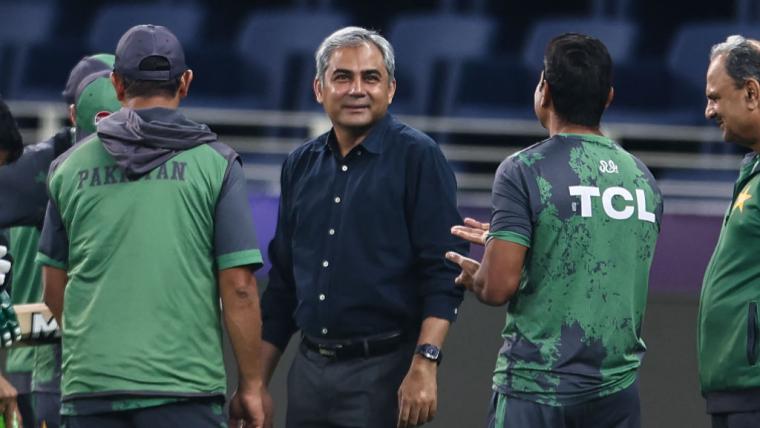
It’s not just a scheduling quirk, though. That timing places Mohsin Naqvi, the Pakistani Cricket Board’s rather new chairman, squarely in India, just as the most lucrative T20 league on the planet crowns its champion. Think about it: a top Pakistani official on Indian soil, while an event historically off-limits to his nation’s players, captures global attention. And for two nations whose shared passion for the sport has long been choked by diplomatic frost, even the possibility of shared air can feel like a seismic shift.
For years, a cold war has defined India-Pakistan cricketing relations. Bilateral series? Forget it. Players from either side playing in each other’s domestic leagues? Pure fantasy. It’s a boycott by other means, costing millions and—more importantly—depriving a generation of the most intense rivalry sport can offer. But diplomacy, even when it’s strictly behind the scenes, finds its cracks. This ICC conclave, then, isn’t just about future scheduling or administrative tweaks. It’s an accidental intersection of sporting might — and political sensitivity.
Naqvi, an insider who also heads Punjab’s provincial government, isn’t some starry-eyed cricket romantic. He understands the optics, the whispers. And he’s got to manage a national sentiment always primed to interpret any move towards India with intense scrutiny—and frequently, suspicion. A fleeting handshake, a polite nod across a banquet table, these things often hold more weight than formal declarations. “We’re there to represent Pakistan’s interests in global cricket, not to score diplomatic points,” Naqvi, never one to mince words, was reported to have commented to associates recently. But then, isn’t merely being present a kind of point?
His counterpart, or rather, his potential host, could be Jay Shah, the Secretary of the Board of Control for Cricket in India (BCCI), also an Asian Cricket Council president, and a man whose influence on the game runs deeper than many realize. His pronouncements tend to be measured, carefully calibrated. “India’s always been a generous host for world cricket, — and the ICC meetings are paramount for the game’s future. Our focus remains solely on its governance,” Shah apparently told journalists on the sidelines of a recent industry event, sidestepping the larger narrative. But even that sort of careful neutrality speaks volumes.
📄 POLICY WIRE WHITEPAPER PUBLISHED: PAKISTAN'S NATIONAL SECURITY POLICY PRIORITIES
👉 READ BY CLICKING HEREThe stage, naturally, will be set in Gujarat, Indian Prime Minister Narendra Modi’s home state, and Ahmedabad, a city where cricket is almost a religion. That a Pakistani official could potentially witness—or at least be in the vicinity of—the IPL final is layered with delicious irony. The IPL itself, now an economic titan, scarcely needs more buzz, but the underlying narrative of regional détente (even imagined détente) makes for compelling copy. According to D&P Advisory’s ‘Indian Premier League Brand Valuation Report 2023,’ the league’s brand value soared to an astounding $10.7 billion, solidifying its place as a global sports behemoth. This isn’t just a game; it’s big business.
What This Means
The geopolitical temperature between India — and Pakistan is often read through their cricket. For years, the absence of bilateral tours has been a tangible sign of their frozen relationship, an open wound for fans in both nations. This specific ICC meeting, coinciding with a mega-event like the IPL final, doesn’t automatically herald a dramatic thawing. Not at all. But it does create a rare window for informal interactions—a kind of ‘corridor diplomacy’ in casual clothes. The presence of a senior Pakistani official on Indian soil, amidst the electrifying energy of an IPL final, would carry immense symbolic weight, especially for a Muslim-majority nation whose regional influence has often been overshadowed by larger neighbors. It’s an opportunity for nuanced signalling, an unwritten communiqué passed in glances and handshakes that might suggest a slight easing of a seemingly intractable impasse, however minor. Economically, while a full resumption of ties would obviously bring massive revenue, even a tacit acknowledgment could open doors for future collaborations, perhaps even in areas beyond sports, subtly shifting regional dynamics. Because sometimes, a shared stadium, even an unwatched game, can set a different precedent.