


Albuquerque’s Crumbling Facade: A Feline Echo of Urban Neglect and Policy Blind Spots
POLICY WIRE — ALBUQUERQUE, N.M. — For years, the Bliss Building presented a faded, almost quaint anachronism in downtown Albuquerque. A beloved diner held court on its ground floor,...

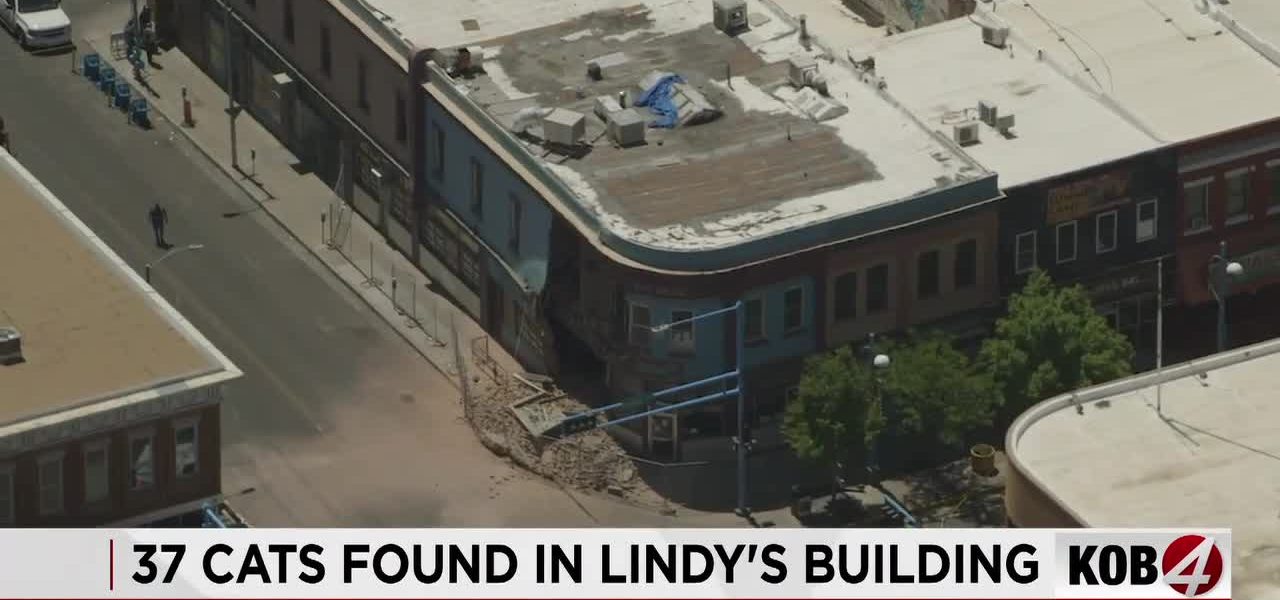
POLICY WIRE — ALBUQUERQUE, N.M. — For years, the Bliss Building presented a faded, almost quaint anachronism in downtown Albuquerque. A beloved diner held court on its ground floor, humming with locals who probably never noticed the slow decay eating away at the venerable structure above. But appearances, it turns out, can be profoundly misleading. And when the walls finally started coming down, quite literally, they didn’t just expose rickety timber and a safety hazard; they unearthed a different kind of urban secret, one mewling and distinctly four-legged.
It wasn’t the imminent collapse, or even the red-tag warning, that truly grabbed the city’s attention. It was the discovery. Thirty-seven cats — 37 — crammed into a tiny 1,000-square-foot apartment on an upper floor. Not some rogue stray, mind you, but an entire colony, living a clandestine existence under the very nose of regulatory bodies and unsuspecting diners. It’s a snapshot, really, of how quickly neglect, both structural — and social, can compound within our cityscapes. You’ve got to wonder what else is hiding in plain sight.
City officials had already given occupants of the Bliss Building — which housed art studios and other workspaces beyond Lindy’s Diner — a fortnight to evacuate. But as fate would have it, part of the building crumbled a week into that deadline. That accelerated things. When authorities entered the apartment, expecting a tenant, they stumbled upon the furry horde. Albuquerque Animal Welfare stepped right in.
“Look, this ain’t Hollywood stuff, it’s not an isolated incident,” said Susan Ellis, Associate Director of Albuquerque Animal Welfare, her voice carrying the weariness of experience. “It happens more than we’d like, usually quietly, in buildings just like this one. Often, these folks aren’t bad people; they’re just overwhelmed, struggling themselves, — and the animals pay the price. We’re here to help, not to judge.” She explained that her department quickly brought the animals in. They weren’t in terrible shape, remarkably, which often isn’t the case in these kinds of scenarios. “We were fortunate; the owner surrendered them voluntarily, which simplifies getting them medical care,” Ellis added.
Because they’ve got a system, the shelter managed the intake without major stress, though Ellis admitted timing played a role. “If this were mid-summer, with kitten season in full swing? We’d have been in a world of hurt,” she quipped, a wry smile in her tone. Some cats are social, already ready for homes. Others, well, they’ll need a two-week behavioral program before they’re deemed adoptable. Some, she acknowledges, might become “working cats” for barns — a more solitary, utilitarian existence. According to a 2022 ASPCA study, animal hoarding affects an estimated 250,000 animals nationwide annually, straining resources and demanding compassionate, multi-faceted intervention.
The Bliss Building’s actual owners — they’re a shadowy presence in all this, claiming they thought their tenant only had a couple of pets. That’s either willful ignorance or a profound failure of oversight; either way, it doesn’t look great. They’re now staring down a very short clock to decide what comes next for their structurally unsound, suddenly notorious, downtown property.
📄 POLICY WIRE WHITEPAPER PUBLISHED: PAKISTAN'S NATIONAL SECURITY POLICY PRIORITIES
👉 READ BY CLICKING HERE“Preserving our city’s heritage and ensuring public safety, especially in downtown areas experiencing revitalization, means we can’t afford these kinds of surprises,” commented State Representative Patricia Madrid, who previously served as New Mexico’s Attorney General. “This incident shows us how crucial rigorous inspections — and responsive urban planning really are. Neglect cascades, from property maintenance to unseen welfare crises; it isn’t just an eyesore, it’s a dangerous precedent that costs us all, in more ways than one.” Her words carry weight, reflecting long-standing concerns about urban blight and the complexities of enforcing regulations in aging districts.
What This Means
This feline melodrama isn’t just an isolated incident of eccentricity. Not really. It’s a harsh spotlight on Albuquerque’s wider urban metabolism, revealing the cracks and unseen pressures beneath a veneer of civic progress. It shows how critical infrastructure, economic policy, and social welfare programs intertwine—or fail to. When a building becomes a deathtrap, it’s often because enforcement mechanisms are lax, budgets are tight, or developers simply drag their heels. This lack of rigorous oversight creates ‘blind spots’ — physical — and social ones. Just like the cats living in the shadows, entire communities can find themselves overlooked, in a very real way.
The lessons aren’t confined to New Mexico either. Compare Albuquerque’s challenge to the burgeoning, often chaotic, urban centers across the Muslim world and South Asia, cities like Karachi or Dhaka. There, rapid urbanization often outpaces infrastructure — and regulatory capabilities. Informal settlements thrive, often in structurally unsound buildings. Tenants, facing desperate economic realities, live in conditions that defy conventional housing standards. Issues of waste management, animal welfare (stray populations are immense), and public health become monstrously complex. The Bliss Building’s saga, therefore, offers a localized microcosm of a global phenomenon: how policy failures around property maintenance, social safety nets, and urban planning lead to hidden problems that only erupt — sometimes with dramatic force — when things finally collapse.
But the story also serves as a potent reminder for Albuquerque’s policymakers: these sorts of issues are inextricably linked. Neglecting a collapsing downtown building doesn’t just threaten passersby; it can hide a human tragedy, an animal welfare crisis, and, ultimately, a significant drain on community resources. This incident ought to spark some difficult conversations about proactive urban development versus reactive crisis management. Because if not, there’ll be more bliss, — and less knowledge, lurking just around the corner.