


Under a Burning Sun: Israel’s Eastern Gambit and the Unquiet Sands of the Middle East
POLICY WIRE — Jerusalem — The sand, perpetually restless in this ancient part of the world, never truly settles. And neither, it seems, does the quiet — not when Israel’s military is on maneuvers....

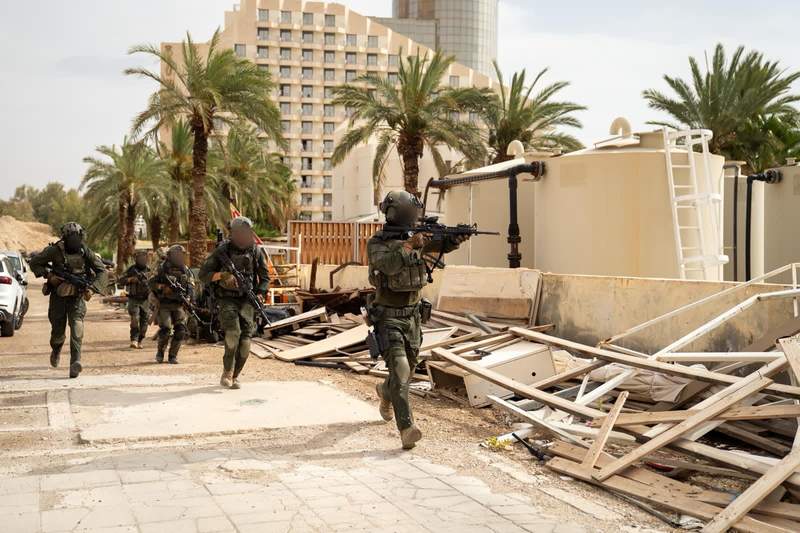
POLICY WIRE — Jerusalem — The sand, perpetually restless in this ancient part of the world, never truly settles. And neither, it seems, does the quiet — not when Israel’s military is on maneuvers. This time, the rumble came from the parched plains along the eastern frontier, stretching down to the desolate beauty of the Dead Sea, where the Israel Defense Forces (IDF) recently wrapped up a sprawling readiness exercise cryptically dubbed ‘Sulfur and Fire.’ It wasn’t just a routine run-through; this was a deliberate flex, a pointed reminder that while the international gaze might drift elsewhere, the furnace of regional friction remains stoked.
Picture it: weeks of coordinated havoc, air force jets screaming low over biblical landscapes, armored columns kicking up plumes of dust that could be seen for miles. We’re talking about thousands of ground troops, commandos, intelligence units, even medical personnel—all of them rehearsing what amounts to a large-scale war scenario. The official line? It’s about readiness. Because, frankly, in this neighborhood, you’re either ready or you’re history.
But readiness, of course, is a performance. And who exactly was the audience for this particular show of force, positioned precisely where Israel abuts Jordan, a nation that walks its own diplomatic tightrope? The unspoken narrative here feels a little bit like shouting into a canyon – it’s less about communication and more about the echo. The drills didn’t target one enemy specifically. No. Instead, they projected an omnipresent preparedness against, well, everyone who might be thinking about messing around. It’s a classic deterrent move, dusted off — and given a contemporary shine.
Defense Minister Yoav Gallant, always one to articulate Israel’s harder edges, left no room for doubt. “Our resolve isn’t etched in stone; it’s carved into the very desert floor,” he declared during a fly-through, the unmistakable implication being that Israel expects to fight, and fight hard, anywhere, anytime. He didn’t mention names—he rarely needs to—but everyone understands the coded language. Iran, obviously. Syria, naturally. Proxies — and various non-state actors operating with increasing boldness across borders. But this exercise on the eastern side? That raises eyebrows, makes you wonder what specific contingencies they’re mapping out. Maybe it’s a dry run for pushing back against potential incursions, or maybe—and this is the part that gets diplomats edgy—it’s signaling a capacity to project force outward.
Jordan, predictably, maintained its diplomatic decorum. One high-ranking Jordanian diplomat, speaking on background from Amman, noted, “We watch these developments with a close, but clear, eye. Regional calm, we believe, demands a delicate balance, a respect for all sovereign boundaries. We hope that such exercises contribute to that stability, not detract from it.” It’s a sentiment as threadbare as some of the Bedouin tents dotting the landscape, but it remains their consistent—and frankly, most practical—public stance. You don’t pick unnecessary fights when your neighbor’s tanks are literally rehearsing outside your back door.
📄 POLICY WIRE WHITEPAPER PUBLISHED: PAKISTAN'S NATIONAL SECURITY POLICY PRIORITIES
👉 READ BY CLICKING HEREThe strategic noise from Israel’s eastern border echoes far beyond, reaching capitals like Islamabad, where strategic analysts monitor every twitch in the geopolitical muscle. The ongoing regional ferment—Israel’s drills, Iran’s posturing, the always-bubbling Palestinian question—doesn’t just shape immediate neighborhood policy; it subtly recalibrates defense discussions across the wider Muslim world. For Pakistan, for instance, a strong, unpredictable Israel in a volatile Middle East serves as another layer to an already complex global security calculus, perhaps indirectly bolstering arguments for sustained military modernization and independent defense postures in the face of perceived external threats. It’s never just about Jerusalem; it’s about a global chessboard where each move resonates, even if faintly, thousands of miles away.
Because ultimately, these military theatrics happen against a backdrop of increasing regional instability. Globally, defense budgets reached an all-time high of $2.2 trillion in 2022, according to SIPRI data, with significant portions concentrated in regions defined by ongoing conflict and perceived threats. Israel, naturally, contributes to that tally, and every dollar spent on these elaborate rehearsals is a dollar not spent on, well, anything else. It’s the relentless economic consequence of maintaining vigilance.
What This Means
The ‘Sulfur — and Fire’ exercise, beyond its tactical implications, acts as a multi-layered signal. Politically, it reasserts Israel’s unwavering security doctrine in a region desperate for stability but persistently prone to rupture. It’s a firm reminder to Tehran—and anyone else eyeing Israel with ill intent—that the IDF’s capabilities are comprehensive and ever-ready, spanning land, air, and sophisticated intelligence operations. Economically, these large-scale drills are not cheap; they represent a continuous, substantial investment, a cost of doing business in a neighborhood where deterrence is a commodity often bought with hard cash and even harder resolve. And this cycle continues, because there isn’t a peace dividend being planned anytime soon in these parts. The performance of force has become, for better or worse, a default setting, keeping the pot bubbling without quite boiling over—for now. It’s a delicate, dangerous ballet where the price of a misstep is unimaginably high, affecting not just immediate neighbors, but also shaping security discussions from Cairo to Kuala Lumpur. Everyone watches. Everyone plans. And the dust just keeps on blowing.