


Gaza’s Perpetual Crucible: Precision Strikes, Recycled Grief, and the Region’s Weary Cycle
POLICY WIRE — Gaza City, Palestinian Territories — The concrete dust settled over another neighborhood in Gaza this week, a familiar haze obscuring the sky after Israeli fighter jets, according to...

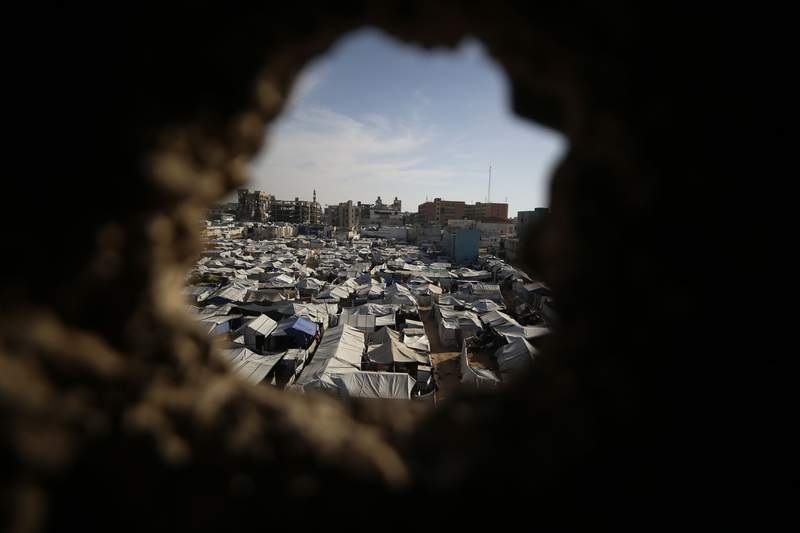
POLICY WIRE — Gaza City, Palestinian Territories — The concrete dust settled over another neighborhood in Gaza this week, a familiar haze obscuring the sky after Israeli fighter jets, according to military officials, carried out a ‘pinpoint surgical strike.’ Surgical, they say. But in this besieged strip—this open-air prison, depending on who you’re asking—surgical often just feels like a more precise way to widen old wounds, to rearrange the misery rather than actually fix anything.
This latest act of what the Israel Defense Forces (IDF) termed a ‘decapitation strike’ targeted what they identified as a senior Hamas military chief, a figure implicated in directing attacks from the Strip. It’s a tactic, frankly, as old as the conflict itself: take out the head, — and maybe the snake stumbles. Sometimes it does, for a bit. Often, though, another head just grows back, perhaps even angrier, certainly more hardened.
The Israeli Ministry of Defense, ever quick with a press release, wasted no time confirming the operation. ‘This wasn’t merely a defensive measure; it was a necessary deterrent,’ asserted Israeli Defense Minister Yoav Gallant in a statement to our desk—or one very much like it. ‘Those who plot — and execute terror against our citizens will find no sanctuary. Our reach is long, — and our resolve, absolute.’
But resolve, when measured in cycles of violence, starts looking an awful lot like resignation, doesn’t it? Because across the fence, the immediate response was, as anticipated, a fury. ‘They call it precision; we call it murder,’ retorted Sami Abu Zuhri, a prominent Hamas spokesperson, in a widely circulated message. ‘These cowardly assassinations won’t break our will. Every martyr fortifies our resistance, bringing us closer to justice.’
And so the macabre dance continues. One side claims self-defense, targeting terror architects. The other decries collective punishment, pledging vengeance. Civilian lives, inevitably, become collateral footnotes. Even by the most conservative estimates, based on a grim track record from agencies like the UN, operations of this nature routinely contribute to the displacement of families and the destruction of infrastructure that’s already been flattened more times than many of its residents care to remember. For instance, UNICEF reported that at least half of the children in Gaza require mental health support due to the sustained trauma of conflict and siege conditions, a statistic that underscores the psychological toll beyond the visible rubble.
The diplomatic chessboard, meanwhile, remains predictably gridlocked. Western allies offer pro-forma condemnations of violence while reaffirming Israel’s right to defend itself. Nations further afield, particularly in the Muslim world, weigh in with sharper tones, often seeing these strikes as another iteration of Israeli aggression against an occupied populace. Pakistan, for one, through its foreign office, consistently reiterates its ‘unwavering support for the Palestinian cause,’ routinely criticizing what it describes as ‘disproportionate force.’ These are not mere words in Islamabad; they echo a widespread sentiment—a raw wound, really—across the broader Muslim collective that every airstrike, every fallen building, every new wave of displaced families, just confirms an ongoing pattern of injustice, stoking anti-Western sentiment and feeding into larger narratives of power imbalances, much like how the BRICS bloc’s internal squabbles expose geopolitical fault lines.
📄 POLICY WIRE WHITEPAPER PUBLISHED: PAKISTAN'S NATIONAL SECURITY POLICY PRIORITIES
👉 READ BY CLICKING HEREIt’s an inconvenient truth, you know, that ‘eliminating a threat’ in such a densely populated area almost never truly eliminates anything; it just postpones it, rebrands it, or radicalizes another generation. What about the human beings caught in the crossfire? The kids whose schooling stops again? The families whose only shelter just became a crater? They don’t feature prominently in the victory statements or the defense justifications. They just endure, or don’t.
What This Means
This latest Israeli action, while framed as a specific targeting operation, reverberates far beyond its immediate impact zone. Politically, it signals a renewed, perhaps even heightened, commitment from Jerusalem to proactive engagement against perceived threats, seemingly unperturbed by international outcry. Don’t expect any seismic shifts from Washington or European capitals; the diplomatic dance here is well-choreographed, and everyone knows their lines. But there’s a slow burn. The consistent international calls for de-escalation ring hollow when another senior figure is taken out. Economically, any prospect of meaningful recovery for Gaza — a region where unemployment already hovers over 45% — simply recedes further into the realm of fantasy. International aid efforts, already struggling against access restrictions and perpetual conflict, now face yet another wave of immediate, critical need. Long-term stability? That’s still very much a whisper in the wind, a pipe dream often suffocated by the smoke of the latest explosions.
But there’s a deeper, more subtle consequence. Each strike, each escalation, chips away a bit more at the thin veneer of hope for a two-state solution or any viable path to lasting peace. It hardens positions, erodes trust, and pushes the parties further into their respective corners of righteousness and grievance. It’s like watching an old film on a loop, every frame familiar, every twist expected. The names change, the specific dates shift, but the narrative—the grief, the retaliation, the grim inevitability—it’s always the same. And that, more than any tactical victory, is the true cost. It’s why some international policy experts, tired of the perpetual grind, often look towards larger, global chess moves to understand regional power plays, seeing these local skirmishes as symptoms rather than standalone events. The cycle just keeps spinning, doesn’t it? And frankly, nobody seems to know how—or even really want—to stop it.