

Pacific Divide: Baseball’s Billion-Dollar Bragging Rights and the Unsettled West
POLICY WIRE — San Diego, USA — The long summer stretches out like a high-stakes poker game, where fortunes ebb and flow not by the hand of a dealer, but by the capricious bounce of a baseball and the...

POLICY WIRE — San Diego, USA — The long summer stretches out like a high-stakes poker game, where fortunes ebb and flow not by the hand of a dealer, but by the capricious bounce of a baseball and the durability of millionaire athletes. It’s a marathon, this particular American pastime, one where the final sprint often belies months of unseen grinding, strategic wagers, and a quiet, brutal war of attrition. Forget the pristine highlights reel; the real story unfurls in the weary travel days, the inevitable slumps, and the constant threat of a career-altering injury. But don’t let the bucolic veneer of ‘America’s Game’ fool you—it’s a multi-billion dollar enterprise, where narratives of dynasty and disappointment are etched in very real ledger books.
And nowhere does this financial and athletic calculus feel more pronounced than in Major League Baseball’s National League West, currently dominated by the Los Angeles Dodgers. They’ve owned this patch of California for what feels like an eternity, snagging division titles as casually as a late-night snack. But a hungry San Diego Padres outfit, no strangers to a heavy wallet themselves, have started snapping at their heels, turning what might’ve been another coronation into something resembling a genuine dogfight. This ain’t some charity exhibition. This is business.
Last year, the Padres wrapped things up a mere three games back, close enough to taste it—close enough to push the formidable Toronto Blue Jays into a grueling seven-game, extra-innings brawl come November. That’s a stark reminder that even the most well-oiled machine can sputter when an opponent shows true grit (and enough capital to fund it, obviously). This isn’t just about bat-and-ball anymore; it’s about deep-pocketed investors, broadcast deals that dwarf national budgets in smaller countries, and a global betting market that’s constantly trying to game the odds.
But the numbers still scream Dodger dominance. Betting markets reflect that cold, hard reality: FanDuel, for instance, pins the Dodgers as heavy favorites for the NL West crown at -900. The Padres? A distant +800. That gap represents not just talent disparity on paper, but a statistical prediction of how well a team can weather a six-month season’s slings and arrows—injuries, slumps, travel, and the mental drain that comes with it all. “We’ve built this roster for sustained excellence, for the long haul,” commented Dodgers President of Baseball Operations, Andrew Friedman, earlier this week, his voice a picture of calm confidence. “You don’t win multiple World Series by accident, or by having a weak bench. We plan for every eventuality.”
It’s an almost audacious level of self-assurance, certainly. But can you blame them? They’ve stockpiled stars through a robust farm system and aggressive free agency, patching up any roster holes with surgical precision. Even with offensive powerhouse Shohei Ohtani hitting a rare cold streak (his first, reportedly, between starting pitching assignments), and Mookie Betts returning this week, they’ve managed. Justin Wrobleski, Tyler Glasnow, and Yoshinobu Yamamoto are effectively throwing money at the problem (with dazzling results, it turns out), keeping them afloat. Meanwhile, the Padres, despite an offense currently ranking 25th in wRC+—a stark measure of a team’s offensive output compared to league average—have kept pace. Because Michael King (2.76 ERA) and Randy Vasquez (3.05 ERA) have kept their rotation from fully imploding amidst injuries, like the one that sidelined Nick Pivetti.
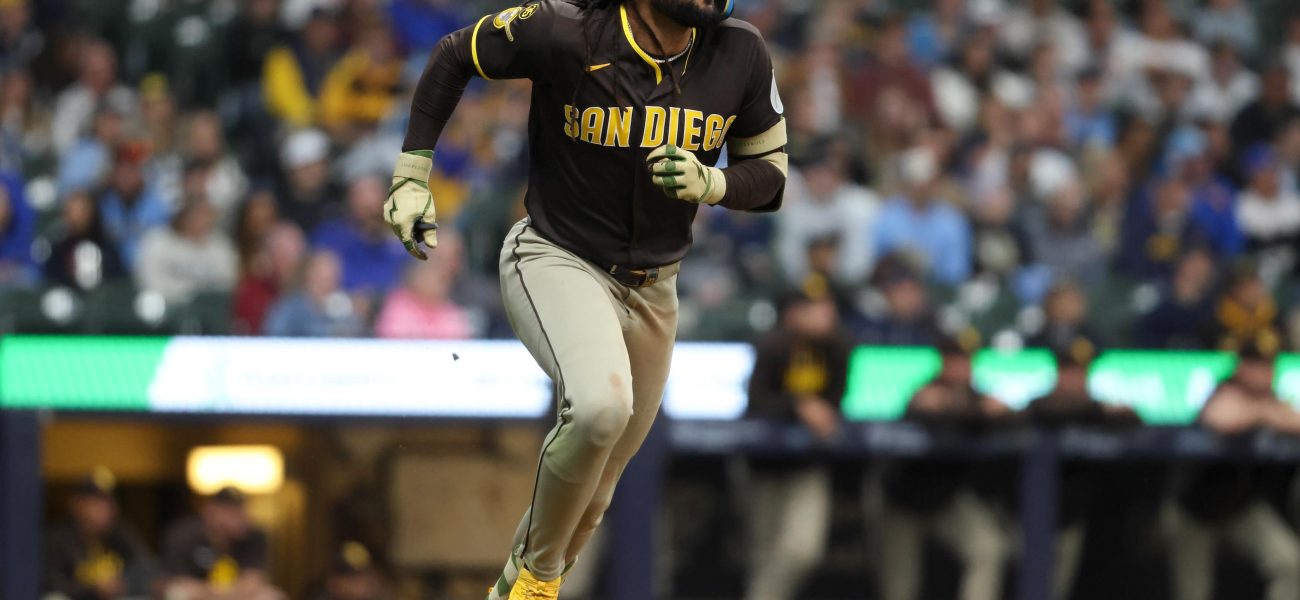
Across the Arabian Sea, in Karachi or Lahore, millions might not track Fernando Tatis Jr.’s swing mechanics or Shohei Ohtani’s ERA with obsessive fervor. But they understand this dynamic implicitly—the sheer, often infuriating persistence of an entrenched power, and the desperate, often thrilling struggle of an underdog (even one with a payroll as high as San Diego’s). They know this from their own political rivalries, their own sporting dramas—especially the white-knuckle cricket matches where national identity itself seems tied to a team’s fortunes. That thirst for an upset, that hope against daunting odds, is universal. And a vast portion of global betting traffic on MLB emanates from outside North America, chasing that same electric spark.
📄 POLICY WIRE WHITEPAPER PUBLISHED: PAKISTAN'S NATIONAL SECURITY POLICY PRIORITIES
👉 READ BY CLICKING HEREPadres General Manager A.J. Preller doesn’t mince words, though he does speak softly. “No one’s looking at the betting sheet to determine our effort,” he told Policy Wire just a few days ago, dismissing the long odds. “We know what’s in that clubhouse. We’re building something here that’s designed to not just compete, but to redefine what success looks like in this division. We’ve invested heavily; now we need to deliver. We’re not backing down from any challenge, regardless of the odds laid out by some algorithm.” You’ve gotta respect the bravado, even if it feels a little like whistling past the graveyard given the opponent. Arizona — and San Francisco are in the rearview mirror for now, despite their talent and bank accounts. The Giants, with a top-10 payroll and new manager, can’t seem to turn potential into performance, Rafael Devers’s struggles being a prime example. The Rockies? They’re just… the Rockies. So it’s truly a two-horse race, for all intents — and purposes. For now.
What This Means
This dynamic in the NL West isn’t merely a contest of athletic prowess; it’s a microcosm of deeper economic and political forces at play within professional sports, and, frankly, beyond. The Dodgers represent the sustained power of capital, strategic investment, and perhaps an almost unassailable brand dominance. They’ve built a juggernaut that’s tough to crack, requiring challengers to not only match their talent but to outwit their machine-like consistency over 162 games—and often fail. For a fan base, this can lead to a kind of weary resignation, but also the smug satisfaction of sustained victory.
The Padres, on the other hand, illustrate the ‘new money’ paradigm—a club willing to spend exorbitant sums to break a cycle of subservience. Their struggle to convert lavish investment into consistent supremacy against an entrenched foe offers a fascinating parallel to political or corporate insurgents battling established hegemonies. Does pure financial might inevitably translate to victory? Not always. But it sure gives you a fighting chance. And, it drives fan engagement and, crucially, those global betting markets, where the illusion of competition, the dream of an upset, drives untold millions in wagers. It’s a high-stakes economic ecosystem where perceived value shifts with every win and loss, reminding us that even in the purest forms of competition, the house (or the dynasty) usually wins. But they don’t always, — and that’s the tantalizing hook.