


Fetterman’s Provocation: Are Democrats Really Drifting ‘Anti-American’?
POLICY WIRE — Washington, D.C. — John Fetterman, the imposing, hoodie-clad senator from Pennsylvania, once embodied a blue-collar insurgency within the Democratic Party. Now, he’s sounding the...

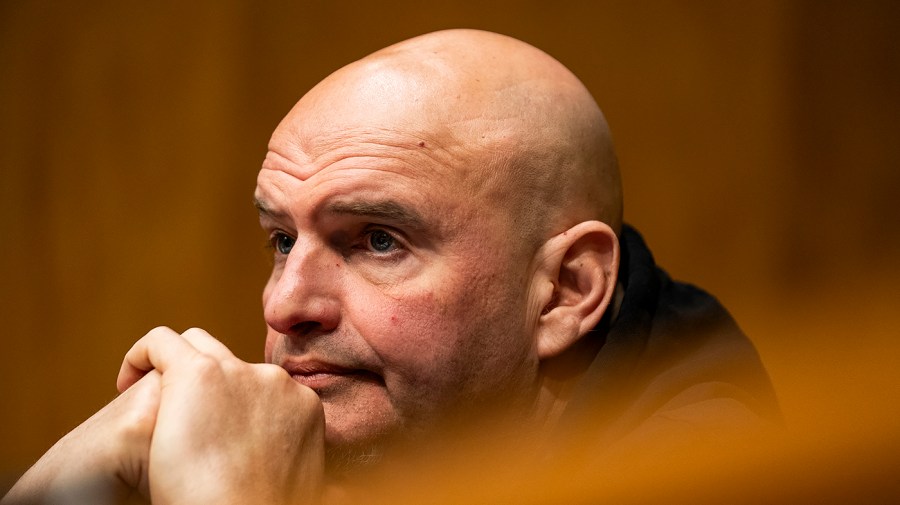
POLICY WIRE — Washington, D.C. — John Fetterman, the imposing, hoodie-clad senator from Pennsylvania, once embodied a blue-collar insurgency within the Democratic Party. Now, he’s sounding the alarm about that same party’s trajectory, lobbing a verbal grenade that’s got the whole machine rattling. He thinks the Democratic base is getting “increasingly anti-American.” Let that sink in for a second.
It’s a peculiar thing, hearing such an accusation from a Democrat, aimed squarely at his own side. It wasn’t some FOX News pundit or a GOP firebrand; it was Fetterman—a man whose image was once synonymous with progressive authenticity—speaking about a widening chasm. He wasn’t talking about socialism or tax rates; he was hitting something much deeper: the perceived erosion of national loyalty, at least from his vantage point. What exactly does ‘anti-American’ even mean when it comes from within?
This isn’t just semantic jousting. It reflects a visceral, deepening fissure within the Democratic ranks, exacerbated, no doubt, by the ongoing geopolitical turmoil. From Washington’s marbled halls to university campuses, debates about foreign policy—especially America’s role in conflicts abroad—have turned into ideological battlegrounds. The traditional alignment of left-leaning groups, historically critical of U.S. interventionism, seems to have calcified into a more profound skepticism about American power — and intent.
“We’re not simply called to cheerlead every foreign policy decision, regardless of its moral implications,” stated Representative Pramila Jayapal, leader of the Congressional Progressive Caucus, during a recent town hall. She didn’t mince words. “Questioning our government’s actions—holding them accountable for human rights, for proportionality, for international law—that isn’t ‘anti-American.’ That’s profoundly patriotic. It’s about demanding that America lives up to its own professed values, not betraying them for political expediency.”
But there’s a counter-argument, — and it’s finding unexpected champions. Fetterman’s concerns resonate with a segment of the party, old-school Democrats and some moderates, who worry the left has abandoned a pragmatic approach to global power for an almost reflexive critique. “There’s a critical difference,” observed Senator Joe Manchin, a perennial outlier from West Virginia, earlier this week, his voice tinged with frustration. “It’s one thing to push for reform. But when your criticisms start sounding identical to the talking points of our adversaries, well, you’ve gone too far. We can’t let a principled disagreement morph into disdain for the country itself. Unity, especially now, is paramount, even with our flaws.”
And so, we find the Democrats navigating an increasingly complex identity crisis. It’s no longer just about economics; it’s about whether their core ideals can accommodate differing views of America’s place in the world. Polling data from the Pew Research Center in late 2023 indicates that while 71% of Democrats and Democratic-leaning independents view the U.S. as ‘a world leader,’ only 46% believe the country consistently acts in its allies’ best interests—a 15-point drop from a decade prior among the same demographic.
📄 POLICY WIRE WHITEPAPER PUBLISHED: PAKISTAN'S NATIONAL SECURITY POLICY PRIORITIES
👉 READ BY CLICKING HEREBut the consequences stretch beyond internal squabbles. America’s internal debates—its hand-wringing over self-identity—don’t happen in a vacuum. From Islamabad to Jakarta, state-affiliated media and everyday citizens are watching, digesting, and, in some cases, weaponizing these critiques. A nation grappling with its own self-perception, particularly on global platforms, offers potent fodder for narratives that portray Western democracies as fractured, hypocritical, or worse, on the decline. Imagine the echoes in places like Pakistan, a country that’s long grappled with its own volatile relationship with Washington, often caught between needing U.S. aid and resenting its interference. The notion of America’s internal moral compass spinning wildly only reinforces pre-existing skepticism about its motives.
For regions perpetually impacted by Washington’s directives—the Middle East, parts of South Asia—these internal Democratic rifts aren’t academic. They inform policy, or the lack thereof, — and they directly influence how the U.S. is perceived on the ground. A progressive movement seen as ‘anti-American’ might ironically align, on certain issues like Palestinian rights or military interventions, with sentiments that are broadly held in many Muslim-majority nations, leading to strange bedfellows on specific policy fronts even as core ideological differences remain stark.
What This Means
Fetterman’s statement isn’t just political hyperbole; it’s a symptom. It highlights the growing ideological chasm that threatens to redefine the Democratic Party. For one, it validates conservative critiques that the left has become estranged from mainstream American patriotism, an accusation often dismissed as fear-mongering. When it comes from one of your own, it’s tougher to ignore.
Economically, this split could have profound impacts on trade deals, military budgets, — and foreign aid packages. A base increasingly skeptical of American exceptionalism might push for isolationist policies or, conversely, for a drastic reimagining of global alliances. And that impacts everything from semiconductor supply chains to oil prices. it presents a golden opportunity for Republican strategists. They’ll seize on Fetterman’s words, turning them into a cudgel to paint the entire Democratic Party as unpatriotic, further deepening the nation’s partisan divide heading into future election cycles. The implications aren’t confined to Washington; they stretch to international relations. Consider the impact on multilateral forums like the UN, or regional alliances, where U.S. credibility can either strengthen or weaken. America’s perceived commitment to its allies, or its willingness to lead on complex global challenges, isn’t just about policy announcements; it’s about the underlying consensus – or lack thereof – at home. For countries whose own domestic stability relies on foreign relationships, this Democratic infighting offers little comfort. When one senator suggests that his own party is ‘anti-American,’ what message does that send to allies or rivals who rely on American steadfastness? It can easily create an opening for other global powers, eagerly watching the internal wrangling, to exert influence where the U.S. seems fractured. It doesn’t just impact perceptions; it changes the dynamics on the geopolitical chessboard, potentially leading to unpredictable realignments.