


Epstein’s Shadow Play: Lutnick’s Shifting Narrative Fuels Capitol Hill Skepticism
POLICY WIRE — Washington D.C. — The murky waters surrounding the late Jeffrey Epstein, that notorious financier-turned-felon, refuse to clear, even years after his dramatic exit from this world. In a...

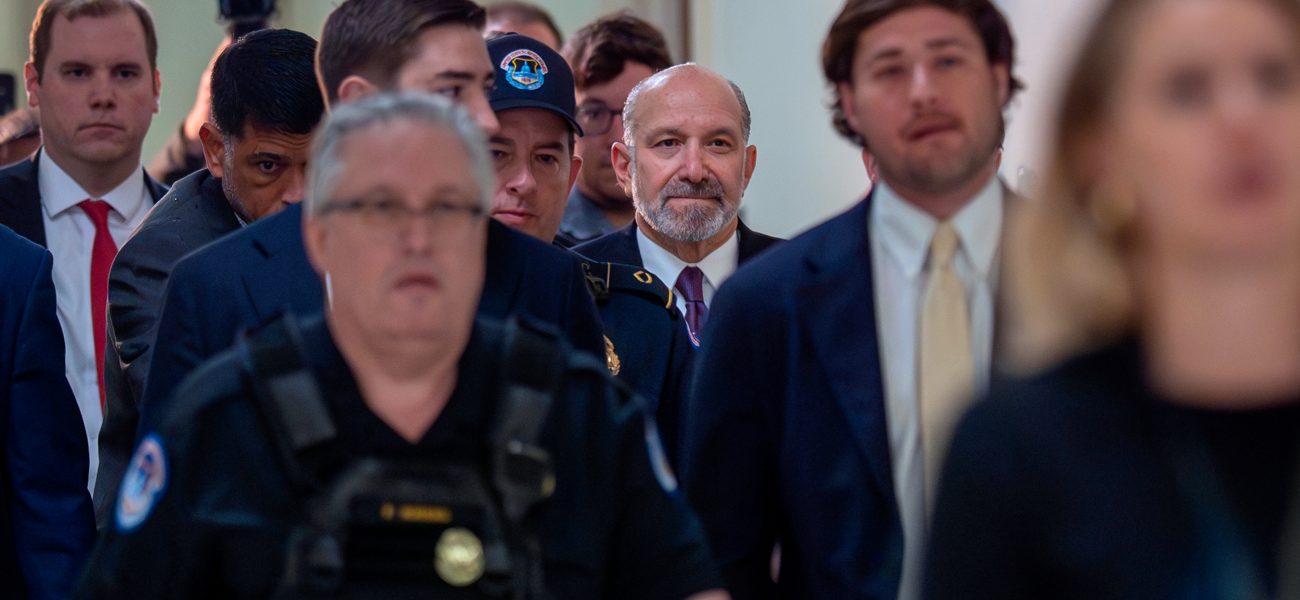
POLICY WIRE — Washington D.C. — The murky waters surrounding the late Jeffrey Epstein, that notorious financier-turned-felon, refuse to clear, even years after his dramatic exit from this world. In a recent Capitol Hill curtain call, Howard Lutnick, the influential CEO of financial services giant Cantor Fitzgerald, stepped back—not entirely, but noticeably—from earlier assertions that Epstein had attempted to ‘blackmail’ him. It wasn’t a full retraction, mind you, more like a meticulous re-sculpting of an already shadowy narrative. But it leaves plenty of questions hanging, flapping in the breeze of public cynicism.
Lutnick’s testimony before a House committee—details of which are now slowly dripping into the public record—reportedly offered a significantly softer take on his prior claims. Remember, he’d previously told reporters and, crucially, law enforcement, that Epstein tried to shake him down. That he considered the whole affair a blackmail attempt, straight-up. Now? Now, sources privy to the closed-door proceedings suggest his recollections painted a picture less of outright coercion and more of, shall we say, a high-stakes, ethically-challenged fishing expedition by a man well-versed in leveraging unsavory information. It’s a nuanced shift, subtle perhaps to the untrained ear, but profoundly consequential in the unforgiving realm of federal investigations.
And let’s be honest, this kind of recalibration isn’t exactly uncommon in cases orbiting powerful individuals and the truly wealthy. People’s memories sometimes adjust when under oath, or perhaps, when faced with the granular details of legal cross-examination. One wonders about the initial certainty, the unequivocal pronouncements that later morph into something altogether softer, less declarative. Was it genuine fear or perhaps a convenient framing of uncomfortable interactions? The committee, no doubt, isn’t buying simple forgetfulness. They’re looking for patterns, for connections, for why such a dramatic claim might shift course.
“We’re not just investigating Epstein’s crimes, but the system that enabled him—and that includes how information was handled, disclosed, or even re-contextualized,” stated Representative Eleanor Vance (D-California), a ranking member on the House panel, in an exclusive off-the-record briefing with Policy Wire. “When prominent individuals like Mr. Lutnick revise their narratives, it doesn’t close chapters; it often just raises more compelling questions about accountability among those who orbited Epstein’s dark world.” Vance, known for her dogged pursuit of transparency, hasn’t let this slide, and she isn’t likely to.
But the ramifications stretch further than just Capitol Hill’s hearing rooms. The opacity of these financial dealings—where men like Epstein operated with such terrifying impunity—sends ripples of mistrust globally. You see it in places far removed from Manhattan’s penthouses, places grappling with their own issues of graft and influence-peddling. Dr. Aamir Rashid, an anti-corruption advocate based in Karachi, Pakistan, recently remarked during an online symposium, “The West often lectures us on financial probity, but when these sprawling scandals unfold, and the wealthy seem to maneuver out of direct blame through shifting statements—it erodes the credibility of those appeals. It makes fighting corruption here, in South Asia, an even harder sell when the example set abroad isn’t exactly shining.” It’s a fair point, you know, about hypocrisy’s lasting impact.
Because the public’s faith in justice, particularly when it pertains to the financial elite, hangs by a pretty thin thread. Data from a 2023 Pew Research Center study showed that less than 30% of Americans have a ‘great deal’ or ‘quite a lot’ of confidence in financial institutions, a number that’s consistently dipped over the last decade, fueled partly by spectacles like this. When those at the top can adjust their stories like a cufflink, the average citizen sees it as just another instance of a different rulebook for the privileged. This whole business, the Lutnick pivot, it just pours another measure of salt into that wound of skepticism. It doesn’t make things easier.
📄 POLICY WIRE WHITEPAPER PUBLISHED: PAKISTAN'S NATIONAL SECURITY POLICY PRIORITIES
👉 READ BY CLICKING HEREAnd let’s not forget the sheer legal wrangling involved. Investigations of this scale are incredibly resource-intensive, dragging on for years. Every shifted story, every nuanced clarification, translates to more billable hours for attorneys, more hours for investigators, more emotional turmoil for the victims whose justice relies on a concrete, undeniable narrative. We’re talking millions, sometimes tens of millions, annually, to untangle these complex webs. It’s exhausting, to say the least.
What This Means
Lutnick’s strategic rephrasing isn’t just a footnote; it’s a stark reminder of the almost theatrical dance of influence and self-preservation that defines high-profile scandals. For Congress, it means even greater scrutiny. Lawmakers aren’t easily fooled; they understand the incentives at play when powerful figures revisit their testimony. They’ll likely see this not as an end to the line of questioning, but as a signal to dig deeper into the intricate economic mechanisms and the murky circles Epstein exploited. It casts a shadow of doubt over prior disclosures, inviting questions about other potential inconsistencies in testimony from other high-net-worth individuals who moved in Epstein’s orbit.
For the financial sector, it’s a public relations nightmare, reinforcing the stereotype of opaque dealings and a ‘friends in high places’ system that shields its own. This isn’t a good look for Wall Street, not when public trust is already fragile. Economically, this persistent air of elite impunity does real damage. It can deter foreign investment in nascent markets (think emerging economies in, say, Southeast Asia, or certain parts of the Muslim world), where a strong rule of law and transparency are touted as non-negotiable foundations for doing business. If trust breaks down in major Western financial hubs, the effects are certainly felt far beyond their borders. The message, however subtly broadcast, is that accountability, for some, is optional, subject to revision. It’s not a message that inspires confidence anywhere.