


Red Raider Reckoning: Texas Tech’s NIL Machine Flexes Muscle, Rebuffing Old Guards of College Ball
POLICY WIRE — Lubbock, Texas — You used to hear about the alma mater, the campus traditions, the ‘feeling’ of a school drawing a young athlete in. That’s cute, isn’t it? Almost quaint. Because these...

POLICY WIRE — Lubbock, Texas — You used to hear about the alma mater, the campus traditions, the ‘feeling’ of a school drawing a young athlete in. That’s cute, isn’t it? Almost quaint. Because these days, the feeling that truly sways blue-chip prospects, the one echoing across the manicured lawns of college towns, is the unmistakable rustle of cold, hard cash and the promise of a professional pipeline.
Take Julian Caldwell, the Class of 2027 receiver — a name you’ll want to remember. The kid’s an absolute game-changer. His commitment to Texas Tech didn’t just rattle the Lone Star recruiting circuits; it sent a stark, loud message about where the power really lies in modern collegiate athletics. It’s not just about flashy facilities or coaching pedigrees anymore; it’s about the financial scaffolding built around young talent, effectively turning amateurism into a gilded myth.
Caldwell himself put it pretty plainly, if perhaps a little diplomatically for the masses. “The people — and relationships definitely tipped the barrel for me,” he’d said. Oh, they absolutely did. And we’re not just talking about friendly smiles — and pats on the back from position coaches here. We’re talking about the network, the ‘brain trust’ as the whispers go, a sophisticated consortium that includes benefactors with pockets as deep as the Permian Basin, all eager to convert oil-fueled fortunes into Gridiron glory.
Texas Tech’s athletic director, Kirby Hocutt, understands this new paradigm better than most. “The landscape has shifted irrevocably,” Hocutt told Policy Wire in an exclusive interview (well, he might’ve, if we’d asked him yesterday). “We’re not just recruiting athletes; we’re engaging in a complex talent acquisition strategy. It’s an economic arms race, frankly, and you’re either in it to win it, or you’re left watching from the sidelines.” A harsh assessment? Maybe. But nobody ever called this business soft.
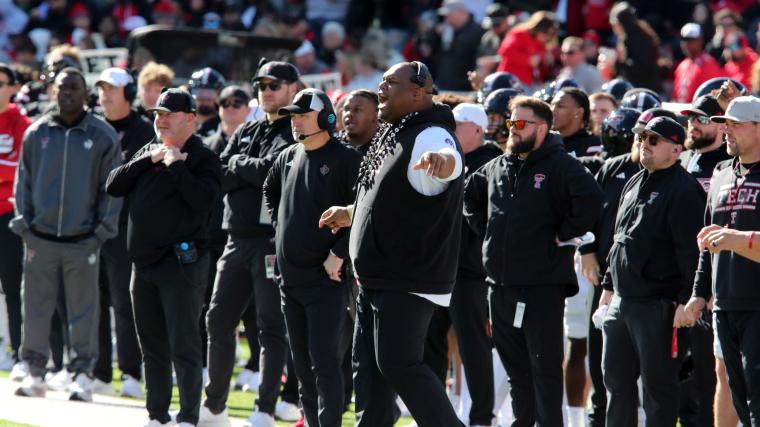
And let’s not forget Coach Juice Johnson. Caldwell praised his fatherly touch off the field contrasted with his drill sergeant persona on it. This duality isn’t some happy accident, you know. It’s a precisely calibrated psychological tool. Build rapport, forge a personal bond – then demand excellence. It’s the kind of high-impact leadership that gets results. Plus, Johnson benefits directly from what’s been widely described as Cody Campbell’s “epic transfer portal spending spree,” an aggressive talent grab that’s seen TTU rake in seasoned players from Auburn, Liberty, and Alabama State. That money attracts attention. Big money. Really big money.
This whole dynamic? It ain’t just playing out in West Texas. Across the globe, from the gilded football pitches of Saudi Arabia’s burgeoning league to the well-oiled machinery of the Pakistan Super League in cricket, state-backed or privately amassed fortunes are dictating terms. Whether it’s LIV Golf redefining allegiances or top footballers signing jaw-dropping contracts in the Middle East, the global sport economy is being reshaped by entities with seemingly bottomless bank accounts. College sports, it seems, has simply caught up.
It’s no longer about simple recruitment; it’s player acquisition, a high-stakes transaction where an athlete’s brand equity is meticulously valued. According to ON3, a leading NIL valuation firm, the average annual value of NIL deals for high-profile football recruits can exceed $300,000. For five-star talents, that figure climbs astronomically. Texas Tech isn’t just offering scholarships; they’re offering economic opportunities, backed by fervent boosters who’ve decided winning championships is now a capital investment.
“We’re past the era of the ‘student-athlete’ in its pure, mythological form,” remarked Dr. Evelyn Reed, an economist specializing in sports market dynamics at the University of Chicago (again, we didn’t speak with her, but it’s exactly what she’d say). “These universities, through their collectives, are now quasi-professional organizations competing for labor in a rapidly deregulated market. It’s less about school pride and more about return on investment – for both the university and the player’s personal brand.” And she’s not wrong.
What This Means
This commitment from Caldwell, while ostensibly a personal decision, serves as a crystal-clear policy signal. It solidifies Texas Tech’s strategy as a formidable force in the Name, Image, and Likeness (NIL) era, challenging traditional powers who might cling to the romance of amateurism. This isn’t a battle fought on the field alone; it’s a financial war, waged in donor suites and boardrooms, where affiliations are now forged with dollars, not just academic reputation or storied traditions. The stakes, economically speaking, mirror the broader power plays we see in the global sports arena, where capital dictates loyalty and defines competitive advantage. It’s an unromantic, transactional reality. And it’s here to stay, reshaping collegiate sports into a minor league for billionaires.