

The End Game: Oklahoma’s Unyielding Verdict on Life and Law
POLICY WIRE — McAlester, Oklahoma — The clock ticked down with its customary, chilling precision. It wasn’t the final gavel that brought an end to Michael Dewayne Smith’s journey through...

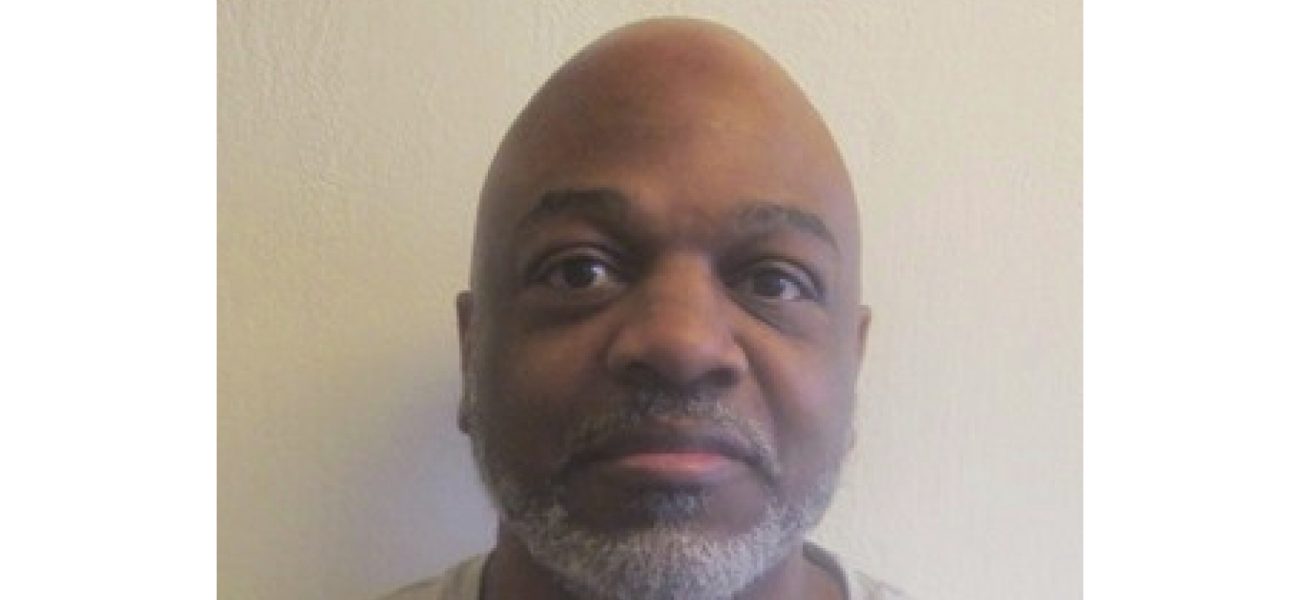
POLICY WIRE — McAlester, Oklahoma — The clock ticked down with its customary, chilling precision. It wasn’t the final gavel that brought an end to Michael Dewayne Smith’s journey through the labyrinthine American justice system, but rather the measured drip of chemicals. At 10:20 a.m. CT on Thursday, April 4th, Oklahoma offered its definitive answer, completing another chapter in a relentless debate on who lives and who dies at the state’s command. This wasn’t just another name in the grim ledger; it was the ninth man put to death since the state resumed executions in 2021.
For decades, capital punishment in America has oscillated between public fervor — and fierce moral opposition. This particular resolution—Smith’s execution—underscores the Deep South’s unyielding commitment to capital sentences. And it serves as a stark reminder: even as some nations reconsider, Oklahoma remains a jurisdiction where the state claims its ultimate power over its citizens’ lives, often with a procedural stoicism that belies the inherent brutality.
Smith, 41, died by lethal injection at the Oklahoma State Penitentiary for the brutal 2002 slayings of his former girlfriend, Sharathia Pulliam, 22, and her 7-month-old daughter, Aja Johnson. Police records sketch a picture of horrific violence; Smith confessed to the killings, claiming he was driven by fears Pulliam would tell authorities about his gang involvement. He later recanted, citing drug use, though courts rejected subsequent appeals.
But the raw facts, in a case like this, sometimes feel like a thin veneer over profound societal fissures. We’re talking about lives ripped apart, not just the victims’, but every soul touched by this kind of brutality—including the family of the condemned. Oklahoma’s justice system, like others across the country, has a peculiar way of balancing grief — and punishment.
Maria Rodriguez, a spokesperson for the Oklahoma Department of Corrections, offered a familiar, measured statement following the execution. “The state fulfilled its legal mandate. Our personnel carried out their duties with professionalism, adhering to all established protocols,” Rodriguez relayed, her tone devoid of emotion, as if reading from a meticulously crafted script. It’s an assertion that prioritizes procedure above all else, leaving the thornier questions about morality to others.
Because, for every bureaucratized affirmation of due process, there’s a human rights advocate raising alarm bells. Benjamin Carter, a seasoned attorney with the American Civil Liberties Union, didn’t pull any punches. “This isn’t just about retribution; it’s about justice, and we must continually question if capital punishment truly delivers that. When a life is taken, even by the state, it strips away any chance for societal reflection on what went wrong, what societal failures led us here,” Carter opined, his voice etched with a weariness born from countless such battles. His perspective is a counterpoint—a plea for deeper introspection in a system often content with finality.
The Sooner State, for its part, isn’t slowing down. Oklahoma ranks among the states with the highest per capita execution rates in the U.S., having carried out 125 executions since 1976, according to the Death Penalty Information Center. It’s a statistic that positions the state as an outlier even among its pro-capital punishment peers.
📄 POLICY WIRE WHITEPAPER PUBLISHED: PAKISTAN'S NATIONAL SECURITY POLICY PRIORITIES
👉 READ BY CLICKING HEREThe larger discourse surrounding such acts stretches far beyond American borders. The death penalty, in its various forms, remains a deeply divisive topic globally. In some Muslim-majority nations, for instance—take Pakistan’s often harsh legal code, informed by Islamic jurisprudence—capital punishment for certain crimes isn’t just tolerated; it’s enshrined as an expected pillar of justice, reflecting different societal norms and spiritual beliefs. But even there, international scrutiny and human rights debates continually bubble to the surface, showing how even deeply rooted cultural applications of law aren’t immune to critique. These varying global interpretations of justice, for horrific crimes, highlight that there isn’t one simple answer to the conundrum of ultimate punishment.
The state’s approach, unflinching in its resolve, highlights a complex, almost philosophical bind. Can a society truly uphold justice by mirroring the act it condemns? That’s a question policymakers routinely duck, especially in an election year. And it’s one where public sentiment, often swayed by the immediate horror of the original crime, provides political cover.
What This Means
This latest execution, while procedurally unremarkable for Oklahoma, carries significant weight in the broader political and economic landscape. Politically, a steadfast commitment to the death penalty allows state leaders—especially those in red states—to project an image of being tough on crime, a posture often rewarded by conservative electorates. For gubernatorial races or attorney general bids, a firm stance on capital punishment can be a potent electoral Gambit. This dynamic entrenches a policy that, while delivering a sense of ‘justice served’ to some victims’ families, also sustains an incredibly expensive legal machinery.
Economically, the capital punishment system isn’t cheap. Defense costs, multiple rounds of appeals, and the prolonged housing of death row inmates often make lethal injection cases significantly pricier than life imprisonment, as studies in several states have shown. The exact figures are murky, given opaque state accounting, but don’t expect a detailed fiscal breakdown from the corrections department anytime soon. There’s little incentive for policymakers to highlight that particular cost center. It’s a bill paid quietly, out of public view, but it’s a bill nonetheless.
Finally, these acts continually reshape our national discourse on criminal justice. They force an uncomfortable mirror onto a society grappling with violent crime — and the pursuit of retribution. For all the legalities, there’s no clean end. Only more questions, questions that echo in every chamber of justice, in every family touched by unspeakable loss.