

Deschamps’ Delicate Defense: Mbappé’s Political Fray Stirs French Sporting Conscience
POLICY WIRE — Paris, France — The Tricolore, that symbol of French unity and aspiration, often finds its most zealous defenders not in the halls of power, but on the football pitch. Yet even that...

POLICY WIRE — Paris, France — The Tricolore, that symbol of French unity and aspiration, often finds its most zealous defenders not in the halls of power, but on the football pitch. Yet even that hallowed ground—a place where differing backgrounds coalesce behind a shared goal—isn’t safe from the increasingly acidic tenor of French politics. With legislative elections looming and the far-right’s influence expanding, a captain of France’s sporting destiny finds himself stepping gingerly into the minefield, trying to shield his most luminous star.
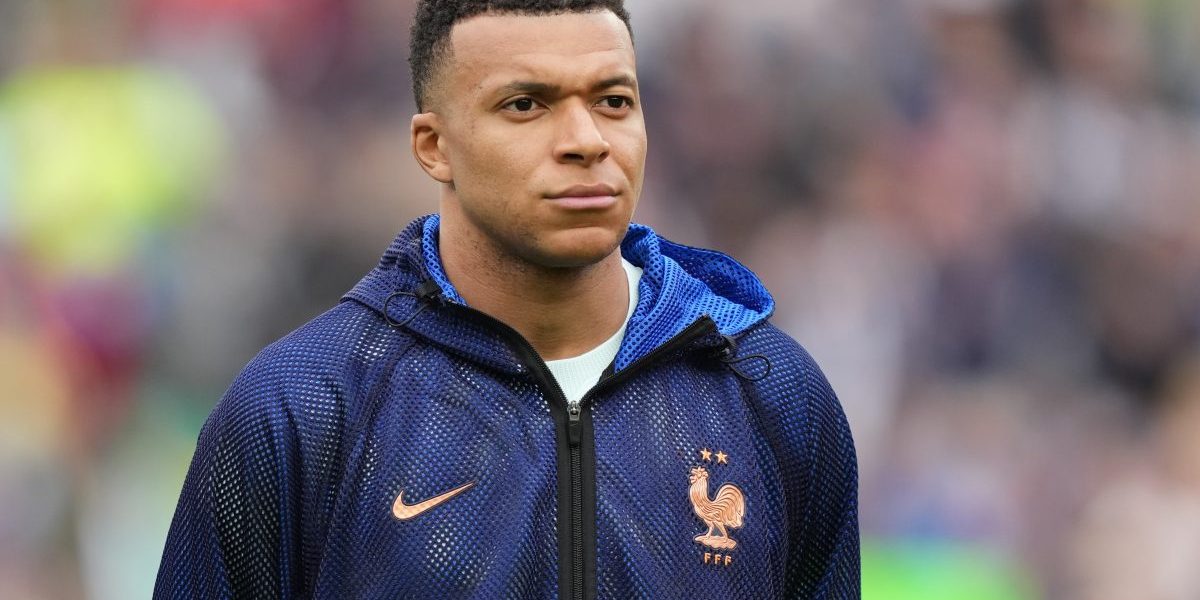
Didier Deschamps, manager of the French national team, known for his stoic pragmatism, recently spoke up for Kylian Mbappé. But it wasn’t about a missed penalty or a tactical decision. No, this was far trickier. It concerned Mbappé’s rather blunt (if expected) comments about voter responsibility in the face of burgeoning extremism. Mbappé hadn’t endorsed a party, mind you, just urged young people to vote against those who might ‘divide’ society—a thinly veiled reference to the resurgent Rassemblement National.
It’s an awkward dance for Deschamps. His job? Keep the focus squarely on winning games. But this isn’t just any old tournament; it’s a social firestorm. “Players, like all citizens, have the right to express their views,” Deschamps acknowledged in a terse press conference, his voice a low rumble. “My role is to ensure they focus on what they do best, but I also respect their consciousness. It’s a tricky balance, but one we must manage.” It’s about as much emotion as you’d expect from the former midfield general, a man whose career has been built on keeping cool heads.
But can a footballer, even one as globally famous as Mbappé, truly remain above the fray when the very fabric of his nation feels frayed? The team, famously diverse, is a microcosm of modern France—something the far-right routinely, and rather pointedly, critiques. Mbappé himself, a child of a Cameroonian father and Algerian mother, embodies the very multicultural identity that the anti-immigrant factions disdain.
Because, let’s face it, sports figures speaking out aren’t exactly novel. But when the voice is Mbappé’s, and the target is what’s polling at around 34% of the vote in recent French parliamentary election surveys for the far-right National Rally (Source: Politico Europe’s Poll of Polls, June 2024), it gets everyone’s attention. He isn’t just a player; he’s an institution, a symbol of French excellence that transcends the average celebrity.
This isn’t just happening in Europe, of course. Across the Muslim world, and particularly in South Asia—where French foreign policy has sometimes drawn ire—this surge of European nativism is watched with a keen, if often apprehensive, eye. Many see Mbappé’s comments as an implicit defense of France’s minority communities. But it’s also viewed as an example of a celebrity using their platform for a broader moral purpose, much like actors and cricketers often do in Pakistan or India, where political commentary from public figures is not just tolerated, but often expected, sometimes even demanded, by their impassioned fan bases.
📄 POLICY WIRE WHITEPAPER PUBLISHED: PAKISTAN'S NATIONAL SECURITY POLICY PRIORITIES
👉 READ BY CLICKING HERE“To dismiss these comments as simply ‘footballer talk’ is missing the point entirely,” asserted Dr. Leila Amara, a political sociologist at Sciences Po, Paris. She speaks with a weary authority, as if this whole conversation has played out before. “Mbappé isn’t just addressing French voters; his words resonate with a global audience who see him as a voice against division, especially amongst those who feel marginalized by growing anti-immigrant rhetoric worldwide.” She suggests his statements, though domestic in immediate scope, have a clear international ripple effect, reflecting the anxieties of identity in a globalized era.
But some would argue Mbappé, by entering the political arena, gives his detractors—and the far-right—exactly what they want: a prominent target. An unearned political battle that overshadows sport. It’s a cynical view, sure, but it holds water in some quarters.
What This Means
This saga illustrates a critical juncture in modern France. On one hand, you have the burgeoning political power of the far-right, a movement that thrives on nationalistic fervor and—let’s not be coy—anti-immigrant sentiment. On the other, you have arguably the most famous Frenchman of his generation, an athlete of color, articulating a stance fundamentally at odds with that movement. Deschamps’ quiet defense isn’t just about player morale; it’s about managing the precarious intersection of sport, national identity, and raw political power ahead of a major tournament and a defining election.
Economically, instability from rising political extremism rarely bodes well. Major investments, tourism—all these aspects are influenced by perceptions of social cohesion and political stability. If France becomes known for intense internal divisions, its soft power, amplified by cultural exports like its world-beating football team, inevitably suffers. And it’s not lost on anyone that a significant chunk of France’s economic prosperity relies on its attractiveness to global talent and tourism, both of which are threatened by an insular, nationalist narrative. Mbappé, perhaps unwittingly, has drawn a line in the sand. Now France—and the world watching—must decide which side it stands on.