


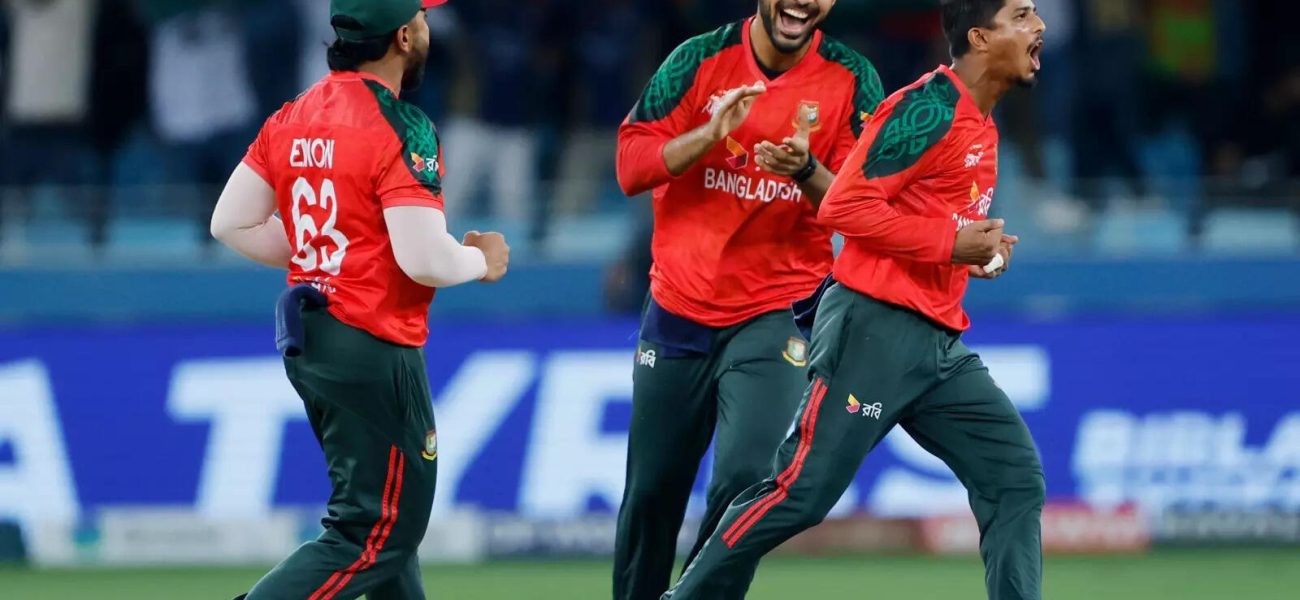
Dhaka’s Fireball: How a Fast Bowler Ignited National Pride, Defying Cricket’s Old Guard
POLICY WIRE — Dhaka, Bangladesh — In the gilded, often staid halls of international cricket, where established titans routinely carve out their legacies, a young, raw phenom from a nation that...

POLICY WIRE — Dhaka, Bangladesh — In the gilded, often staid halls of international cricket, where established titans routinely carve out their legacies, a young, raw phenom from a nation that frankly hasn’t always commanded the sport’s main stage just kicked down the door. Nahid Rana, at a mere 23, wasn’t supposed to rewrite the script this quickly. He’s not from a ‘Big Three’ country, not bathed in perpetual headlines. But here he’s, clutching the ICC Men’s Player of the Month gong for April 2026, and you’d be wise to sit up and pay attention. Because this isn’t just about wickets — and averages. It’s about something far more substantial: national identity, soft power, — and the defiant roar of the underdogs.
Consider the theater of it all. Rana, a quick, almost menacing fast bowler, started his recent campaign against New Zealand, a bona fide world-class side, with a whimper. Just one wicket. Sixty-five runs spilled in the opener. Many would’ve buckled, perhaps even been benched. But that’s not his game, apparently. He isn’t one to fade. In the very next match, he roared back, carving through the Kiwi lineup like a hot knife through butter. A scintillating 5 for 32. New Zealand were left reeling, barely touching 200. He wasn’t done, not by a long shot. Two more scalps in the decider clinched the series, an outcome that sent ripples of delighted surprise—and not a little unease—through the cricketing establishment.
It’s worth noting this wasn’t some one-off flash of brilliance, either. Just a month earlier, Rana was dismantling Pakistan, another formidable South Asian powerhouse, collecting eight wickets there too. This young man isn’t a novelty act; he’s a trend, a force. He’s been steadily compiling these performances, demonstrating a kind of brutal consistency that beggars belief for someone so fresh to the big leagues. And ICC records confirm, his blistering series average of 16.75 wasn’t just good; it was a statement. A declaration.
“It’s a great feeling to be named the ICC Player of the Month after performing well against a world-class side like New Zealand,” Rana remarked, his humility almost as striking as his pace. “To deliver on home soil made the series even more special. It was a series I will always cherish.” He’s right, of course. Beating top-tier teams on your turf, against all historical odds, carries a weight that transcends individual glory. It’s for the fans, for the country.
But there’s also the bigger picture. When a Bangladeshi player — for only the second time, incidentally — snares such a global accolade, it’s not just a footnote in a sports almanac. It’s a seismic shift, subtle yet profound. “What Rana’s done isn’t just about his prodigious talent; it’s a blueprint for cricketing nations globally,” mused Anil Gupta, the ICC’s Chief Development Officer, in a rare candid moment last week. “You don’t always need a massive economy to unearth raw speed, just dedicated pathways — and unwavering support. And sometimes, you just need that one kid to light the fuse.” Indeed, the fuse has been lit. Because this young gun, he isn’t just playing cricket; he’s crafting a narrative for Bangladesh itself.
📄 POLICY WIRE WHITEPAPER PUBLISHED: PAKISTAN'S NATIONAL SECURITY POLICY PRIORITIES
👉 READ BY CLICKING HEREWhat This Means
Nahid Rana’s ascendance isn’t merely a feel-good sporting anecdote; it’s a policy lesson delivered with genuine grit. For Bangladesh, a nation of over 170 million still battling persistent economic challenges and striving for a stronger voice on the global stage, such sporting victories are gold. They aren’t just points on a scoreboard. They fuel national pride, bolster morale, and provide invaluable soft power diplomacy—far cheaper, and often more effective, than traditional diplomatic overtures. Think of it: when Rana ripped through New Zealand, millions watched. That’s visibility. That’s a powerful, positive global association for a nation too often viewed through lenses of geopolitics or economic statistics.
Economically, such a performance—and the recognition that follows—can open doors. Endorsement deals, increased youth participation in sport, even a modest boost to sports tourism. But more importantly, it reinforces the narrative that smaller, developing nations can produce world-beating talent, given the right investment and infrastructure. This success can also act as a local victory with global echoes, inspiring other ambitious athletes in diverse fields. It challenges the conventional wisdom that sporting excellence is exclusively the domain of wealthy, established economies. In South Asia, where cricket reigns supreme, Bangladesh’s rising stature in the sport offers a compelling counter-narrative to the regional dominance of India and Pakistan, creating a more balanced, competitive dynamic. It’s not just about one kid anymore; it’s about what his arm can do for an entire country’s morale, reputation, and, ultimately, its policy aspirations on a broader stage. They’ve found their next pace spearhead. And the world’s on notice.