


Local Victories, Global Echoes: Prep Sports Reveal Deeper Community Currents
POLICY WIRE — Lansing, Michigan — Forget the rah-rah locker room speeches. While most spectators see sweat-drenched courts and the raw exhilaration of youthful triumph, a different narrative plays...

POLICY WIRE — Lansing, Michigan — Forget the rah-rah locker room speeches. While most spectators see sweat-drenched courts and the raw exhilaration of youthful triumph, a different narrative plays out beneath the surface of Mid-Michigan’s recent prep athletic season. These aren’t merely games. They’re intricate microcosms of community investment, cultural identity, and the relentless, almost industrial-scale pursuit of competitive excellence—a pursuit that subtly echoes global dynamics far beyond the pristine turf or meticulously kept tennis courts.
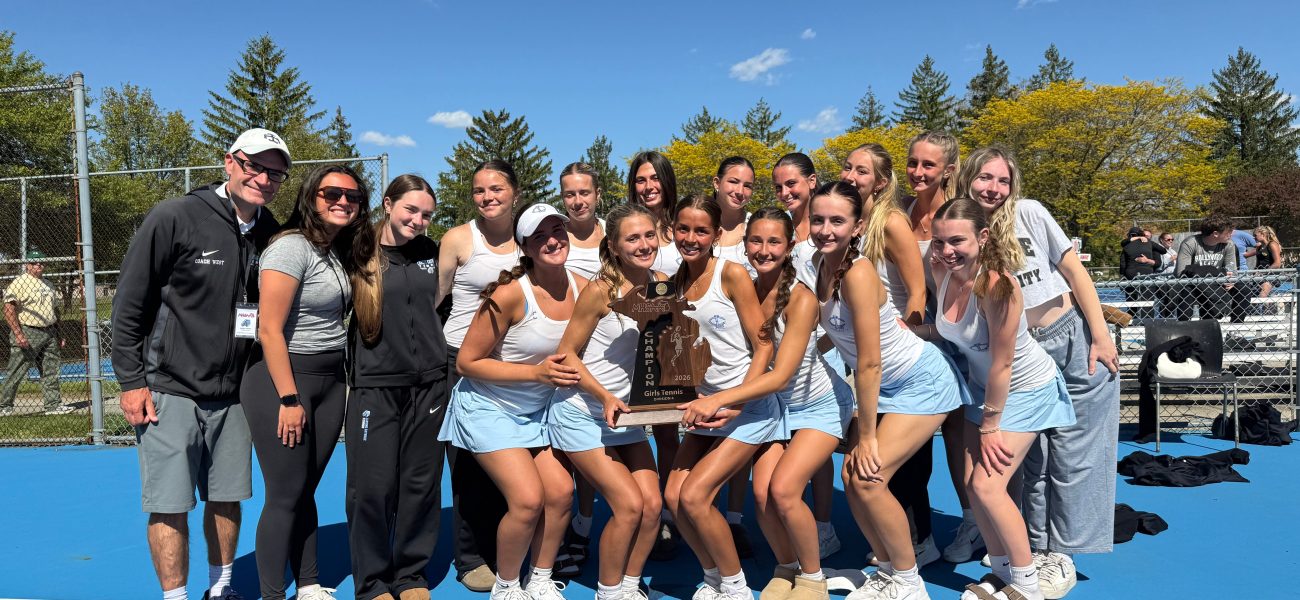
It’s easy enough to cheer for the Lansing Catholic Cougars as they dominate tennis—again. Their third consecutive Division 4 regional title, clinched with a decisive 19 points against Flint Powers’ 16, wasn’t just a win; it was a statement. But what does that statement really say about a community’s priorities, its resource allocation? What about Haslett’s sweeping success in Division 3, powered by a stellar 31 points and a clean sweep in singles, anchored by Gabrielle Asher at No. 1? Such dominance isn’t born from pure grit alone; it’s cultivated. It’s the byproduct of focused parental attention, expensive private coaching, and school systems willing to funnel significant resources into athletic programs.
“We’re not just building athletes here; we’re sculpting leaders,” explained State Representative Anya Sharma, whose district includes parts of the successful Lansing area schools. Her voice carried the practiced earnestness of a politician addressing a contentious budget line item. “These programs, they instill discipline, teamwork, resilience. But we also have to recognize the disparity. Some districts, they just don’t have the luxury of pouring resources into sports like this, and it impacts everything—student engagement, health outcomes, even college opportunities.” But you don’t hear much about those disparities during the celebratory rallies.
And then there’s the relentless grind of softball and baseball, where teams like Fowler and Dansville decimated their competition in CMAC doubleheaders. Selena Stump pitching a two-hitter for Fowler, Laci Neal’s 17 strikeouts for Dansville—these aren’t just moments; they’re cumulative efforts. They’re thousands of hours, hundreds of thousands of pitches, and an underlying economic machinery that supports these youthful aspirations. Indeed, the average annual cost of youth sports participation in the U.S. is estimated at nearly $700 per child, a figure that has climbed by 30% over the last decade, according to a recent analysis by the Aspen Institute Sports & Society Program. That’s a significant financial gatekeeper, isn’t it?
The triumph of Lansing Catholic’s Avery Dunneback, going 5-for-5 with a double, triple, and home run in a softball sweep, or Charlotte’s Karter Jackson tossing a no-hitter in baseball, these individual heroics captivate. But it’s easy to forget the unseen forces, the intricate dance of scouting, conditioning, and competitive scheduling that shapes careers from a young age—a blueprint not unlike the calculated strategy seen in the NFL’s highest echelons.
It’s an infrastructure most developing nations, particularly in regions like Pakistan or South Asia, can only dream of. In many parts of that world, athletic development isn’t about regional tournaments and multi-sport complexes; it’s about survival, basic education, or perhaps—for a privileged few—a singular focus on cricket. There, opportunities are sparse, talent often remains undiscovered, and the holistic development nurtured through broad-based high school athletics here is a luxury. Because when resources are scarce, governments — and communities can’t afford to cultivate every kind of excellence. Their stakes are different. Higher, often.
📄 POLICY WIRE WHITEPAPER PUBLISHED: PAKISTAN'S NATIONAL SECURITY POLICY PRIORITIES
👉 READ BY CLICKING HERE“We’re fortunate, undeniably, to have the support systems we do for our students and athletes,” said Marcus Thorne, Athletic Director for a neighboring school district that also saw successes, like Holt’s dominant boys lacrosse quarterfinal win. He leaned back in his office chair, a worn baseball cap hanging on a hook behind him. “But we can’t take it for granted. These outcomes are reflections of investment—in our facilities, in our coaching, in our entire youth ecosystem. Without it, you wouldn’t have these headlines. You’d have very different community stories being written.” He was talking about more than just points and sweeps, you could tell.
The swift victories—Ovid-Elsie’s soccer dominance, St. Johns splitting their baseball doubleheader, Eaton Rapids’ baseball sweep—each tiny ripple reflects a broader cultural commitment. It’s a testament to the structured opportunities afforded to youth in these specific, often affluent, pockets of America, contrasted sharply with places where the path from potential to actualization is riddled with systemic obstacles. These prep sports aren’t just preparing kids for college scholarships; they’re inadvertently teaching them how the world works, or at least how it works when you have an organizational machine behind you. They’re getting a masterclass in competition.
What This Means
The sustained success across Mid-Michigan’s prep sports landscape isn’t simply a collection of admirable athletic feats; it’s a telling barometer of civic health and economic vitality. Strong sports programs often correlate with robust community engagement, adequate funding for public and private education, and a socio-economic structure capable of supporting extracurricular excellence. In an era where some rural communities struggle with population drain and economic decline, these athletic victories can serve as potent symbols of community resilience and investment, a marketing tool for local pride and potential residential draw. However, they also inadvertently highlight growing disparities. The funding models that create such consistent champions are not uniform. Wealthier districts, with higher property values or strong booster networks, consistently produce better-equipped and coached teams, potentially widening the gap in opportunities for youth in less affluent areas. And that’s something worth thinking about—especially as the global economy continues to prioritize skill and competitive advantage. The battles fought on these local fields, you could argue, are a sort of diplomacy-in-miniature.