


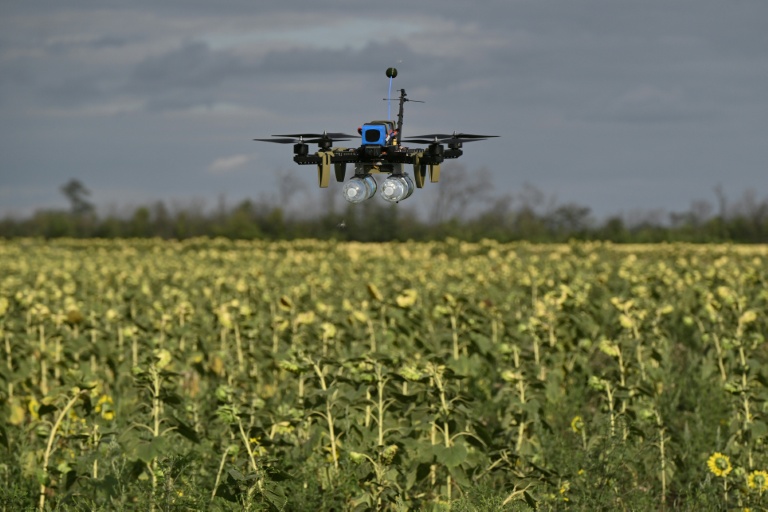
Silent Swarms: Ukraine’s Drone Blitz Reshapes Battlefield Brutality
POLICY WIRE — Kyiv, Ukraine — Forget the grand, sweeping maneuvers and the hulking tank divisions that once defined conflicts. The sound of battle in eastern Ukraine, these days, isn’t always...

POLICY WIRE — Kyiv, Ukraine — Forget the grand, sweeping maneuvers and the hulking tank divisions that once defined conflicts. The sound of battle in eastern Ukraine, these days, isn’t always the roar of artillery; it’s often the almost imperceptible whine of hundreds — sometimes thousands — of tiny propellers. They don’t announce their arrival with much fanfare. But they reshape the landscape, one precision strike, one demoralizing blow at a time.
It’s a brutal, unsettling shift. These are the swarms, folks—autonomous, coordinated, often cheaply assembled, and terrifyingly effective. They represent a military pivot, born of necessity and innovation, that’s forcing every general and defense minister around the globe to reconsider what war even looks like. Because Ukraine, quite frankly, is demonstrating that asymmetric advantage isn’t just theory anymore; it’s an operational reality. We’re watching science fiction play out, frame by bloody frame.
“We weren’t just fighting a conventional army; we were fighting an industrial behemoth with an almost limitless supply of antiquated, yet still deadly, hardware,” explained Colonel Vadym Skybytsky, Deputy Head of Intelligence for Ukraine’s Ministry of Defense, in a recent briefing. “But our ingenuity, our willingness to embrace what they scoffed at as toys—that’s proven to be our greatest weapon. We don’t just build; we adapt. And our enemies are learning that lesson the hard way, one destroyed vehicle at a time.”
And adapt they’ve. From bespoke 3D-printed components to sophisticated, AI-driven coordination software, Ukraine’s drone ecosystem is a testament to scrappy resilience. Open-source intelligence, pieced together from various reports, suggests Ukrainian monthly drone production soared by an estimated 70% in the last quarter of last year, far outpacing the initially ponderous Western supply lines that once seemed indispensable. This isn’t merely about attrition; it’s about establishing technological superiority on a budget. Think about it: a relatively inexpensive drone can cripple—or even take out—a main battle tank that costs millions. It doesn’t take a Harvard MBA to grasp that return on investment.
But the ramifications stretch far beyond the battlefields of Donbas. Nations in South Asia, particularly Pakistan, grappling with their own long-standing geopolitical complexities and often facing technologically superior adversaries, are watching with acute interest. The ‘drone paradox’—where cheap, readily available tech can neutralize prohibitively expensive, traditional military assets—offers both temptation and peril. It democratizes destruction, for better or for worse. It’s the gridiron’s quiet calculus applied to warfare, only with much higher stakes.
📄 POLICY WIRE WHITEPAPER PUBLISHED: PAKISTAN'S NATIONAL SECURITY POLICY PRIORITIES
👉 READ BY CLICKING HERE“The global implications of what we’re seeing in Ukraine are frankly unnerving,” admitted Dr. Helena Vance, a military strategist at the Royal United Services Institute in London. “It lowers the barrier to entry for effective combat, not just for states but potentially for well-funded non-state actors. It changes everything about deterrence, about procurement, — and about the ethical boundaries of automated warfare. We’re in uncharted territory now, aren’t we?”
Her point is stark. Because while Kyiv uses these systems defensively, the blueprint for cheap, autonomous, swarm-based aggression is now firmly established. Nations with global ambitions, and not-so-friendly intentions, will certainly draw their own lessons. It’s an arms race that won’t just be won by the biggest budgets, but by the cleverest engineers, operating out of unassuming workshops rather than massive defense contractors. A chilling thought, that.
What This Means
The rise of drone swarms isn’t just a tactical development; it’s a fundamental recalibration of military power and an economic earthquake for the defense industry. Politically, it empowers smaller nations and non-state groups, creating new flashpoints and complicating traditional alliances. Economically, it promises a boom for agile tech startups and a bust for lumbering defense giants tied to outdated platforms. Nations that fail to adapt—politically, militarily, and industrially—risk rapid obsolescence. It forces a grim question: if war becomes a battle of AI algorithms directing autonomous, inexpensive platforms, what becomes of human heroism? Or, indeed, humanity itself? It’s a question worth losing sleep over. Trust me, they aren’t just toys anymore.