


Sea of Defiance: Another Aid Flotilla Challenges Gaza’s Enduring Blockade
POLICY WIRE — Istanbul, Turkey — It’s a grim, familiar choreography, isn’t it? Like some deeply rehearsed play nobody asked to see again. Another flotilla, laden with what its organizers...

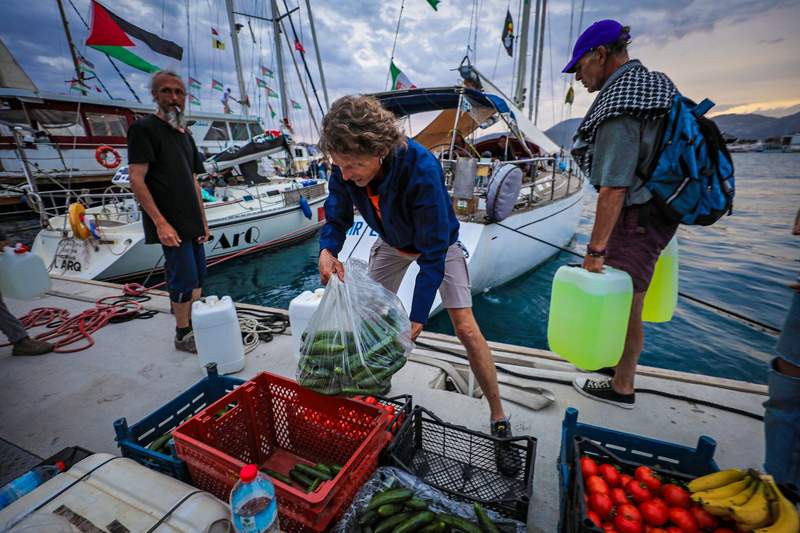
POLICY WIRE — Istanbul, Turkey — It’s a grim, familiar choreography, isn’t it? Like some deeply rehearsed play nobody asked to see again. Another flotilla, laden with what its organizers call humanitarian aid and what observers increasingly perceive as high-stakes symbolism, has cut lines from a Turkish port. Its destination? Gaza, naturally. A stretch of land that has, for far too long, been a battleground of wills—and of bodies.
For some, this represents defiance; for others, a calculated provocation. Regardless, the vessels are on their way, retracing a perilous route worn smooth by previous, often violent, encounters. What’s different this time? Perhaps the world’s weary gaze. We’ve seen this movie before, multiple acts, — and the ending never quite changes.
The latest effort, branded as a ‘Freedom Flotilla,’ isn’t just about powdered milk and bandages—though those are certainly aboard, and desperately needed. No, this voyage is, by most accounts, a diplomatic cudgel. It’s Ankara, with its chest puffed out, asserting a certain regional prominence and expressing solidarity with a besieged population. It’s also an organized rejection of an enduring blockade, a tangible ‘no’ delivered not via communique, but via the high seas. You know, a bit like when Britain’s grand play with drones in the Strait of Hormuz sends its own particular message; the medium truly is the message, isn’t it?
“We won’t stand idly by as children starve and innocent families suffer beneath the weight of this unacceptable siege,” stated Turkish Foreign Minister Hakan Fidan, his words delivered with a practiced gravitas. “This isn’t about politics; it’s about basic human dignity. Those ships carry more than supplies; they carry hope, a defiant message echoing across the Muslim world.” His sentiment encapsulates a frustration shared from Jakarta to Islamabad, where empathy for Palestinians often runs deep.
But Jerusalem tells a different story. And they always do. “Our borders aren’t a free-for-all, designed to be breached by well-meaning — or perhaps not so well-meaning — activist stunts,” countered Israeli government spokesman David Maimon, speaking to Policy Wire from Tel Aviv. “Every shipment, every individual, is subject to scrutiny. Gaza remains under the control of a terror organization; we have a right, a duty, to protect our citizens from arms and agitators trying to exploit humanitarian gestures.” That’s the boilerplate, isn’t it? The same lines trotted out since the blockade started. And yet, the human cost continues to climb.
The blockade, now into its second decade, has strangled Gaza’s economy — and fractured its society. The United Nations Office for the Coordination of Humanitarian Affairs (OCHA) reported in 2023 that approximately 80% of Gaza’s population relied on humanitarian assistance even *before* the latest conflict, a stark indicator of what chronic restrictions do to a society. The aid currently trickling in, often through the Rafah crossing, is woefully inadequate for the population’s basic needs. It’s barely a sip for a parched throat.
📄 POLICY WIRE WHITEPAPER PUBLISHED: PAKISTAN'S NATIONAL SECURITY POLICY PRIORITIES
👉 READ BY CLICKING HEREPakistan, for instance, a nation geographically distant but culturally and religiously intertwined, has consistently called for an end to the blockade. Its government and populace regularly stage protests and issue condemnations, viewing the humanitarian crisis in Gaza through the lens of Islamic solidarity. The actions of this flotilla—its courage, or its foolhardiness, depending on your perspective—resonate powerfully in countries where the plight of Palestinians is a central issue.
What This Means
This flotilla is less about immediate relief — and more about turning up the heat. Politically, it’s a direct challenge to Israel’s narrative of security control and an implicit critique of international apathy. For Turkey’s President Erdogan, it burnishes his credentials as a champion of Muslim causes, projecting regional influence and potentially diverting attention from domestic issues—a tried-and-true maneuver. Economically, its direct impact on Gaza itself will be negligible, unfortunately. Whatever tonnage it carries won’t scratch the surface of a population of over two million on the brink. But its true currency lies in media attention. Every skirmish, every interception, every detained activist becomes fodder for headlines, fueling the information war that runs parallel to any armed conflict.
Because ultimately, these kinds of spectacles force nations to choose sides, even tacitly. They compel diplomatic statements, fuel protests, and generally make the whole thorny situation even more, well, thorny. It doesn’t solve the problem, not really. It mostly just resets the clock on an old argument, like hitting the repeat button on a song nobody wants to hear anymore, but can’t escape. It’s tough sledding for any peace initiatives when these kinds of gestures become the preferred mode of engagement. They’re like shouts across a chasm, instead of bridges.