


The Silent Architects: How Everyday Automation Reconfigures Our Digital Selves
POLICY WIRE — Washington D.C., USA — It lives on your phone, unassuming, probably tucked away in a folder of seldom-used utilities. But don’t let its humble icon fool you. This seemingly benign...

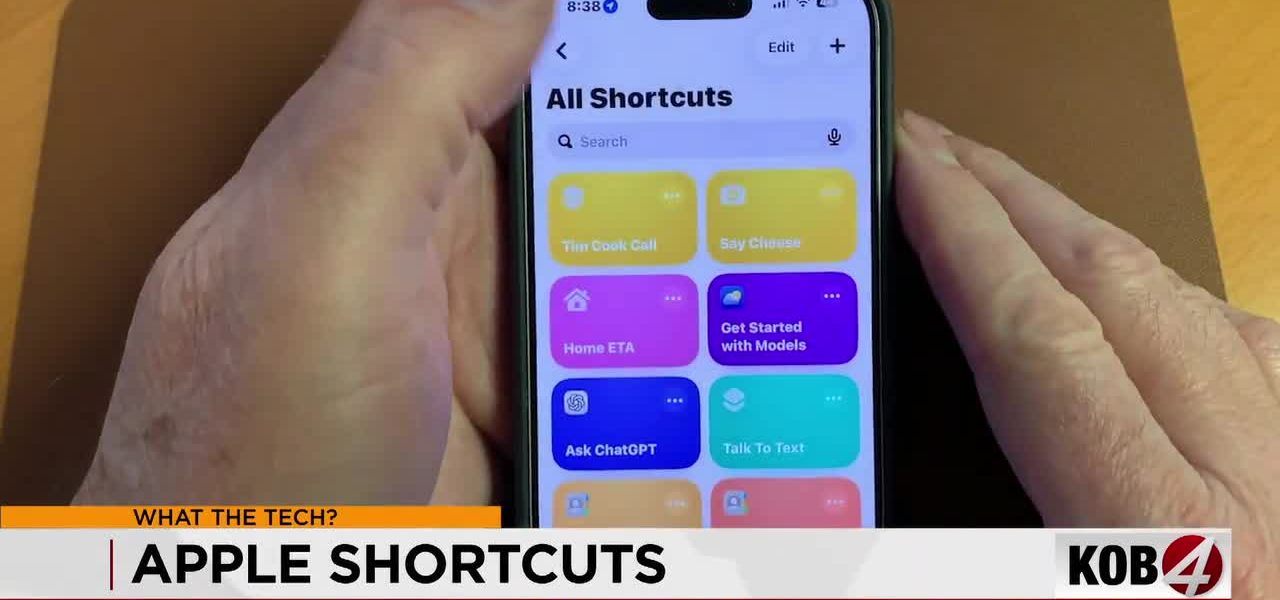
POLICY WIRE — Washington D.C., USA — It lives on your phone, unassuming, probably tucked away in a folder of seldom-used utilities. But don’t let its humble icon fool you. This seemingly benign application, the Apple Shortcuts app, isn’t just about streamlining your morning coffee routine. No, it’s quietly reshaping our relationship with technology—and ourselves—in ways policy wonks haven’t quite begun to unpackage. It’s an automation creep, if you will, disguised as convenience.
Consider the allure: with a single tap, your iPhone could text your partner your exact arrival time, dim the lights, and set the perfect Spotify playlist. Or, say “Siri, take a break,” — and suddenly, the digital world falls silent, notifications banished, brightness muted. These aren’t just gadgets doing tricks; they’re pre-programmed behaviors, micro-agreements we make with our devices to offload mundane decisions. And who’s really thinking about the downstream effects when you just want to avoid typing out an ETA in traffic?
It’s here, in these quiet, unexamined conveniences, that the conversation shifts from mere tech review to something more substantial. The Shortcuts app, a feature baked into every iPhone, offers a gallery of ready-made automations, alongside tools for crafting bespoke digital behaviors. One of its more — let’s call them creative — uses allows a user to initiate a fake incoming call with a tap, perfect for escaping an awkward conversation. Imagine the societal ramifications of widely accessible, instant digital alibis. We’re building intricate, often unseen, digital scaffolds around our daily lives. And most of us? We’re just tapping away, blissfully unaware of the policy fault lines forming underneath.
The push for such seamless integration isn’t accidental. It’s a strategic move by tech giants to embed themselves deeper into our cognitive architecture. The data tells a story: global smartphone penetration hit roughly 6.92 billion units by late 2023, according to Statista. That’s billions of potential users for systems designed to quietly log and categorize our habits, our shortcuts, our digital choices. Each ‘saved minute’ often translates into a deeper integration with a proprietary ecosystem, an increased reliance.
“We’re witnessing the normalization of digital outsourcing of decision-making,” commented Senator Alexi Petrov, a vocal advocate for digital literacy on the Senate Commerce Committee, speaking to Policy Wire this week. “People don’t realize that every convenience comes with a cost—often paid in data, sometimes in autonomy. We’re not just saving time; we’re also subtly ceding control over our attention and, eventually, our preferences. It’s not dystopian; it’s just business as usual, but on a grand scale.” He isn’t wrong. Because these tiny decisions, aggregated, paint a remarkably detailed portrait of you.
But the ramifications aren’t confined to Western markets. In burgeoning digital economies like Pakistan, where mobile technology often leapfrogs traditional infrastructure, the adoption of such tools accelerates at an astonishing pace. Here, features like automatic messaging for family check-ins, or voice-activated recordings for quick notes in bustling bazaars, become not just conveniences but sometimes essential communication aids in rapidly modernizing societies. They bridge distances, they streamline chaotic routines, they’re truly transformative for millions.
📄 POLICY WIRE WHITEPAPER PUBLISHED: PAKISTAN'S NATIONAL SECURITY POLICY PRIORITIES
👉 READ BY CLICKING HERE“These tools, from Cupertino to Karachi, fundamentally alter how communities connect,” said Dr. Aisha Rahman, a Lahore-based researcher specializing in digital humanities. “For many, the phone isn’t just a communication device; it’s a lifeline, a bank, a social network. Automations here aren’t merely about personal efficiency; they can democratize access, connect the unbanked, or even facilitate critical information dissemination in emergencies. But with that power comes a profound obligation for transparency regarding data handling, something that’s not always prioritized.” That’s the tension, isn’t it?
Yet, for all the genuine utility, there’s an undercurrent. This is technology that shapes human behavior by design, making us more reliant, often without a full grasp of the extent of that reliance. It’s an exercise in nudging, performed by algorithms, for profits. It sounds like a conspiracy, doesn’t it? It isn’t. It’s just a finely tuned marketplace at work.
What This Means
The proliferation of sophisticated personal automation, epitomized by apps like Apple Shortcuts, heralds a quiet but significant shift in how policy-makers need to approach digital governance. Economically, it deepens the moat around dominant tech platforms, as user ‘lock-in’ strengthens with each integrated shortcut. The time-saving narrative, while compelling for individuals, concentrates digital power. Politically, the sheer volume of personal data generated by these automated habits creates new vulnerabilities for privacy and raises complex questions about informed consent in an increasingly automated world. We’re moving beyond traditional notions of user agreements; users aren’t just consenting to terms, they’re programming their own consent by configuring their daily digital routines. For governments, this means grappling with how to regulate ‘invisible’ technological forces, safeguarding individual agency against systems designed for maximum stickiness. It demands a fresh look at antitrust concerns, data portability, and digital citizenship in an age where your phone literally anticipates your next move, sometimes even manufactures it.