


Michigan’s Diamond Dreams: A Deep Dive into High School Baseball’s Shifting Sands
POLICY WIRE — Lansing, Michigan — Beneath the gleam of freshly cut diamonds and the crack of wooden bats, something more complex than mere athletic prowess churns in Michigan’s high school...

POLICY WIRE — Lansing, Michigan — Beneath the gleam of freshly cut diamonds and the crack of wooden bats, something more complex than mere athletic prowess churns in Michigan’s high school baseball scene. It isn’t just about who’s got the fastest fastball or the sweetest swing; it’s a stark, unvarnished reflection of shifting demographics, fierce community pride, and a financial commitment to youth sports that, for better or worse, mirrors the hyper-professionalized landscape of the collegiate and pro ranks. This week’s much-anticipated rankings, just dropped by the Michigan High School Baseball Coaches Association, weren’t just a list; they were a dispatch from the front lines of adolescent ambition.
Brother Rice, with a formidable 22-8-2 record, — and Orchard Lake St. Mary’s (21-5) have seized the top slots in Divisions 1 — and 2, respectively. But their ascendance tells a deeper story. It speaks to well-resourced programs, dedicated coaching cadres—and perhaps, an ecosystem where the ‘win at all costs’ mantra begins earlier than ever. Romeo and Woodhaven round out a new top three in Division 1, with New Boston Huron sliding into the number two spot in D2, having merely swapped places with OLSM. The churning at the top? It’s relentless. A new generation of contenders—they’re not just playing for district glory, are they?
Because, let’s be frank, this isn’t just kid’s stuff. These rankings feed into college scouting, scholarships, and—for an increasingly tiny fraction—the improbable dream of the MLB draft. The financial implications for families alone, in travel teams and private coaching, can easily reach five figures annually, turning a simple game into a complex economic enterprise. It’s a relentless grind for these young athletes, a stark contrast to, say, the spontaneous street cricket games you’d observe in Karachi. Our system, it’s engineered for competitive specialization from a young age.
“These programs, they’re cultivating future leaders, not just athletes,” observed Dr. Anya Sharma, Director of Competitive Integrity for the Michigan High School Athletic Association (MHSAA), in an exclusive chat with Policy Wire. “But we’ve gotta keep our eyes on the bigger picture. Are we teaching resilience, or just how to win? It’s a balance, a difficult one to strike, particularly when the stakes feel so incredibly high for these young men and their families.” She’s right, of course, because the line between healthy competition and crushing pressure sometimes blurs for these kids.
The success of teams like Brother Rice — and Orchard Lake St. Mary’s—perennial powerhouses—isn’t an accident. These schools often pull from wider geographic areas, attracting talent with their strong academic and athletic reputations. But this also means that schools in other, perhaps more demographically diverse, regions can struggle to compete for top talent, let alone state titles. Think about Hamtramck or Dearborn, with their vibrant Muslim and Arab-American populations, where soccer often reigns supreme and baseball programs might grapple with different levels of participation or funding. It raises questions about representation — and access within the Michigan sports hierarchy. Is this system truly equitable, or does it implicitly favor certain communities?
And let’s not pretend this is purely about athletic merit. Facilities, coaching staff stability, parental engagement—they’re all ingredients in this potent mix. A recent study, for instance, indicated that districts with higher per-student spending on athletics consistently produced a greater percentage of top-ranked teams across all sports. The ‘source’ for this? A Michigan Department of Education report from late last year, its findings quietly confirming what many have long suspected about the correlation between dollars and dominant dynasties.
📄 POLICY WIRE WHITEPAPER PUBLISHED: PAKISTAN'S NATIONAL SECURITY POLICY PRIORITIES
👉 READ BY CLICKING HERECoach Marcus Thorne of Woodhaven, whose team climbed to No. 3 in Division 1, minced no words about the investment. “Look, no one’s handing you anything. Our kids, our staff, our community—we work for every single win. It’s blood, sweat, — and long hours on the field,” Thorne remarked. “And that builds character. They learn to fight. They learn what it means to be part of something bigger.” He’s a believer, obviously, but the reality for many smaller, less affluent schools can be a starkly different experience.
The updated rankings for Michigan High School baseball:
Division 1
- Brother Rice (22-8-2)
- Romeo (21-6)
- Woodhaven (24-3)
- Rochester Adams (19-5)
- Bay City Western (21-4)
- Detroit Catholic Central (20-10)
- Oxford (22-5)
- Mattawan (20-6-2)
- Hudsonville (20-5-1)
- Midland Dow (21-6-1)
- Rockford (20-6)
- Hartland (15-8)
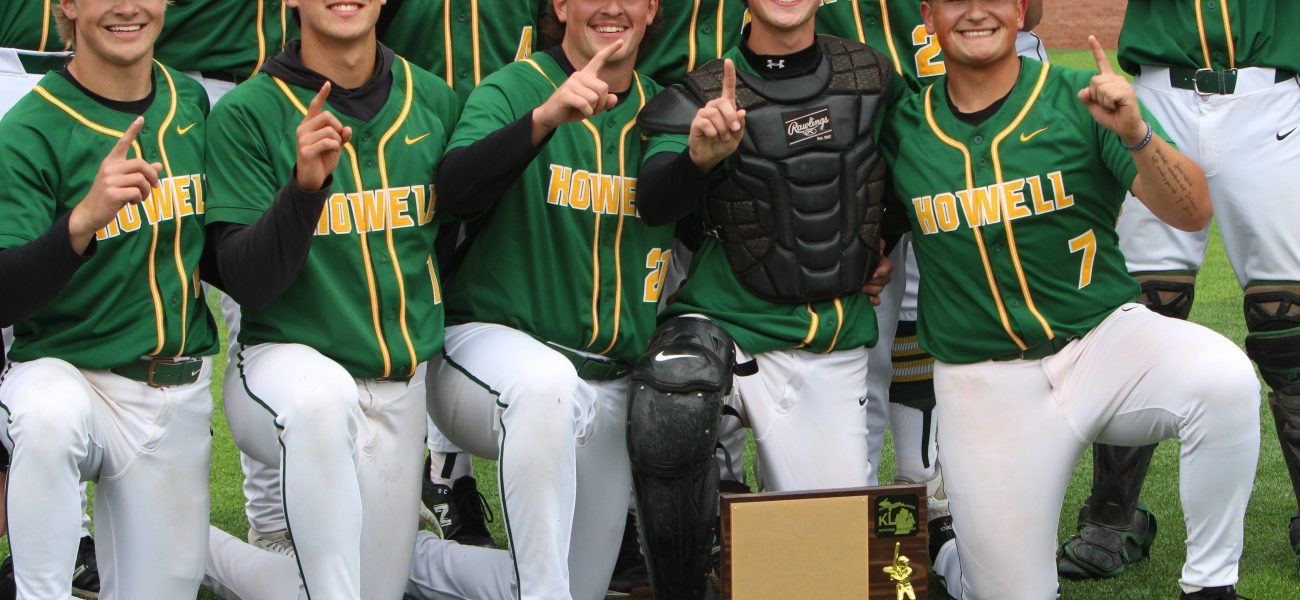
- Howell (18-7-1)
- Saline (21-8)
- Novi (20-6)
- Jenison (22-6)
- Dexter (20-8)
- Allen Park (17-5)
- West Ottawa (18-8)
- Troy (16-8)
Division 2
- Orchard Lake St. Mary’s (21-5)
- New Boston Huron (23-3)
- East Grand Rapids (17-2)
- Pontiac Notre Dame Prep (25-3)
- Dearborn Divine Child (22-2)
- Richmond (21-1)
- Williamston (18-4)
- Edwardsburg (20-4)
- Saginaw Swan Valley (25-4)
- Spring Lake (17-5)
- Standish-Sterling (20-3)
- Grand Rapids Kenowa Hills (19-2)
- Ada Forest Hills Eastern (23-5)
- Parma Western (19-3)
- Garden City (23-5)
- Freeland (21-6)
- Niles (19-7)
- Hopkins (18-7)
- Grand Rapids Catholic Central (15-10)
- Lake Odessa Lakewood (15-6)
Division 3
- Traverse City St. Francis (19-2)
- Brooklyn Columbia Central (21-3)
- Lansing Catholic Central (15-2)
- Detroit Edison (14-7)
- Jackson Lumen Christi (20-7)
- Niles Brandywine (21-2-1)
- Grosse Pointe University Liggett (17-9)
- Grass Lake (18-6-1)
- Saginaw Valley Lutheran (14-5)
- Elkton Pigeon Bayport (20-6)
- Whiteford (15-3)
- Monroe St. Mary’s Catholic Central (12-5)
- Ravenna (16-2)
- Reese (20-4)
- Plymouth Christian Academy (15-6)
- New Haven (13-3)
- Rochester Hills Lutheran Northwest (15-3)
- Watervliet (16-6)
- Kalamazoo Christian (17-6)
- Springport (18-5)
Division 4
- Mt. Pleasant Sacred Heart (24-2)
- Portland St. Patrick (17-1)
- Kalamazoo Hackett Catholic Central (17-3)
- Beal City (18-7)
- Petersburg-Summerfield (9-5)
- Royal Oak Shrine (17-5)
- Fulton (16-6)
- Fowler (15-4)
- Breckenridge (17-5)
- Vermontville-Maple Valley (13-3)
- Rogers City (16-2)
- Harbor Springs-Harbor Light (17-5)
- Indian River Inland Lakes (11-5)
- Adrian Lenawee Christian (12-2)
- Frankfort (13-5)
- Muskegon Catholic Central (14-3)
- Byron Center-Zion Christian (13-5)
- Wakefield-Marenisco (9-2)
- Capac (14-4)
- Grand Rapids Sacred Heart (9-0)
What This Means
These latest rankings do more than reshuffle names on a leaderboard; they offer a microcosm of socioeconomic realities playing out in Michigan communities. The dominance of private and affluent suburban schools isn’t just about athletic recruitment; it’s also a subtle indicator of resource allocation and the value placed on sports infrastructure. For kids in diverse, working-class communities, baseball can be a bridge—a pathway to opportunity, perhaps, or a means of integration. But without the same level of funding or the same entrenched competitive pipeline, those bridges can feel narrower, harder to traverse. This competitive hierarchy also fuels a regional pride that, while potent, can inadvertently exacerbate divisions between the ‘haves’ and ‘have-nots’ of high school athletics.
Economically, strong high school sports programs generate local revenue through ticket sales, concessions, and sportswear—not a fortune, but a steady pulse of community spending. Politically, the success (or failure) of local teams often becomes an issue for school boards and superintendents, who face pressure from vocal booster clubs and alumni networks. The outcomes here ripple into school bond votes and public perceptions of educational quality, even when entirely tangential to academic rigor. It’s a subtle mechanism of social engineering, actually. Sports, after all, have a knack for reflecting and reinforcing societal structures, whether we want them to or not.